§1. Short Title
This Act may be cited as the Surveillance Disclosure and Consent Act, and referred to plainly as the Four Signs law, because that's what it comes down to.
§2. Findings
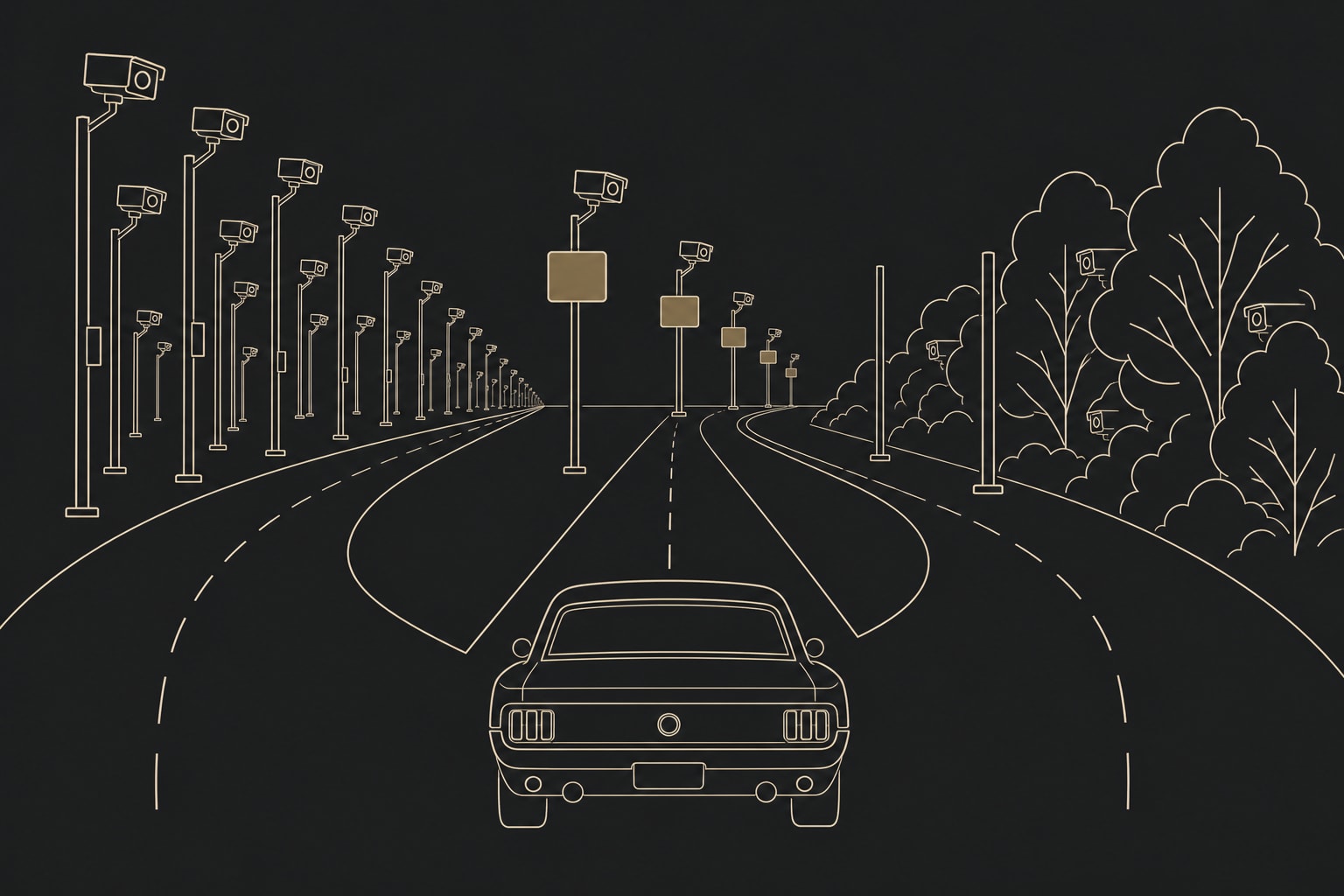
Whereas a private company now operates a nationwide network of automated cameras that read, record, and store the movements of ordinary drivers who are suspected of nothing;
Whereas that data is routinely shared across state lines and into federal databases, giving distant agencies a searchable map of a citizen's daily life;
Whereas the citizens subject to this watching were never asked, never warned, and in most cases were never told the cameras existed;
Whereas the Fourth Amendment protects the people against unreasonable searches, and the Supreme Court held in Carpenter v. United States that the long-term tracking of a person's movements can constitute exactly such a search;
Whereas a free country that insists on watching its people owes them, at the barest minimum, the knowledge that they're being watched and the freedom to choose another road;
Now, therefore, the following is enacted.
§3. Definitions
A Covered Camera Network means any system of one or more automated cameras, including automated license plate readers, that records vehicles, plates, faces, or movements and links that record to any state or national database, or grants any government agency access to search it.
An Operator means any company, agency, or entity that owns, runs, or supplies a Covered Camera Network, whether public, private, or the increasingly common blur of the two.
A Linked Database means any repository, local or federal, that a Covered Camera Network feeds, queries, or makes its records searchable within.
§4. Mandatory Disclosure Signage
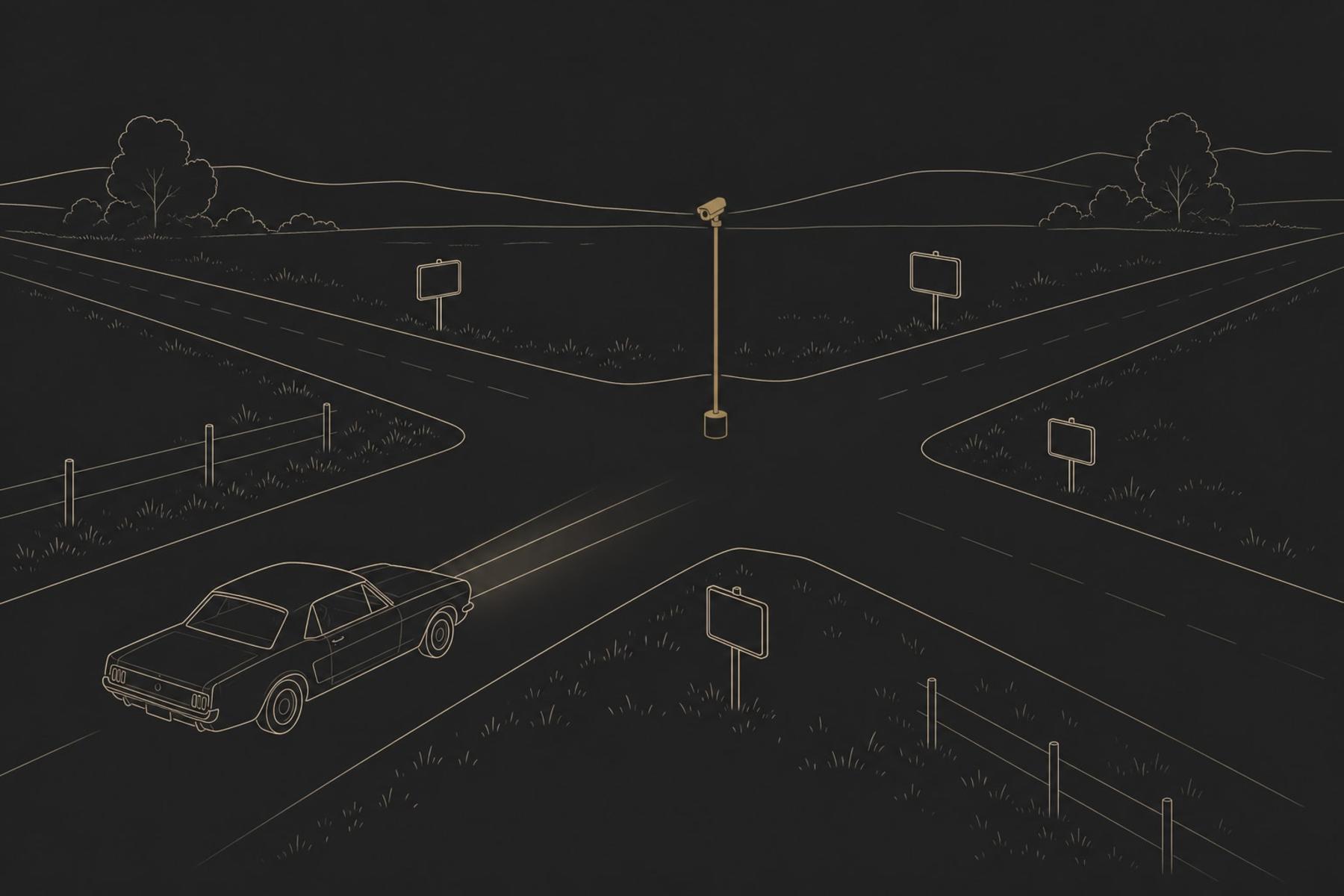
An Operator of a Covered Camera Network shall post clear, legible signage disclosing the surveillance at every point of approach to the watched area. Signage shall face all four cardinal directions of approach, so that a driver entering from any road is told before the camera reads them, rather than after.
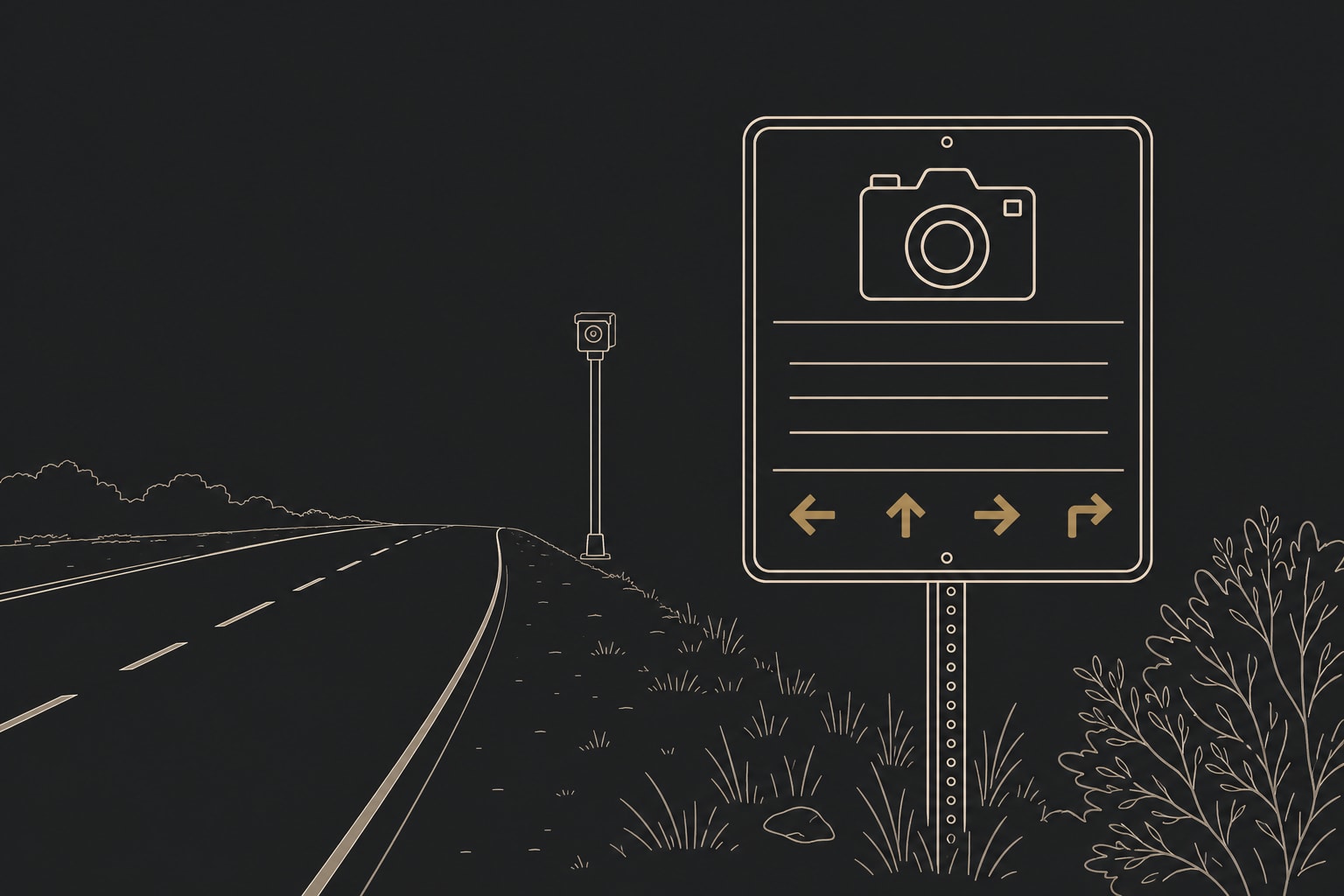
Each sign shall be reflective, weatherproof, and legible from a moving vehicle at the posted speed limit, and shall sit no closer than the stopping distance for that speed, so that the disclosure functions as a choice and not a jump scare.
§5. Required Content of the Sign
Each sign shall state, in plain language a driver can read at speed, the following: that the area is surveilled by a private or government camera network; that the vehicle, plate, and movements may be recorded, stored, and shared with state and federal databases; the name of the Operator; the network's public registry identifier; and a clear indication of where the camera is.
§6. Scope and Applicability
This Act applies to every Covered Camera Network linked to a state or national database, and to every camera that provides direct government access to its records, regardless of who holds the title to the pole. A camera owned by a private company but searchable by a federal agency is government surveillance wearing a corporate coat, and this Act treats it as such.
§7. The Right to Choose the Road
The disclosure required by this Act exists so that a citizen may exercise a choice: to accept the watching of their government, to accept the watching of a private company sharing data across federal networks, or to turn and take a different route entirely. A free person is entitled to know which of those three they're choosing, and to choose it knowingly.
§8. Public Registry
Each Operator shall maintain a public, searchable registry of every camera location, its owner, and every database its records feed. Surveillance conducted on the public in secret is the injury; a public record of who watches whom is the plain remedy.
§9. Enforcement
An unsigned camera is an unlawful camera, and its records are inadmissible for any purpose while the disclosure is absent. Any citizen surveilled by an undisclosed Covered Camera Network shall have a private right of action against its Operator, and the cost of the signs falls, in every case, on the party that chose to do the watching.
§10. Severability, Effect, and Review
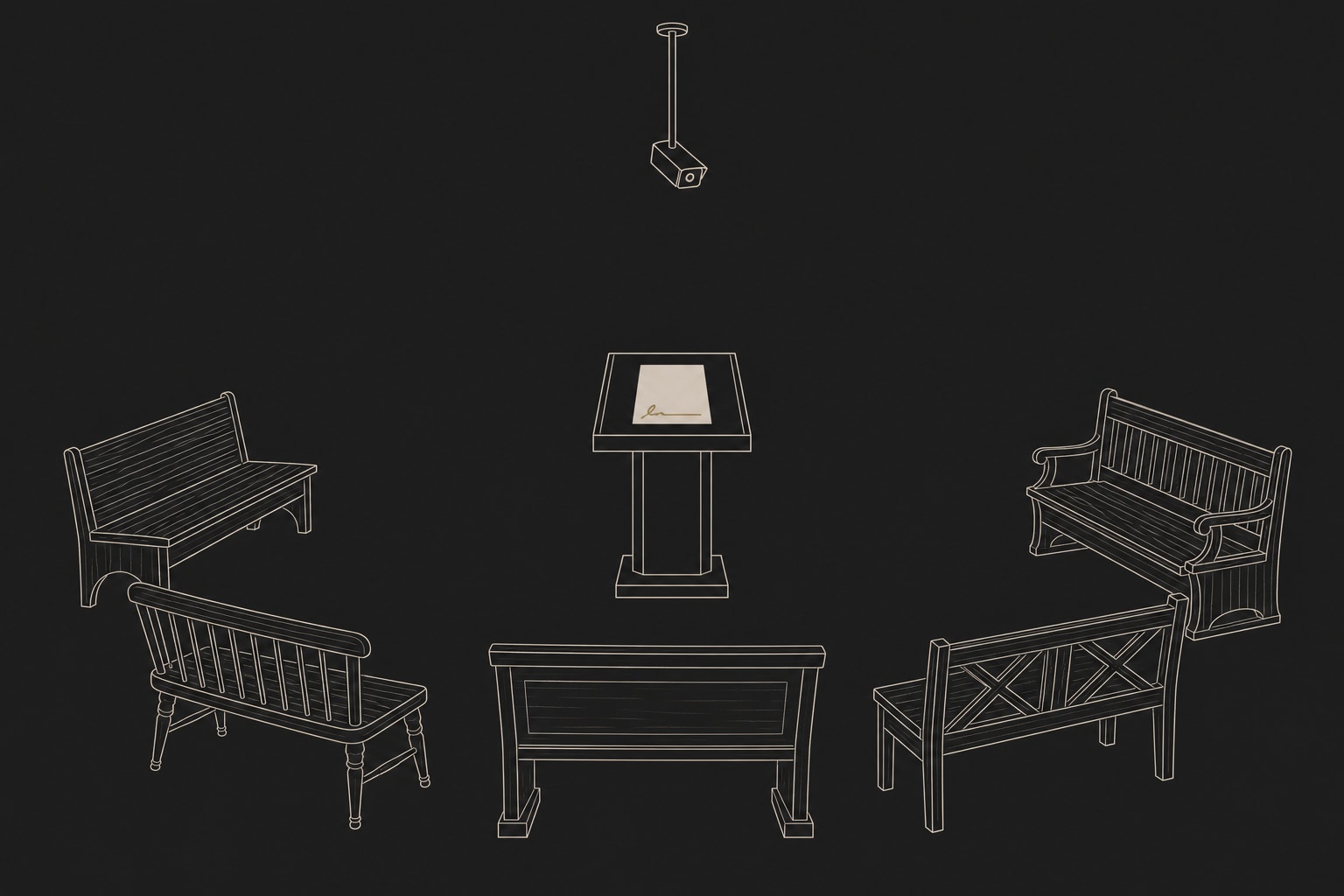
Should any part of this Act be struck, the rest stands. The Act takes effect the day it's signed, applies to cameras already installed as much as those yet to come, and returns to the people's representatives for public review every five years, in open session, with the minutes published and the coffee, one hopes, improved.
Carry it to your council meeting, your statehouse, or your neighbor's kitchen table. Sample letters to your representatives live on the Act page.