Field Notes · 01
A morning at the Reno museum
Eighty-eight portraits from the National Automobile Museum, the light and the leather and the brass and the badges, the Delahaye, the Gullwing, the Tucker, ECTO-1, Herbie, Mater, Grease Lightning, and the one that drove around the world.
The Harrah Collection
Bill Harrah ran a casino. He also ran the largest private car collection on Earth, more than fourteen hundred of them, stored in three hangars on the edge of the desert.
When he died in 1978, the collection was scattered, sold, and very nearly lost. What survived, about two hundred of the most important cars, became the National Automobile Museum, opened in 1989 in a low brick building on the bank of the Truckee River. It is, quietly, one of the great automotive museums in the world.
We arrived on a weekday morning when the light was hanging low through the front glass and the place was almost empty. What follows is what we noticed: the small pieces rather than the cars whole, a lamp, a wheel, the carved initials of a driver who had been awake for nine hundred miles.
Chapter One
The first electricity of light
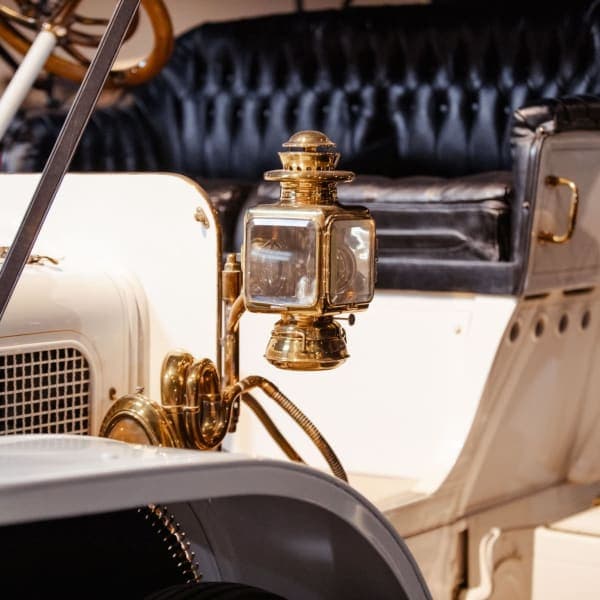
Before sealed beams and tungsten filaments, you carried fire on the front of your car. Acetylene gas, made by dripping water onto calcium carbide in a tank under the running board, burned bright enough to read by, and the lamps that held it were jewellery. Polished nickel, fluted glass, brass collars. Half a dozen of them survive in the museum, each one a small lighthouse.
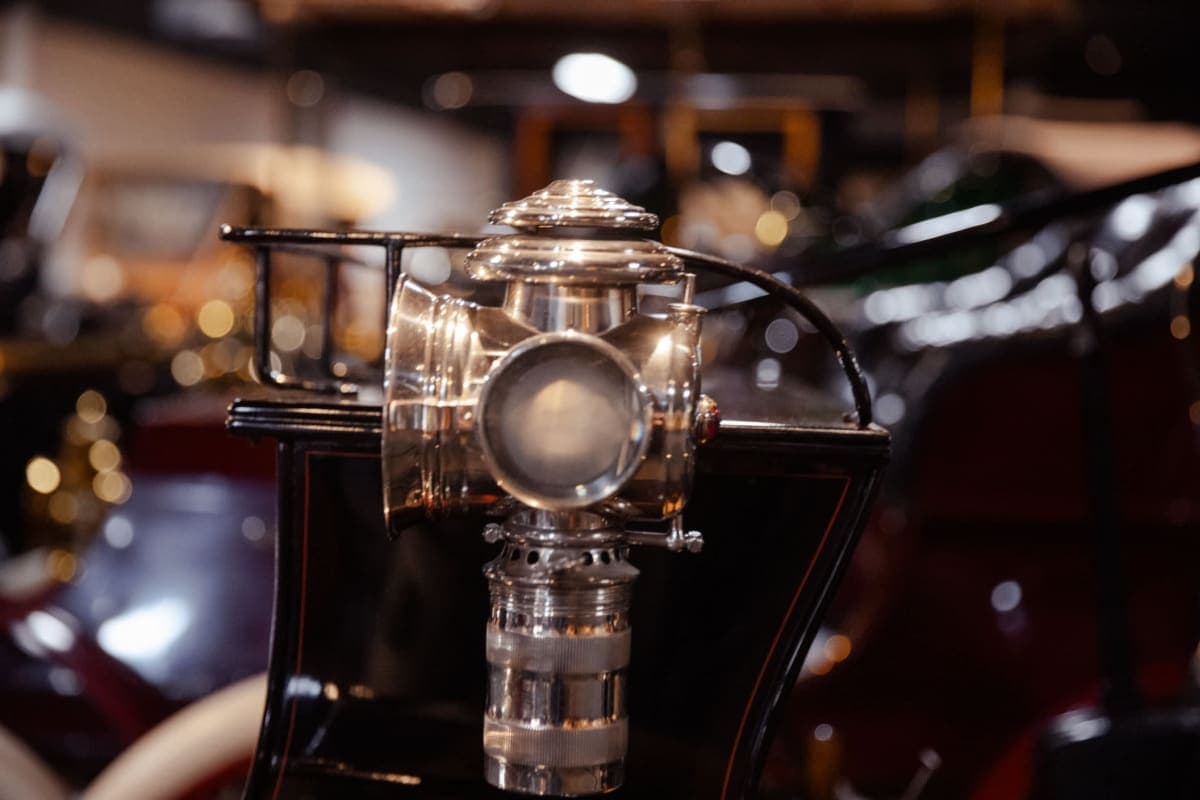
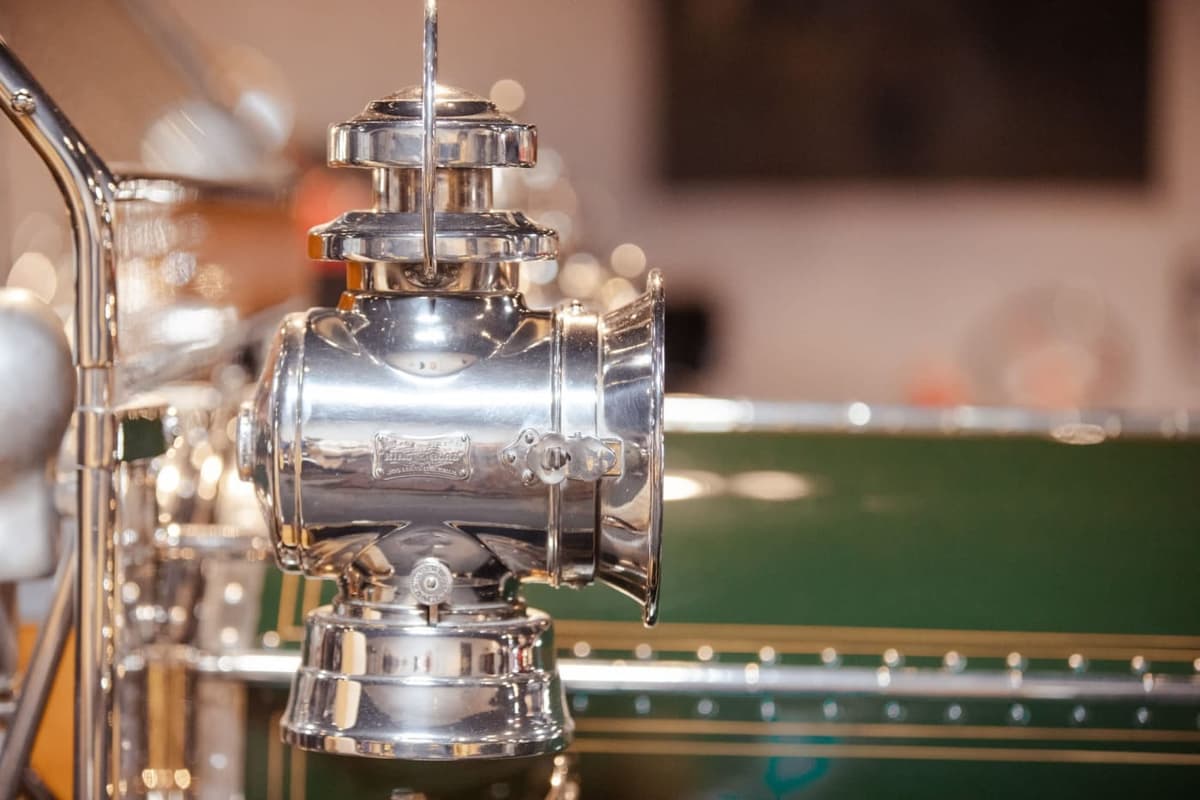
Acetylene side lamp, c. 1908
Polished nickel and bevelled glass — light made by burning calcium carbide in water, one drip at a time.
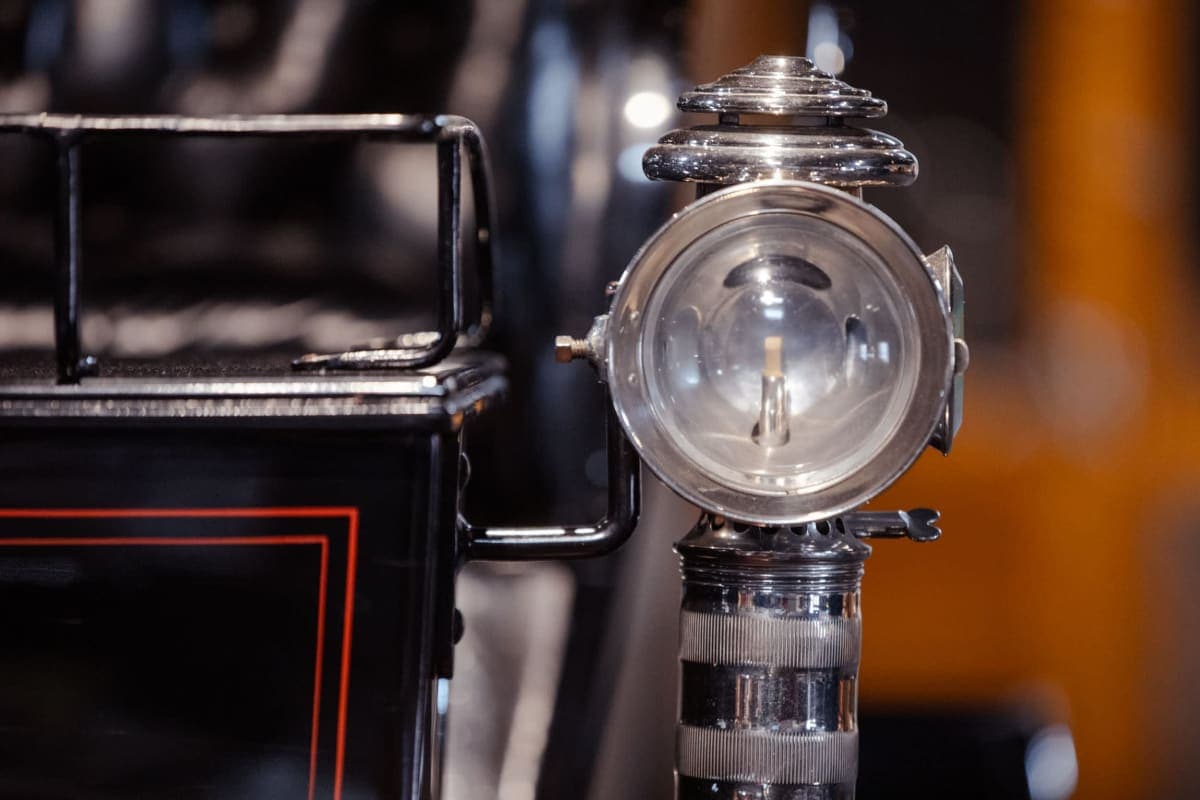
Side lantern, full height
Tall enough to read by, mounted at the cowl of an early Brougham.
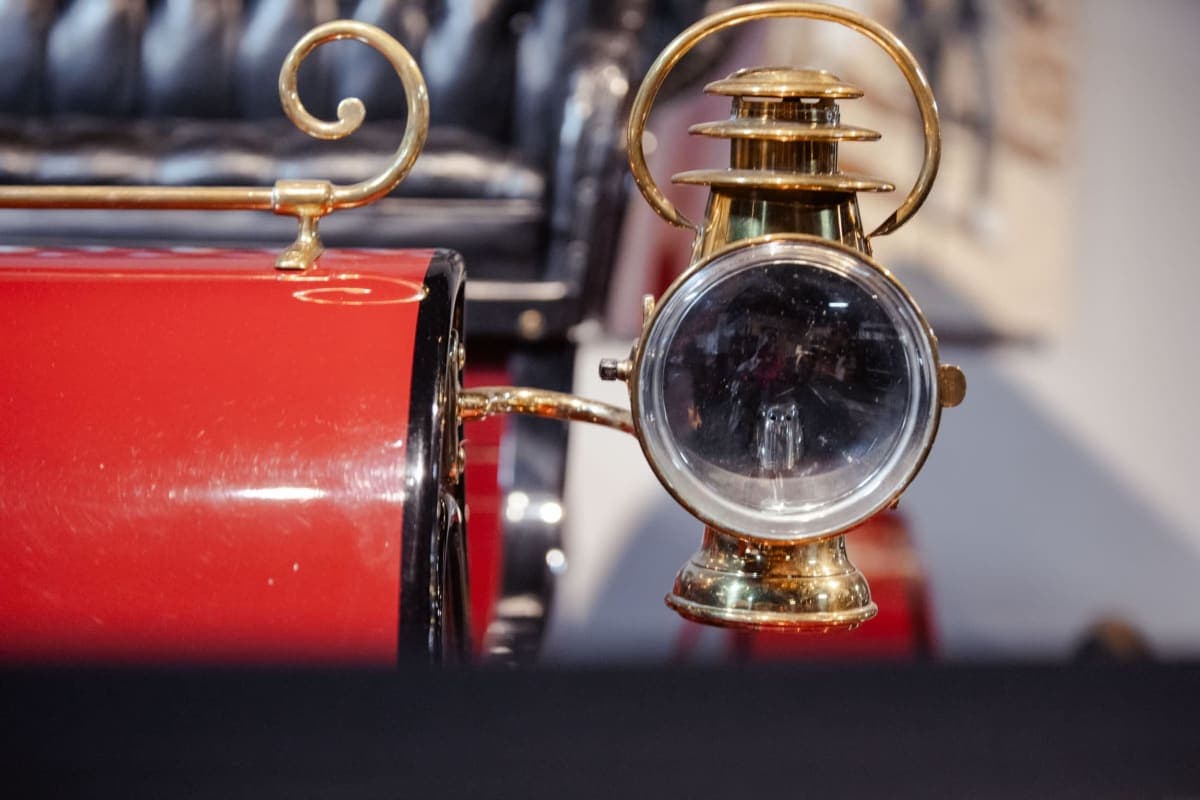
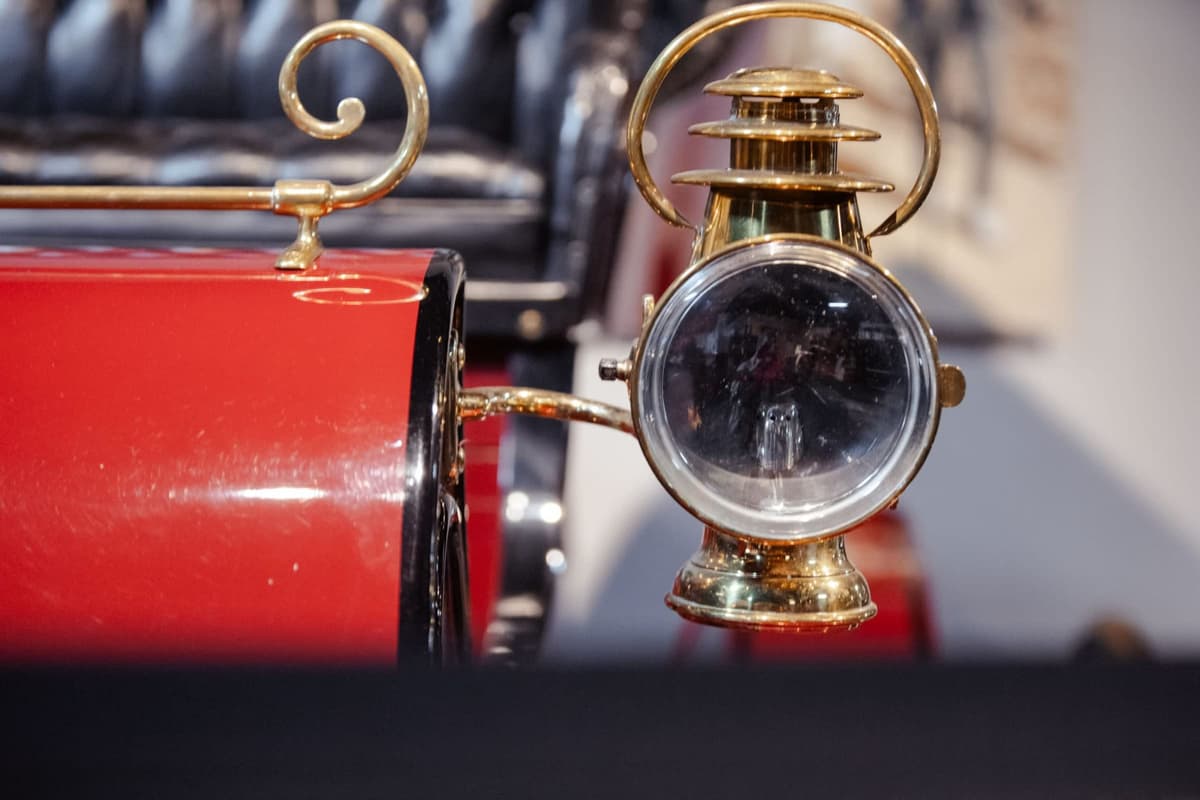
Brass headlamp on red veteran
The fender bracket curls forward like a question mark; the lamp answers it.
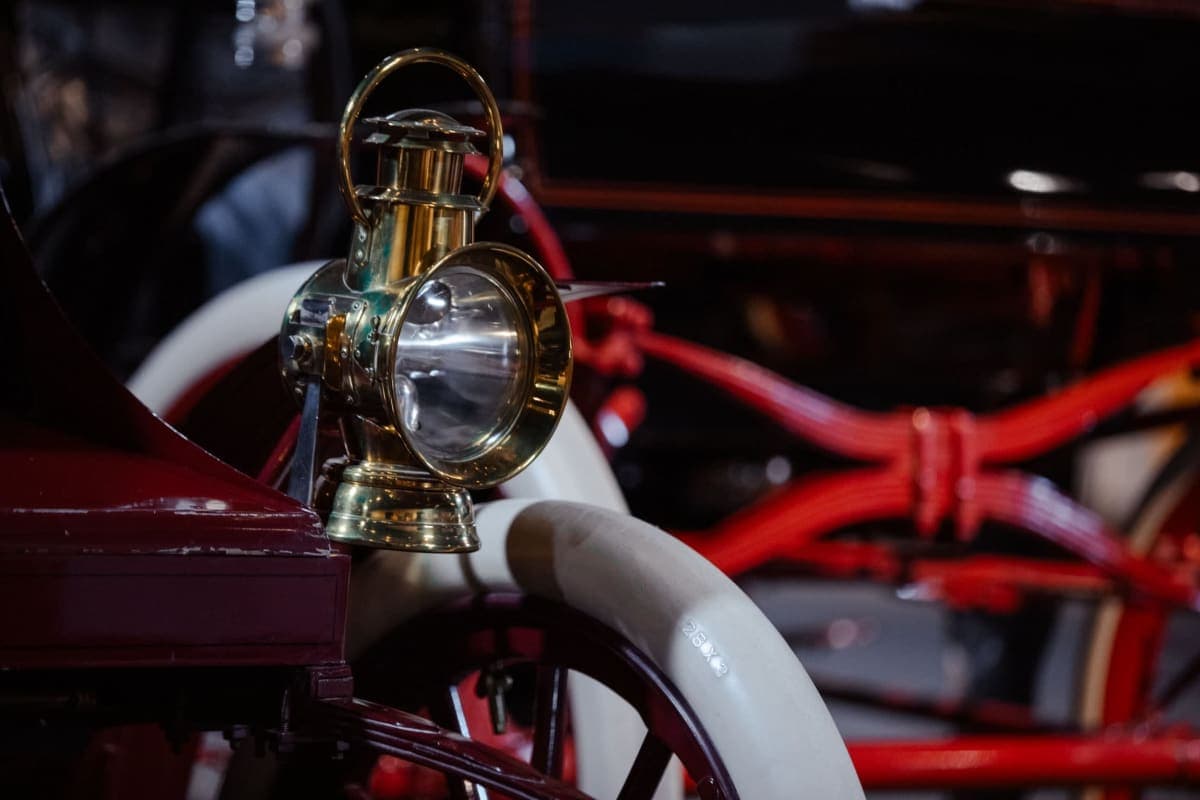
Side lamp above a white tire
Brass fittings and a wooden-spoke wheel — the geometry of a horseless carriage that hadn't quite forgotten the horse.
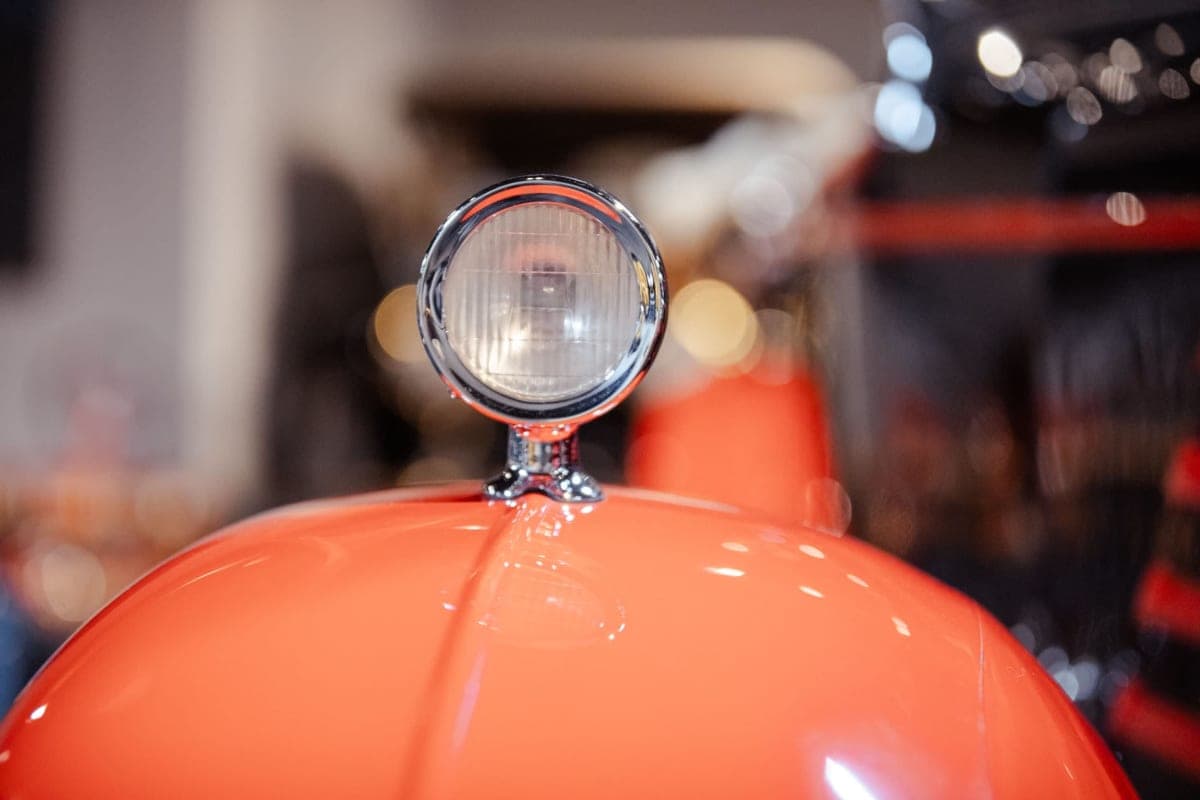
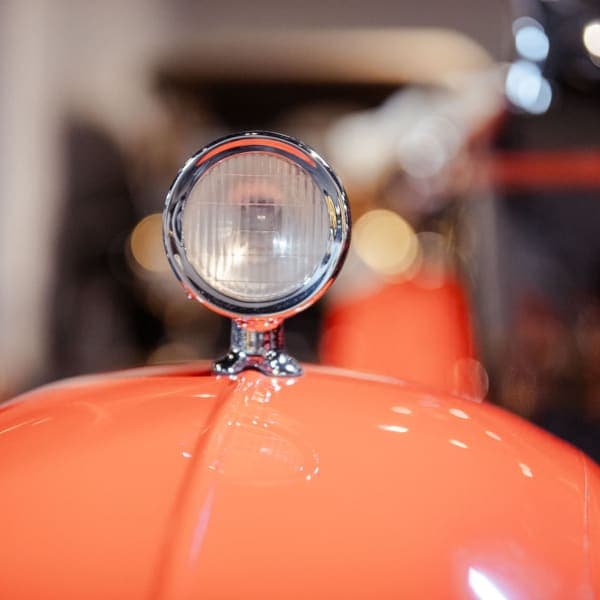
Single headlamp, vermilion bonnet
Chrome ring, painted hood, the silhouette of the 1930s arriving on a curved fender.
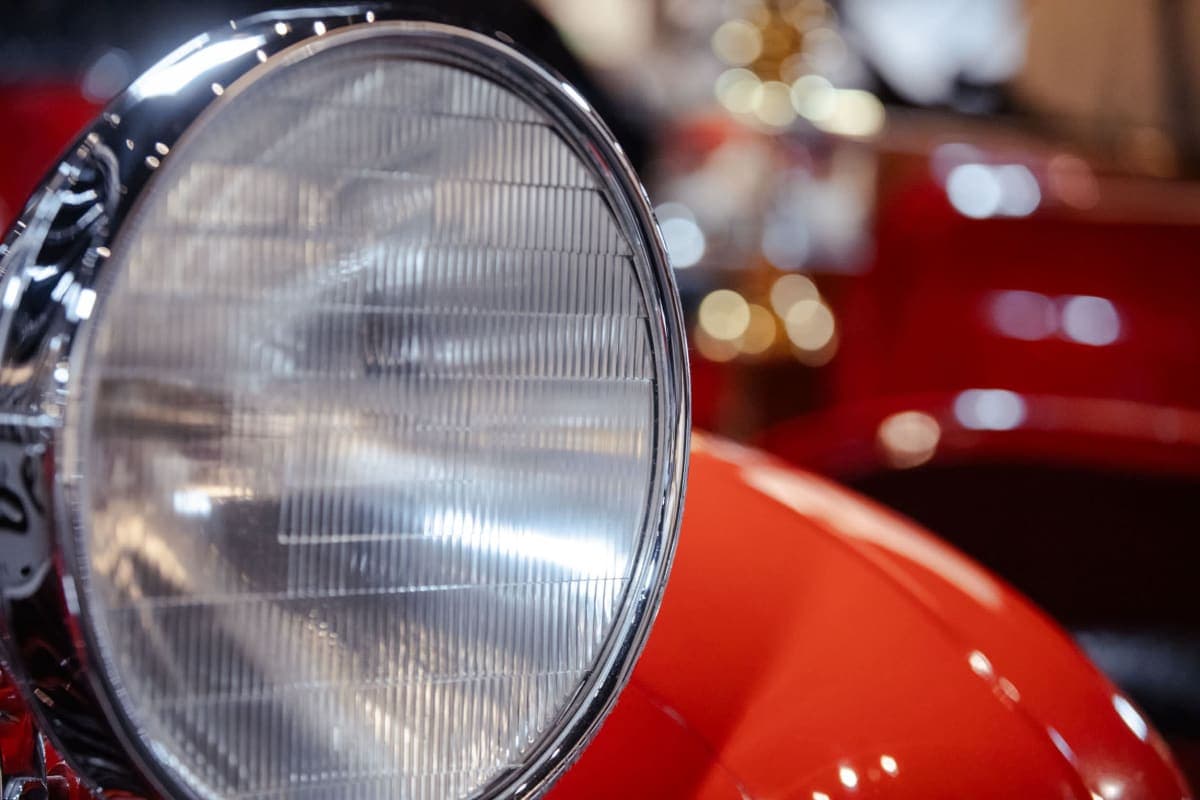
Ribbed-glass headlamp on red coachwork
Each lens groove a small lighthouse for a single oncoming road.
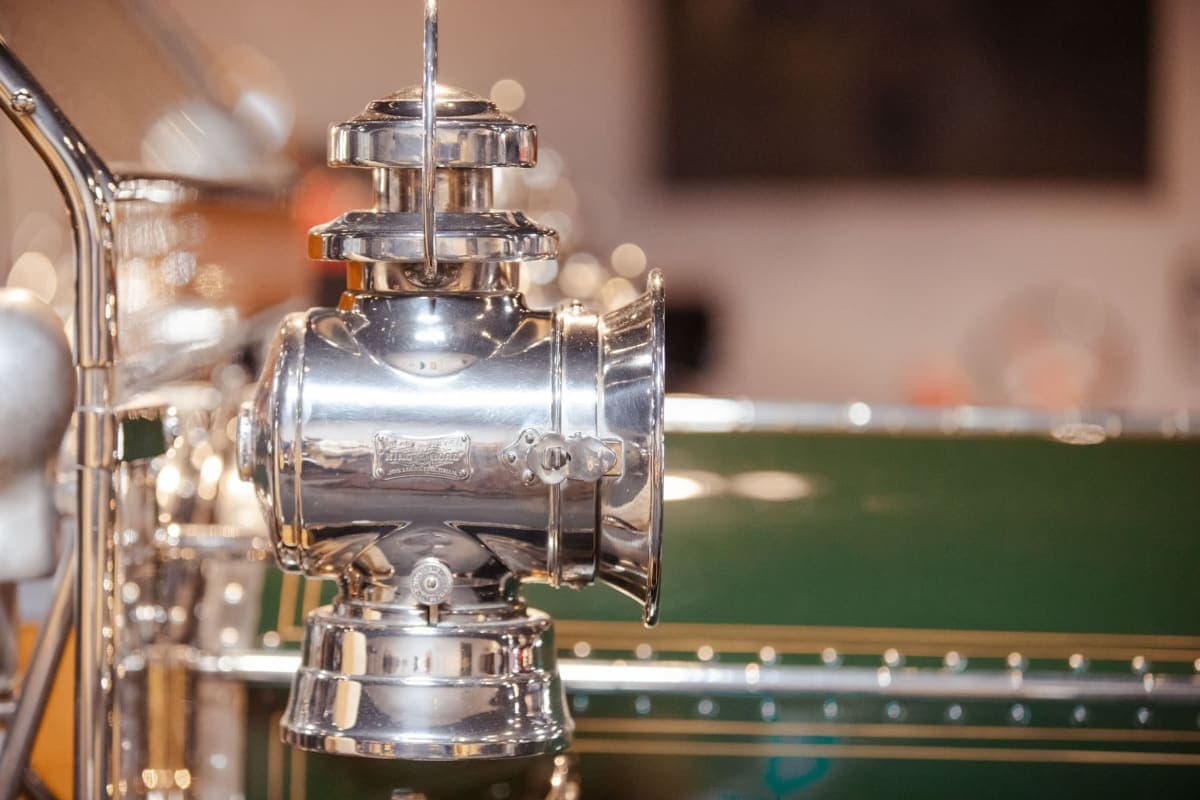
Side lantern with maker's plaque
Mounted on a deep racing-green flank picked out in gold — a body shop's signature, in light.
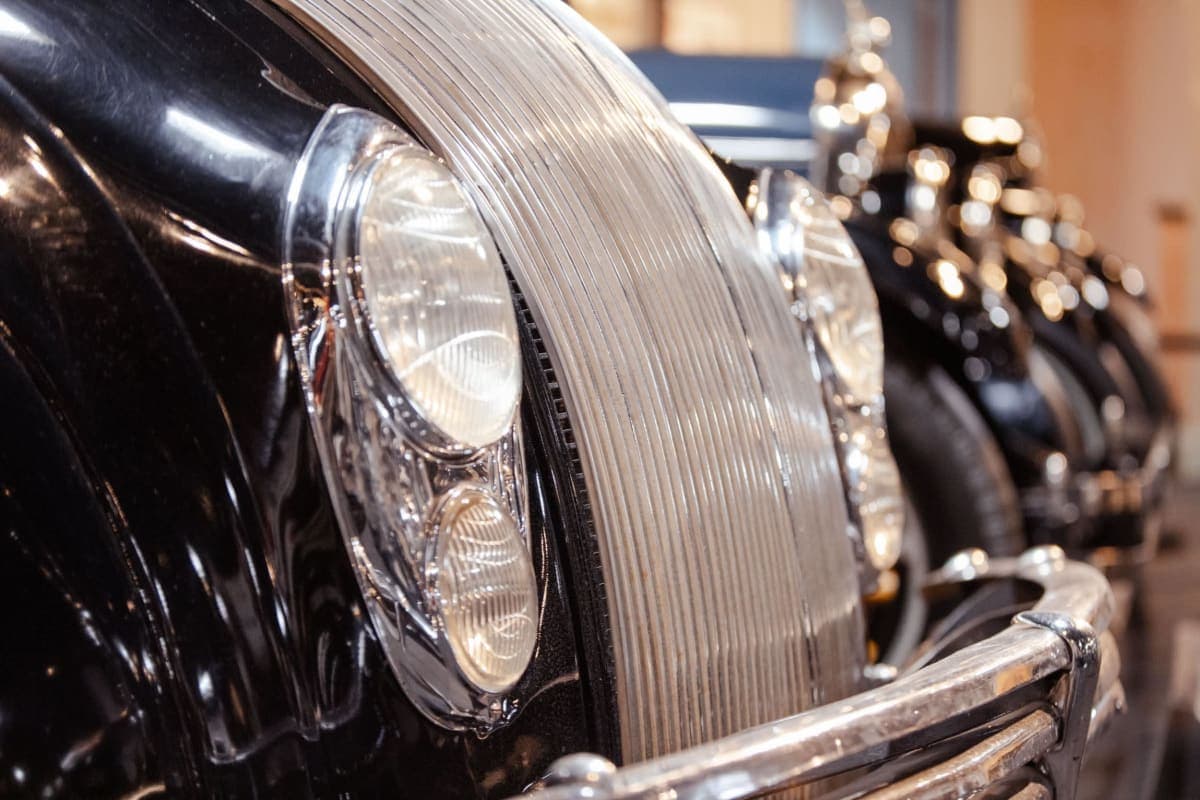
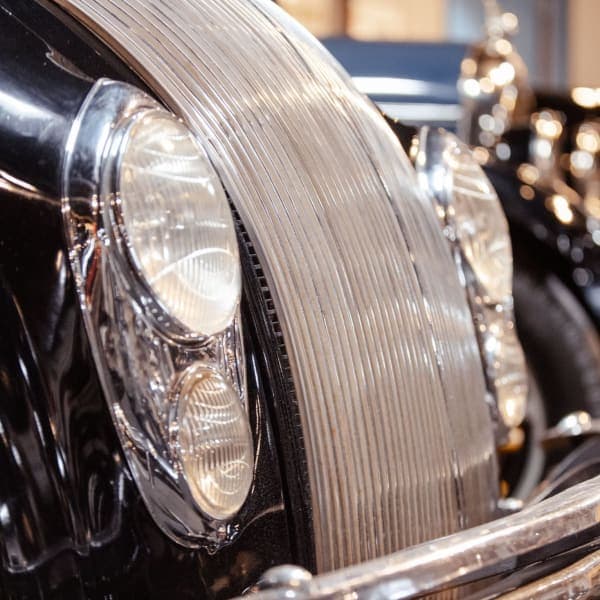
Chromed pontoon fender, 1930s
The headlamp grew into the fender; the fender grew into the wing. Streamline came in inches at a time.
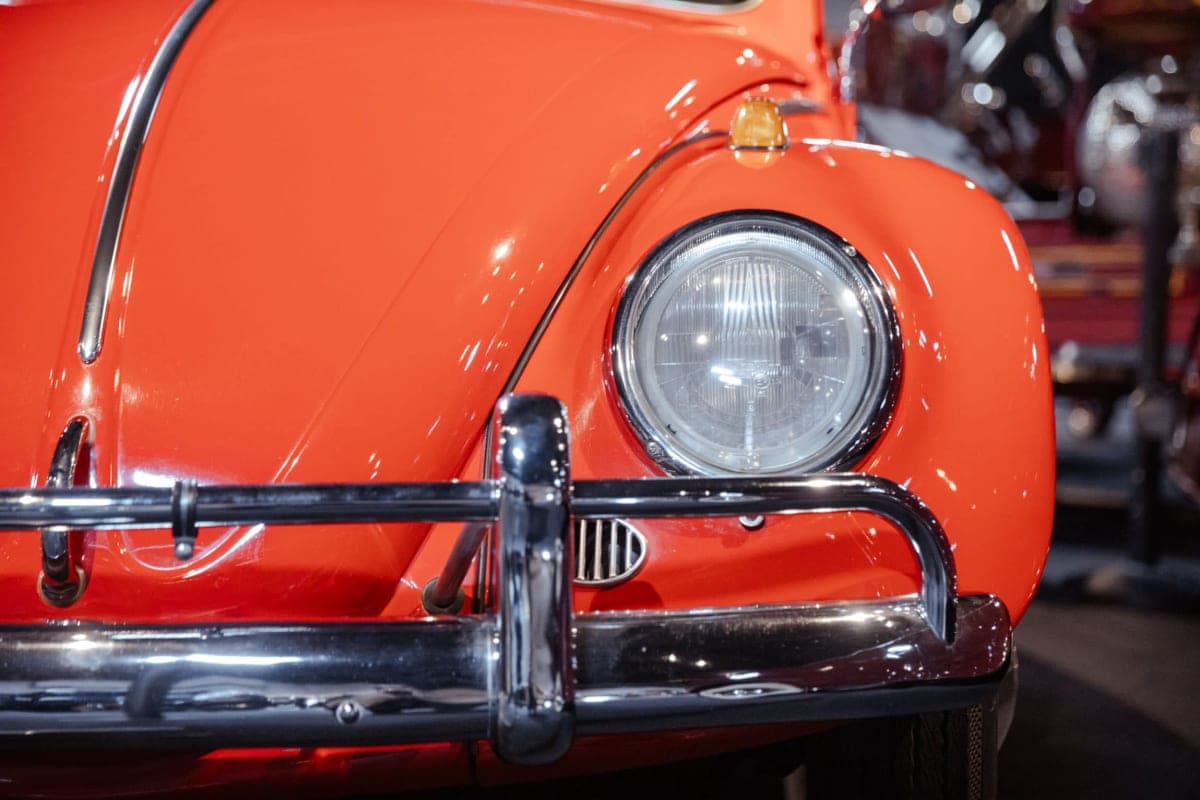
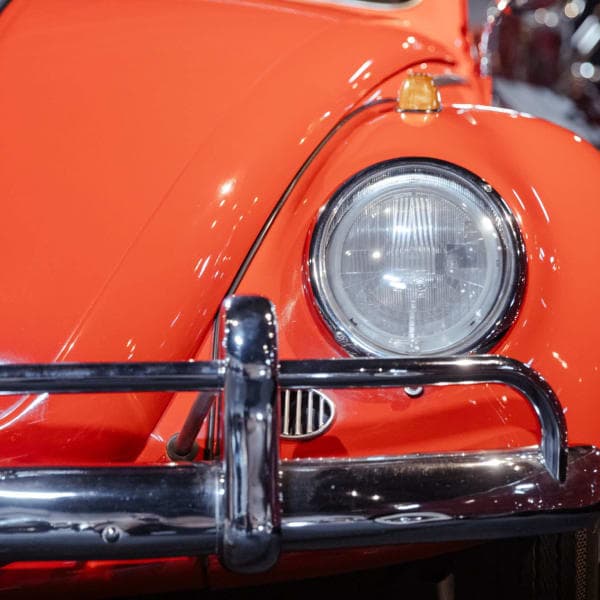
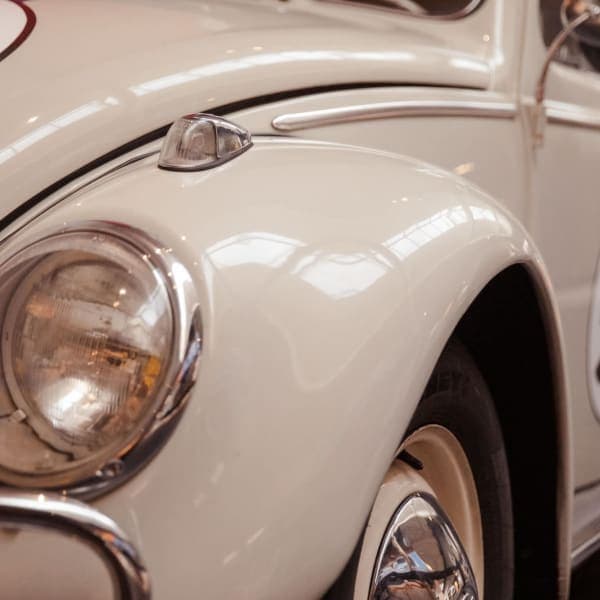
Volkswagen, headlamp & guard
Vermilion paint, a chromed bumper guard, the simplest possible round eye. The car a continent learned to drive on.
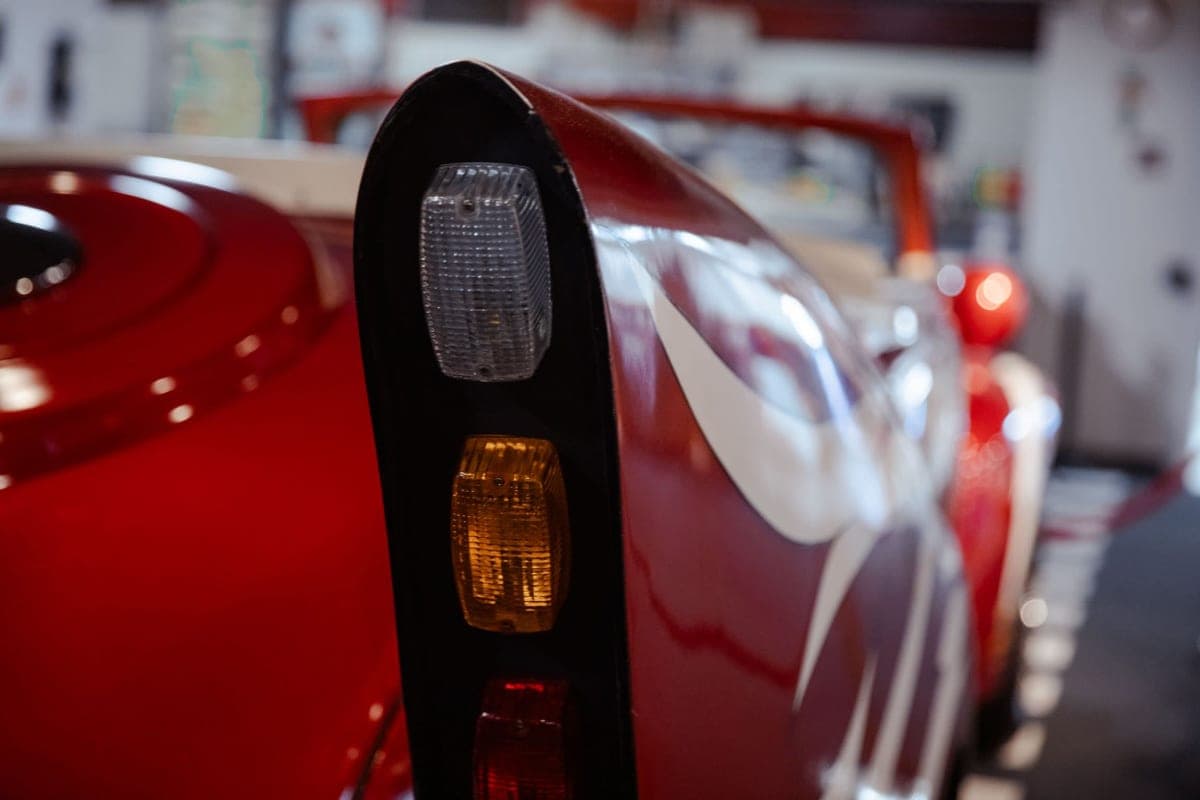
Grease Lightning — taillight cluster
Black-painted fin, three lenses stacked like notes on a stave. Custom car-builders treated the back of a car as the front of a song.
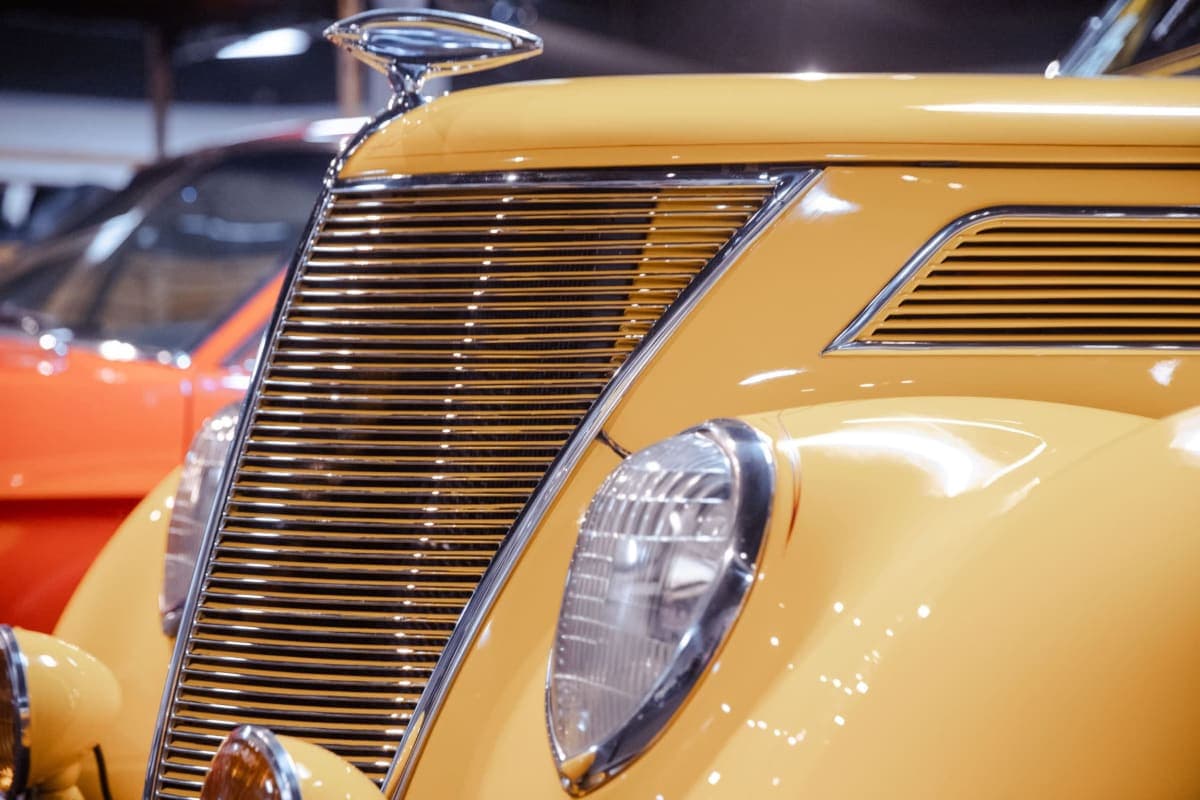
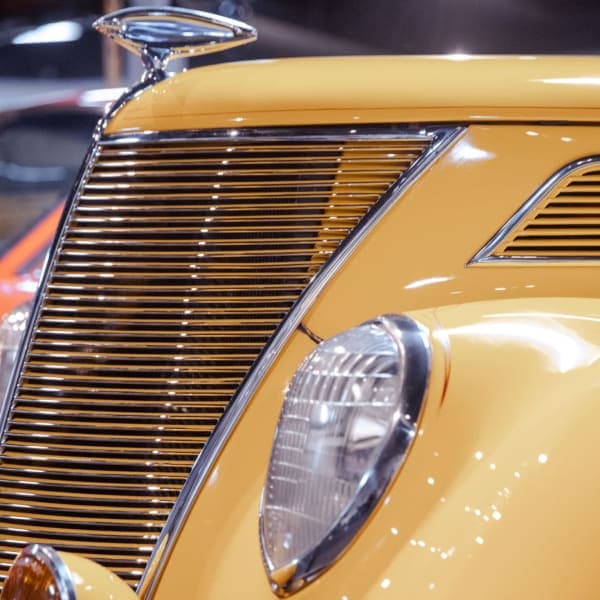
1937 Ford, gold-yellow
Waterfall grille, a single chromed mirror, a long curved fender. Pre-war American style at the moment it became its own language.
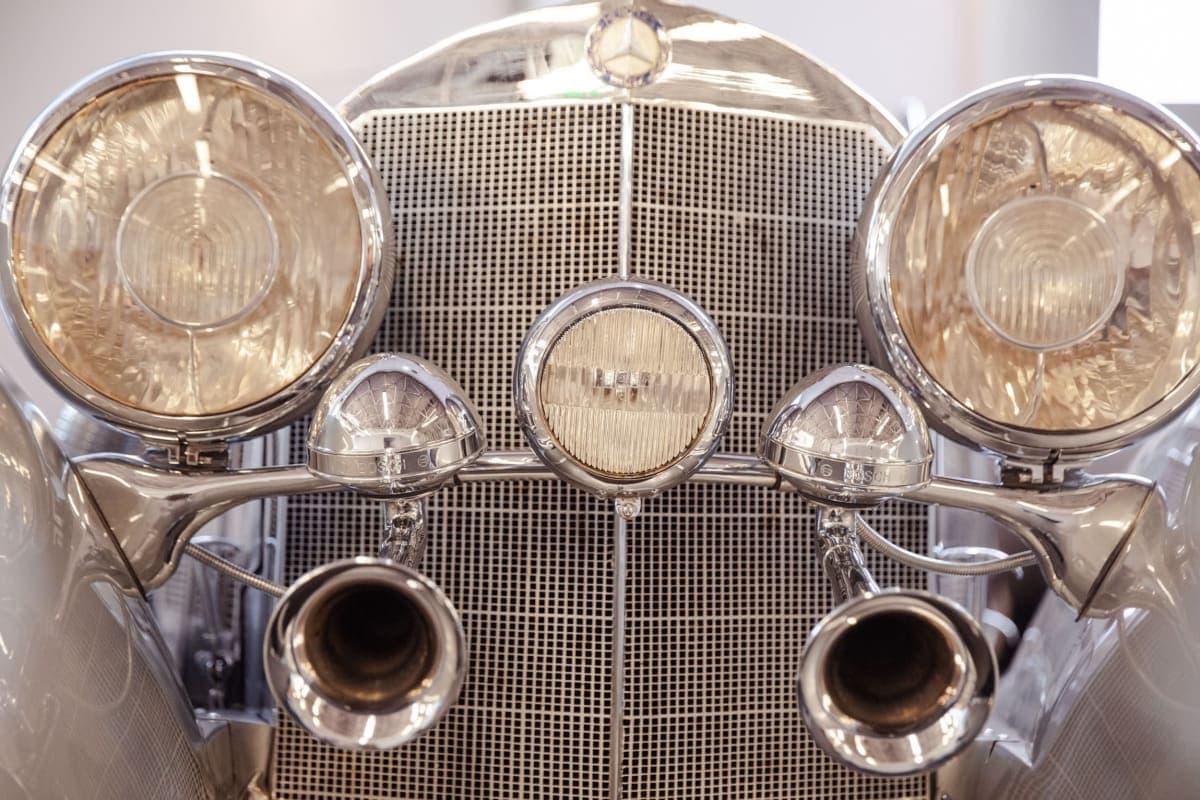
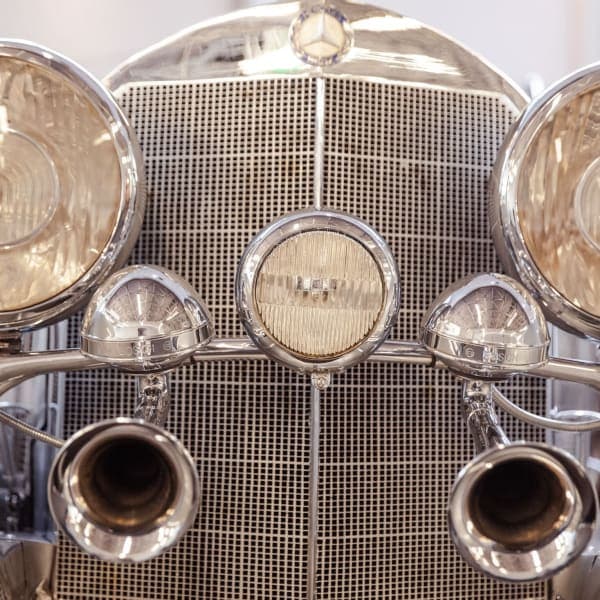
Mercedes-Benz 540K — twin Bosch trumpets
Three lamps stacked above two chromed road horns, the three-pointed star sitting calmly on top of the radiator. Stuttgart announcing itself in 1936.
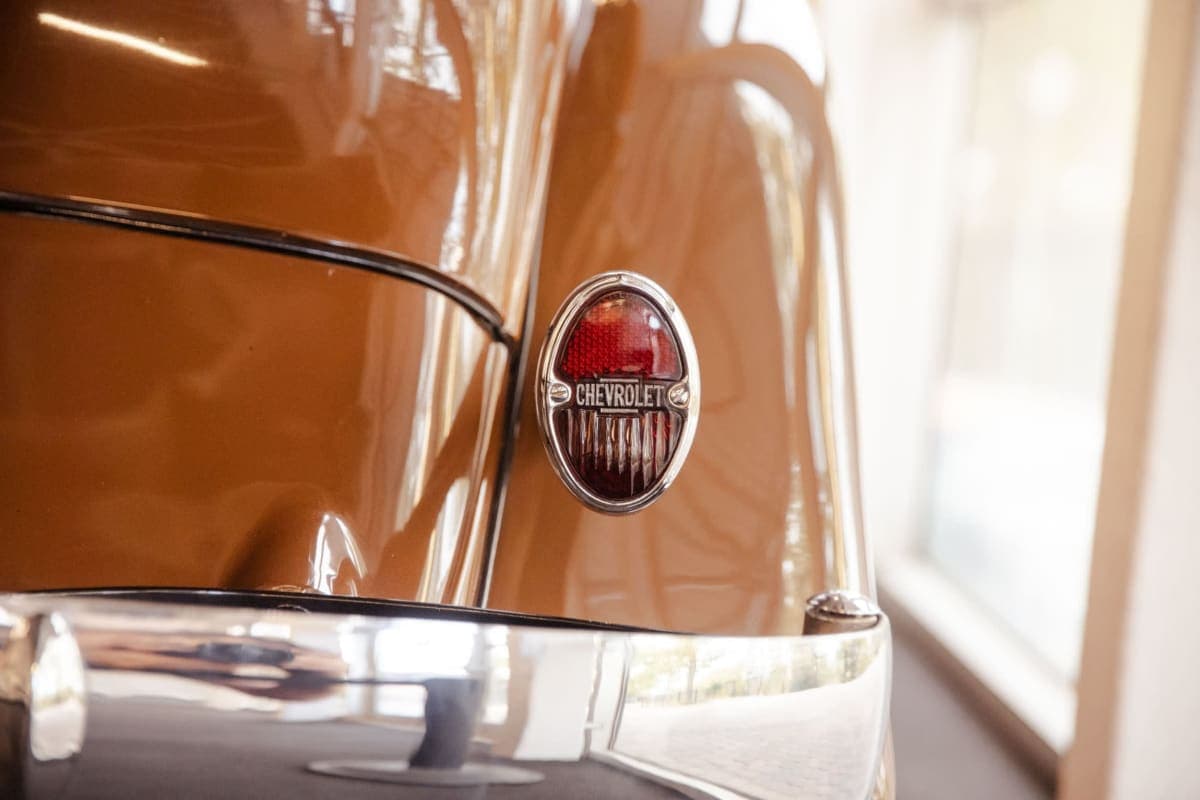
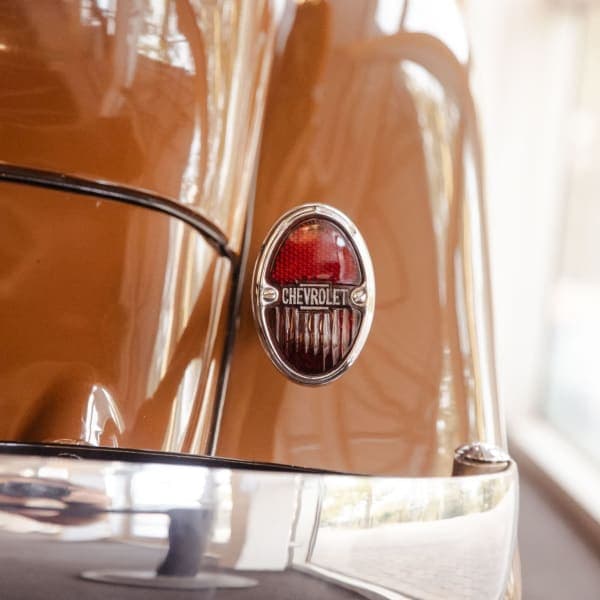
Chevrolet teardrop, 1940
A red-and-chrome teardrop tail light with the word CHEVROLET cast into the centre bar. The lamp is a brand statement and a turn signal at the same time.
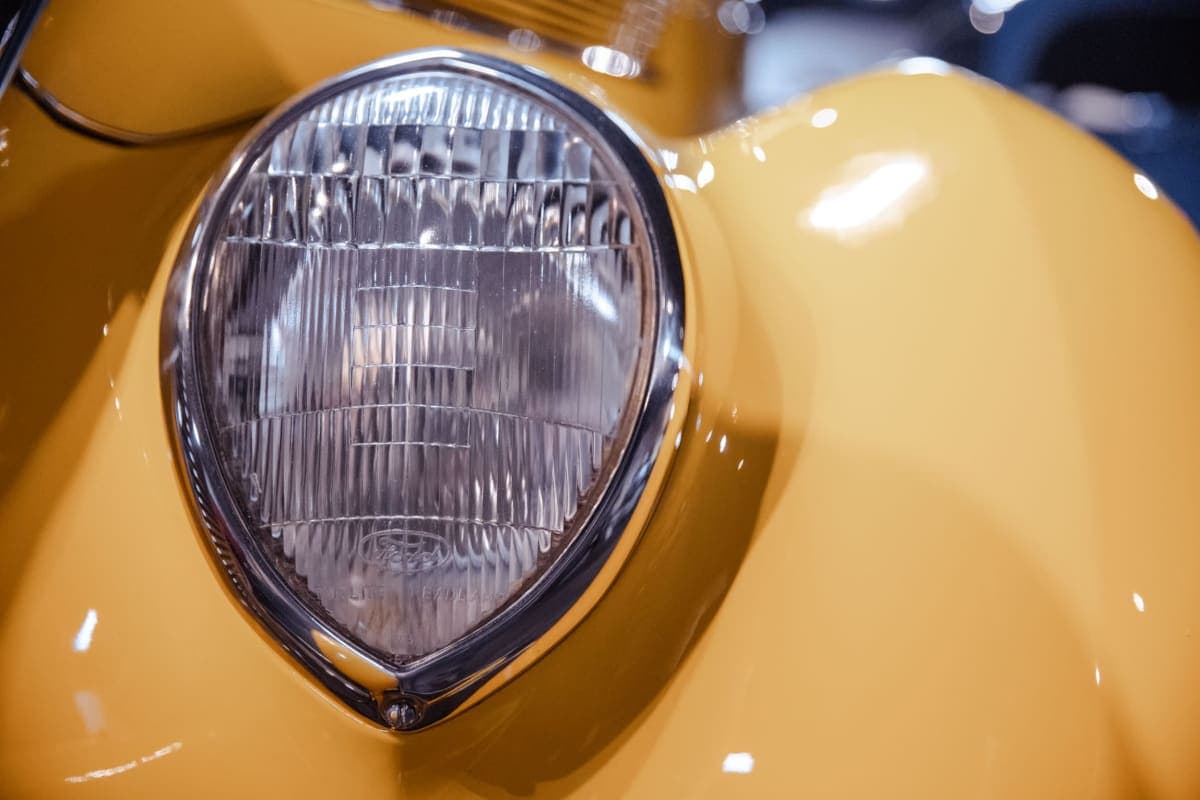
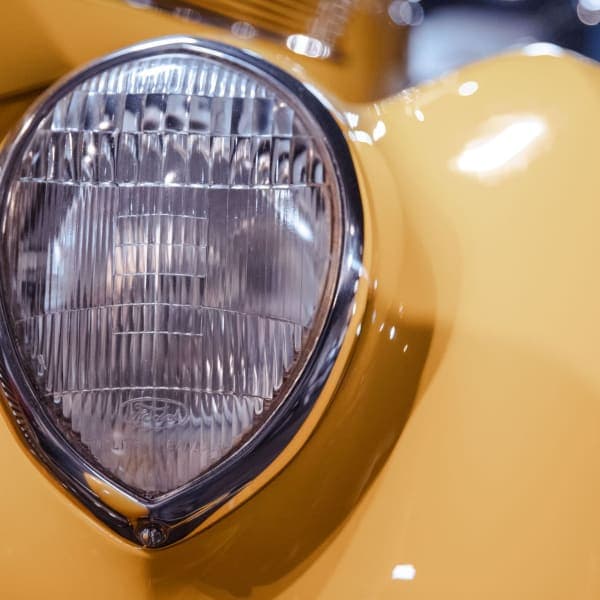
Ford headlamp, in yellow
FORD LIFE-GUARD HEADLAMP cast into the lens, a teardrop chromed bezel, the surrounding fender painted goldenrod. Detroit caught up to art-deco around 1939.
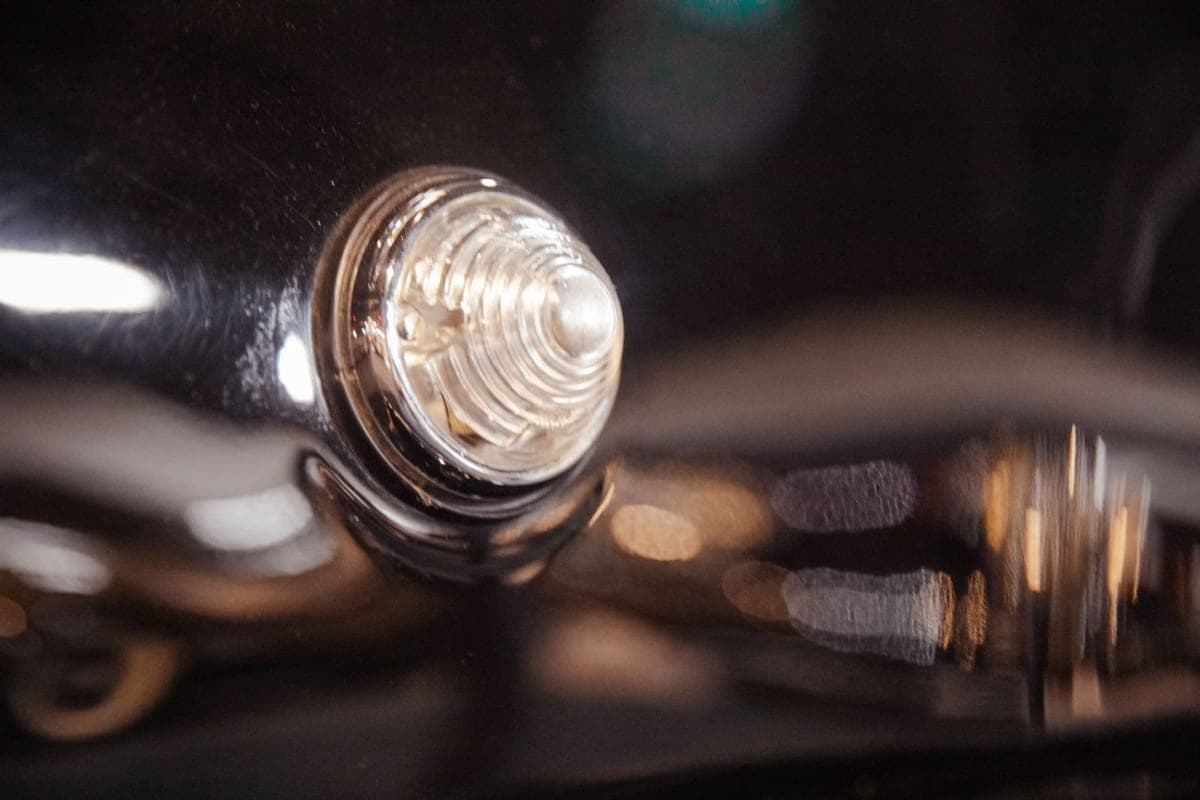
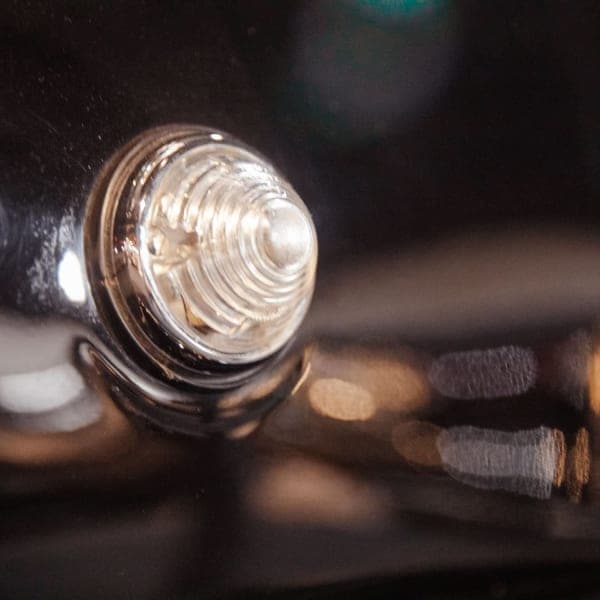
Cut-glass marker lamp
A clear-domed marker light pressed into a chromed bezel — a parking lamp from the 1930s, the kind you turned on by hand.
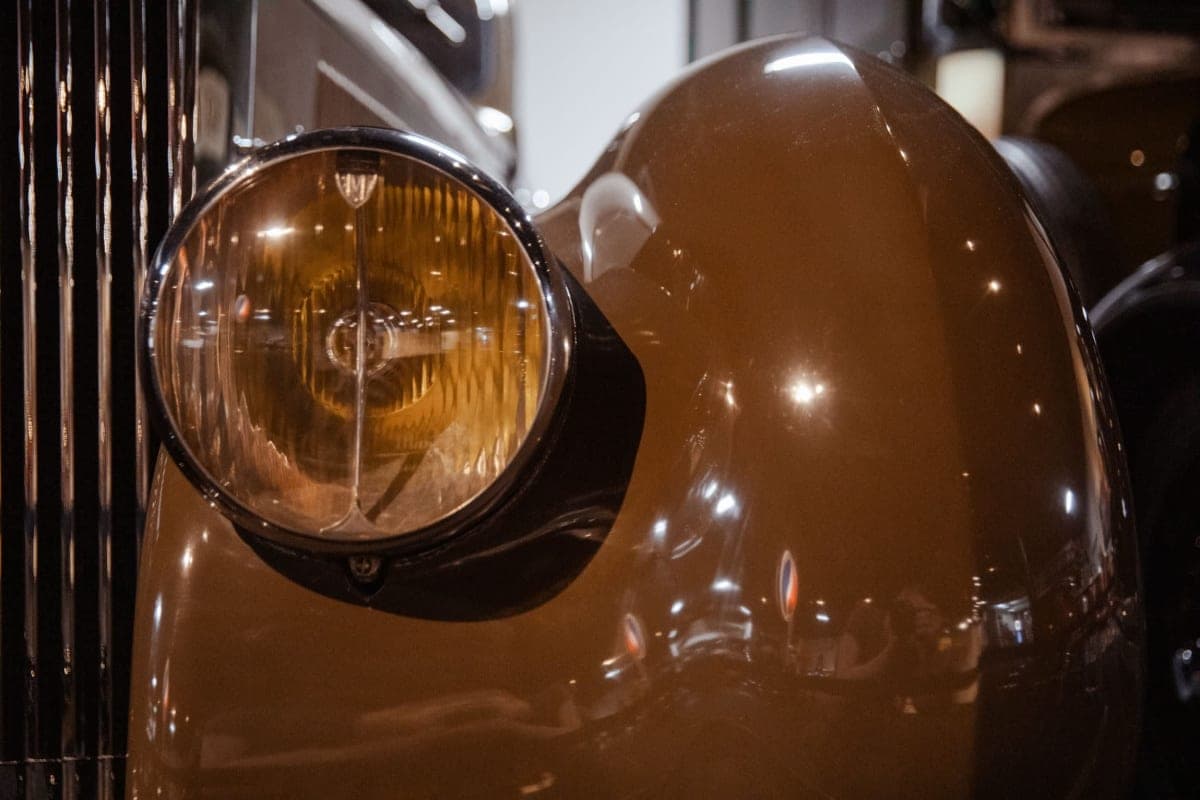
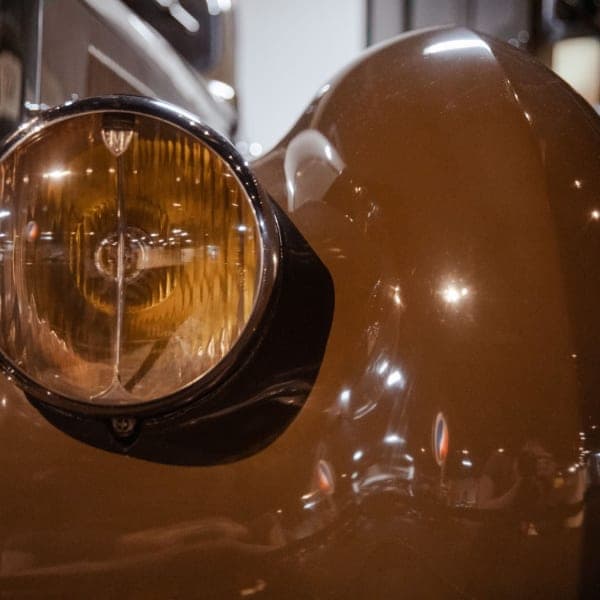
Amber teardrop on chocolate
A clear-domed driving lamp set into a brown fender — almond above polished chocolate, glass on lacquer.

Rolls-Royce Phantom — twin lamps, vertical bars
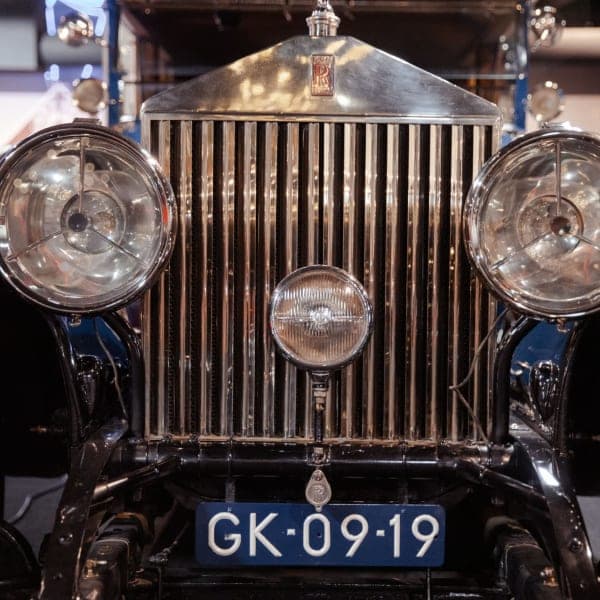
Phantom-era Rolls-Royce framed by twin headlamps and the temple-pillar grille — GK·09·19 on the plate.

Yellow eye on midnight blue
Selective yellow lens — the regulation French headlamp tint, glowing against navy lacquer.
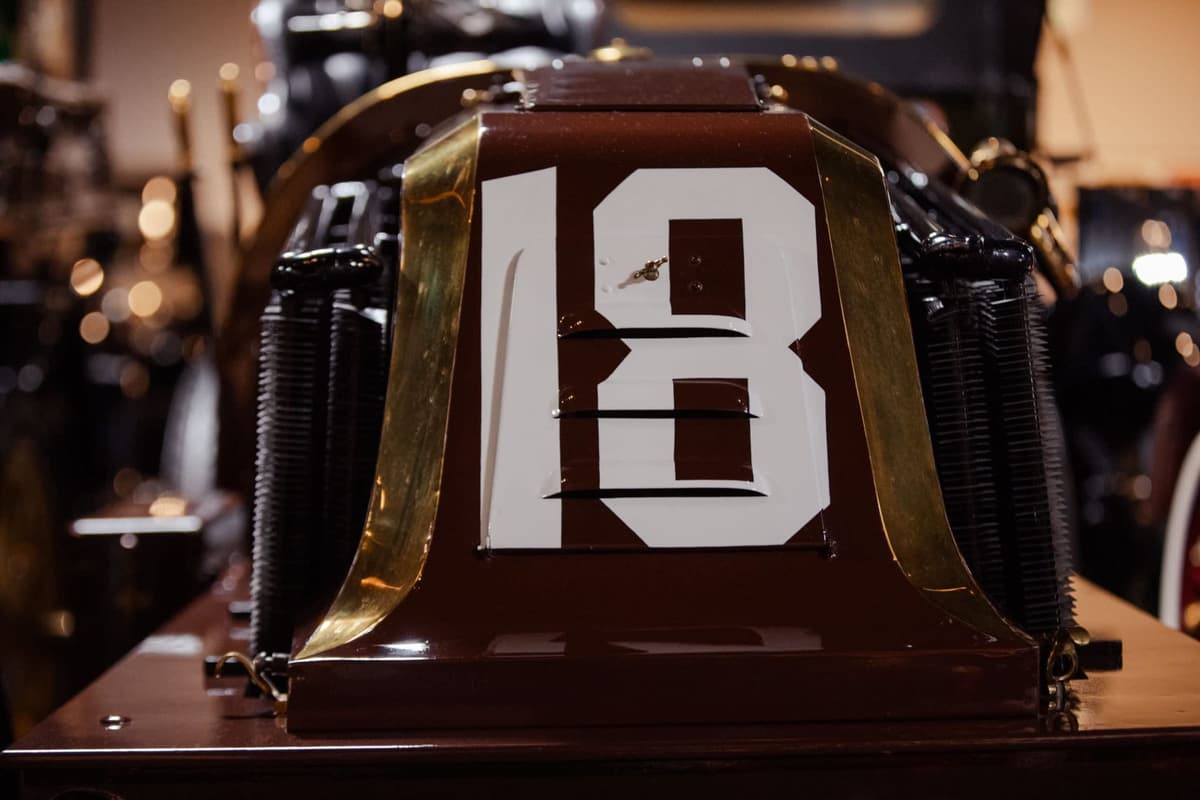
Number 18
“A purpose-built thing, paint laid thick over a hundred years of polish.”
Chapter Two
From the cockpit
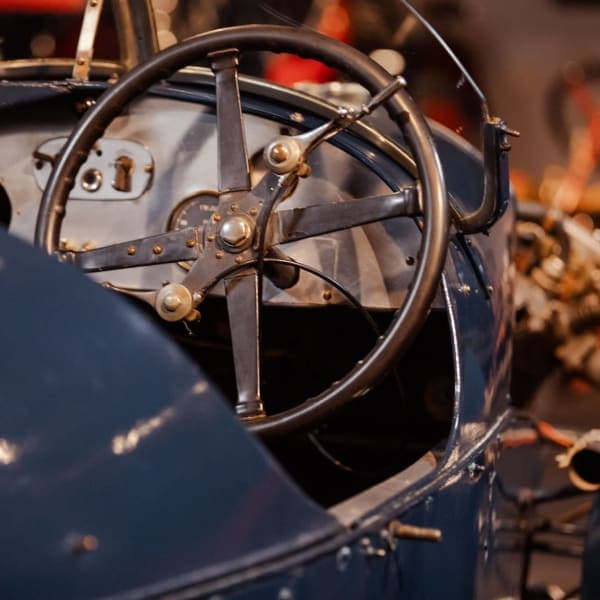
These were cars you talked to with your hands. A spark lever to teach the engine when to fire, a throttle quadrant to tell it how hard, a steering wheel that felt every inch of road through four thin spokes. Driving was a conversation, not a command.
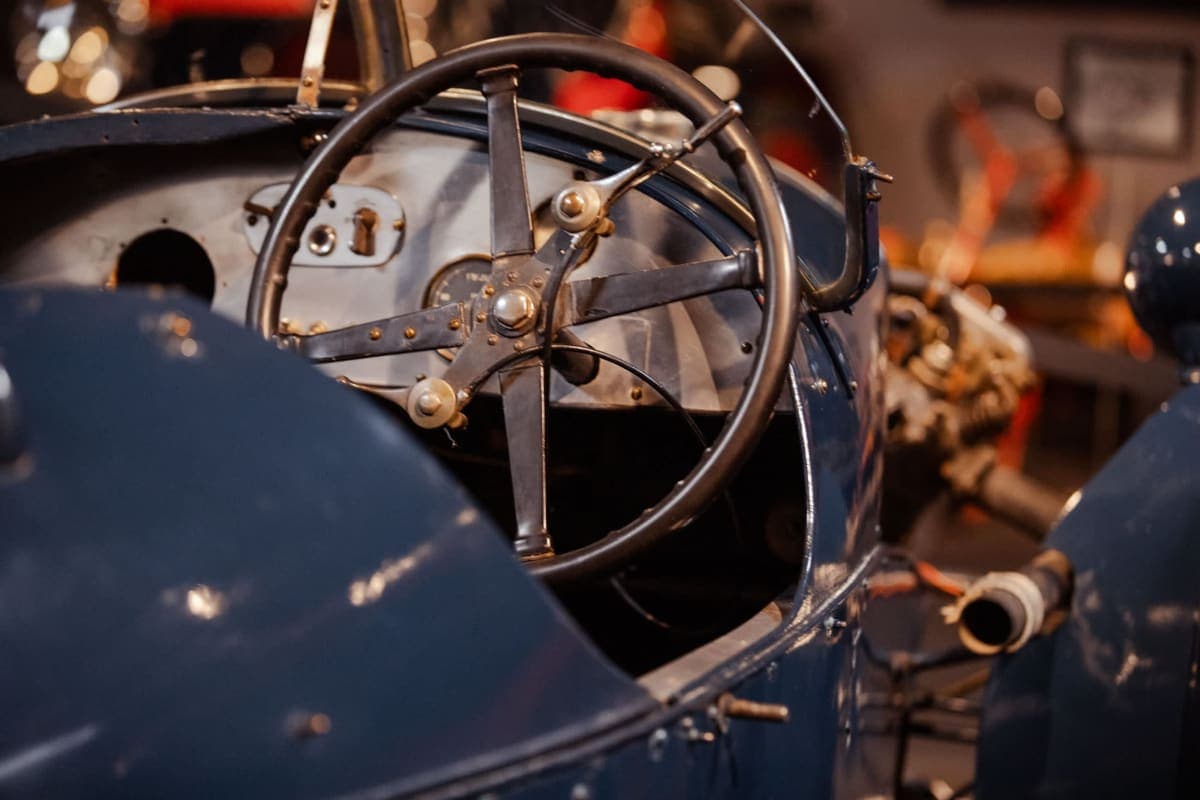
Bugatti steering wheel, blue cockpit
Four spokes, four ivory pucks, one blue body. There's a reason this colour has a name.
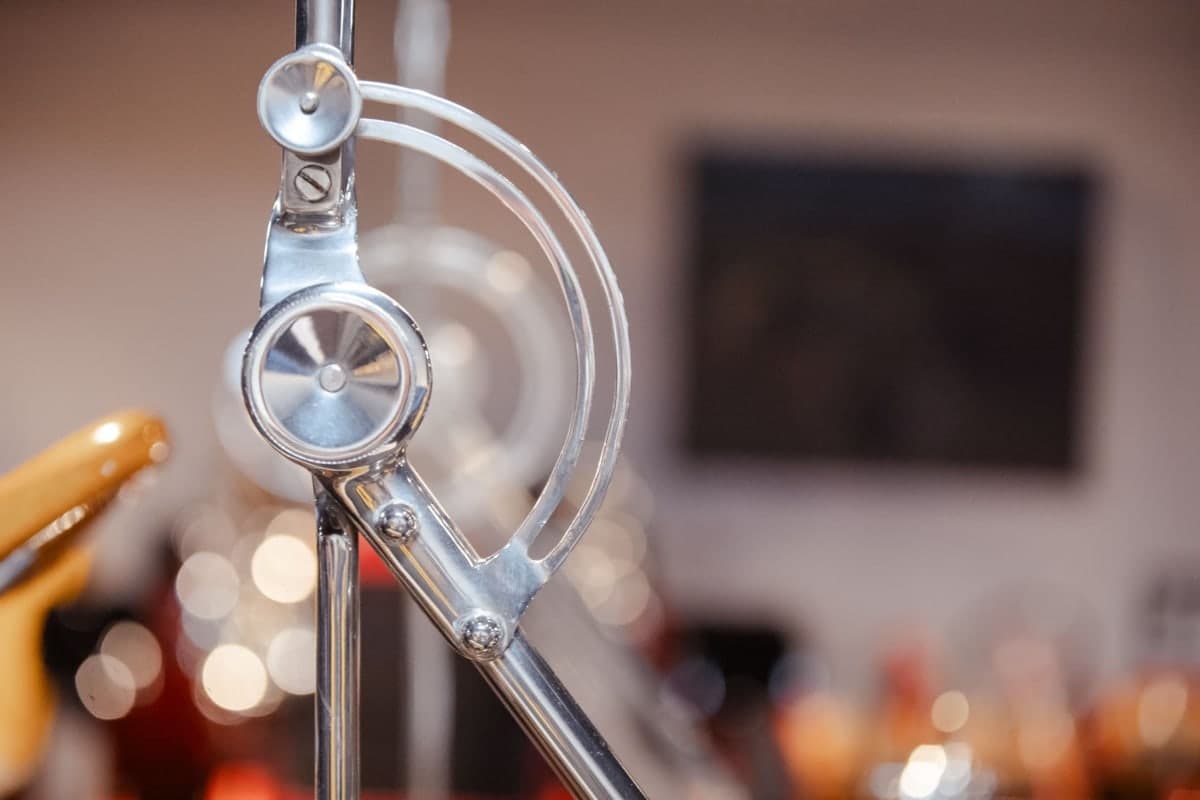
Spark and throttle quadrant
Two levers on the column — one to teach the engine when to fire, the other how hard. Driving as conversation.
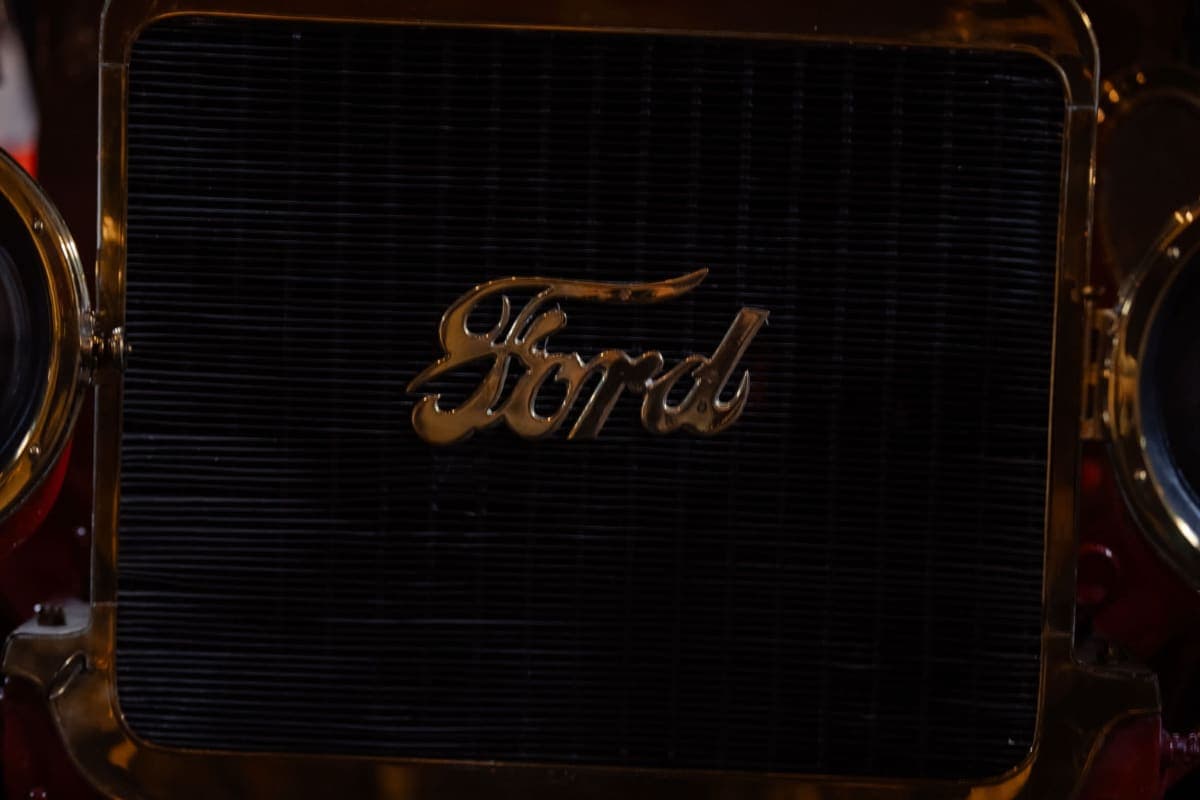
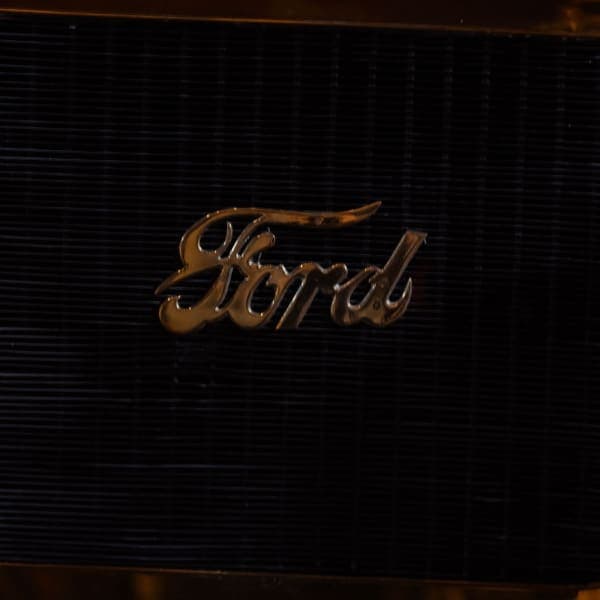
Ford script radiator badge
The shape of an industrial revolution — sized to fit between two brass-rimmed headlights.
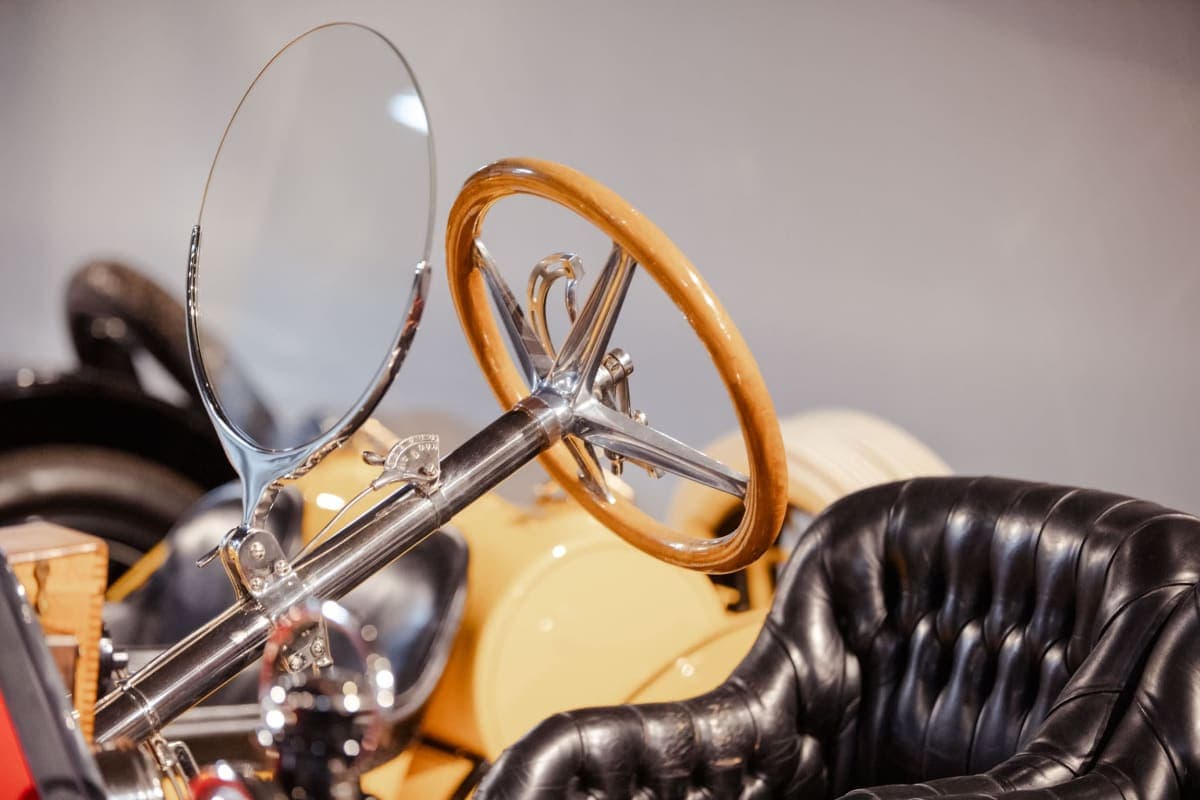
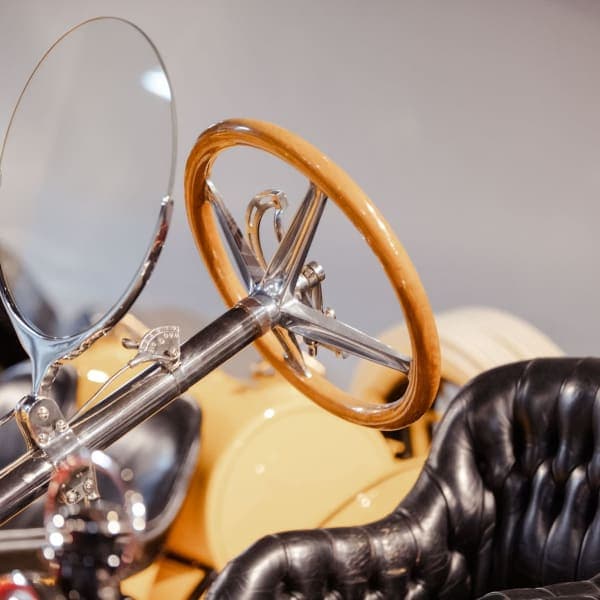
Mercer cockpit — wood wheel & black leather
Two seats, a wooden wheel, a small round window for the wind. There was nothing else, and there needed to be nothing else.
Chapter Three
Around the world in 169 days
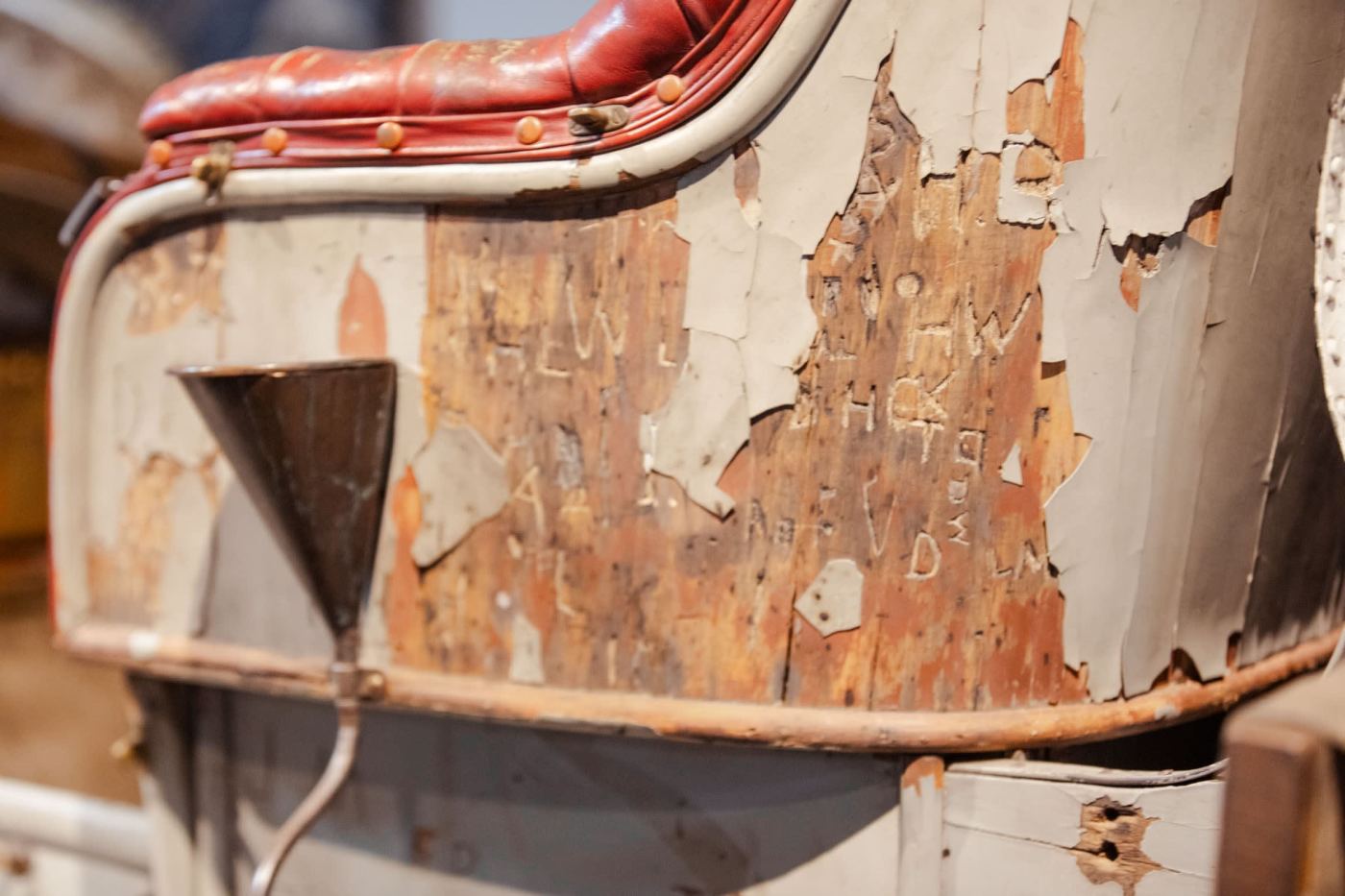
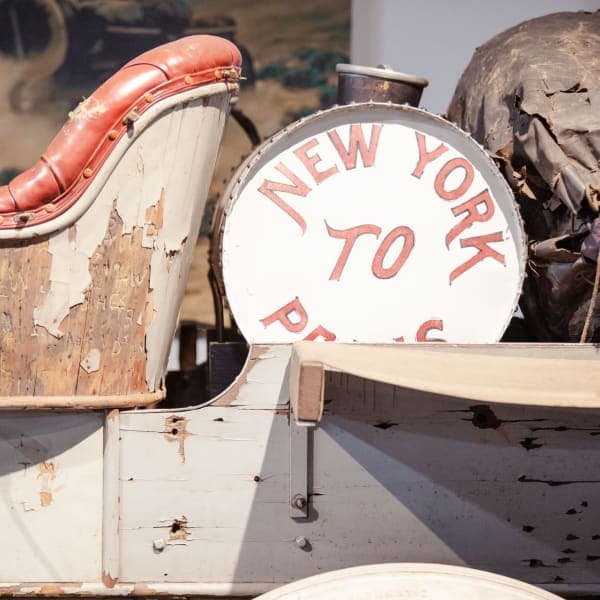
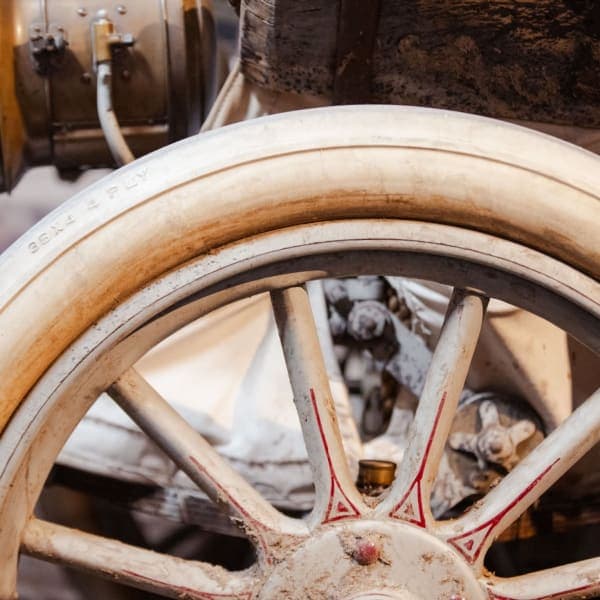
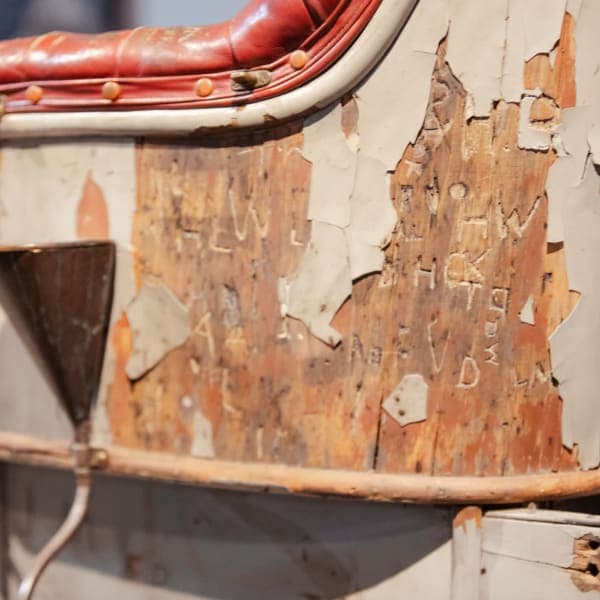
In February 1908 six cars left Times Square bound for Paris, westwards. The route went across America in winter, by ship to Japan, through Siberia in the thaw, and across Europe to the finish. The Thomas Flyer arrived first. The crew slept three to a seat, repaired the chassis with railway tools, and carved their initials into the dash to keep awake. The car has not been restored. You can still read the names.
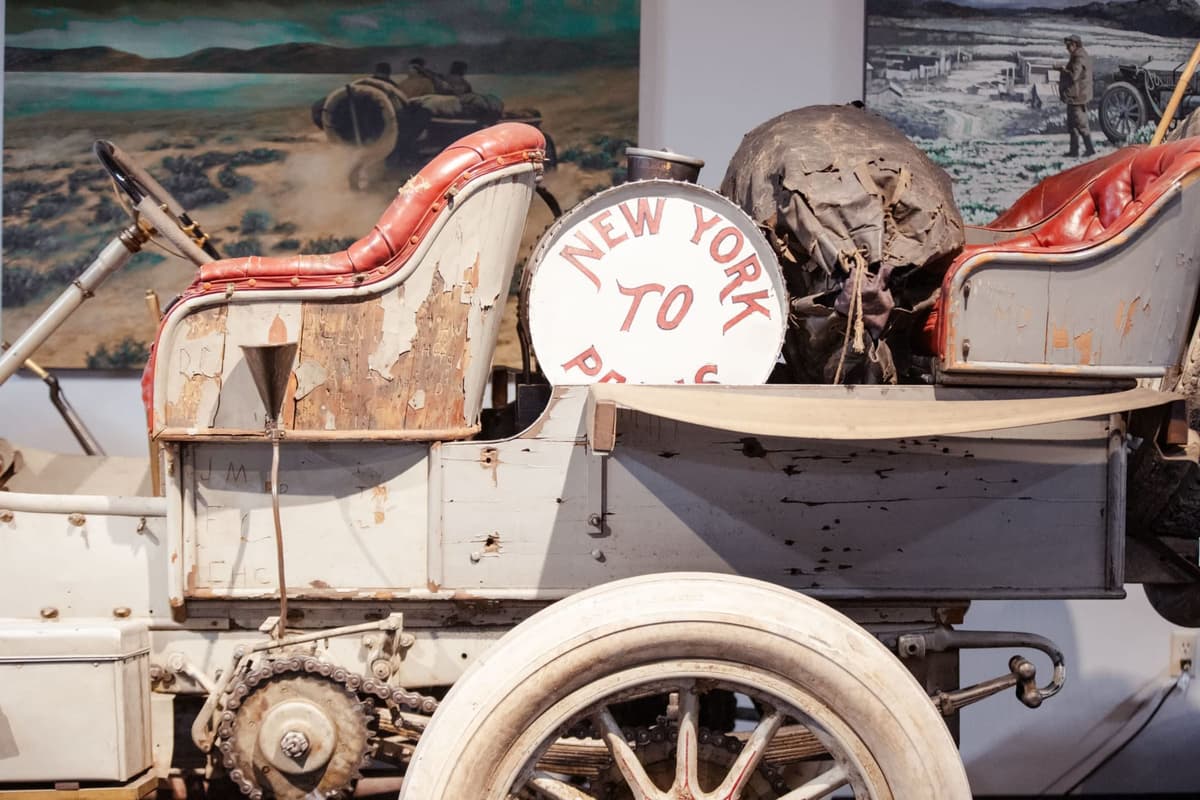
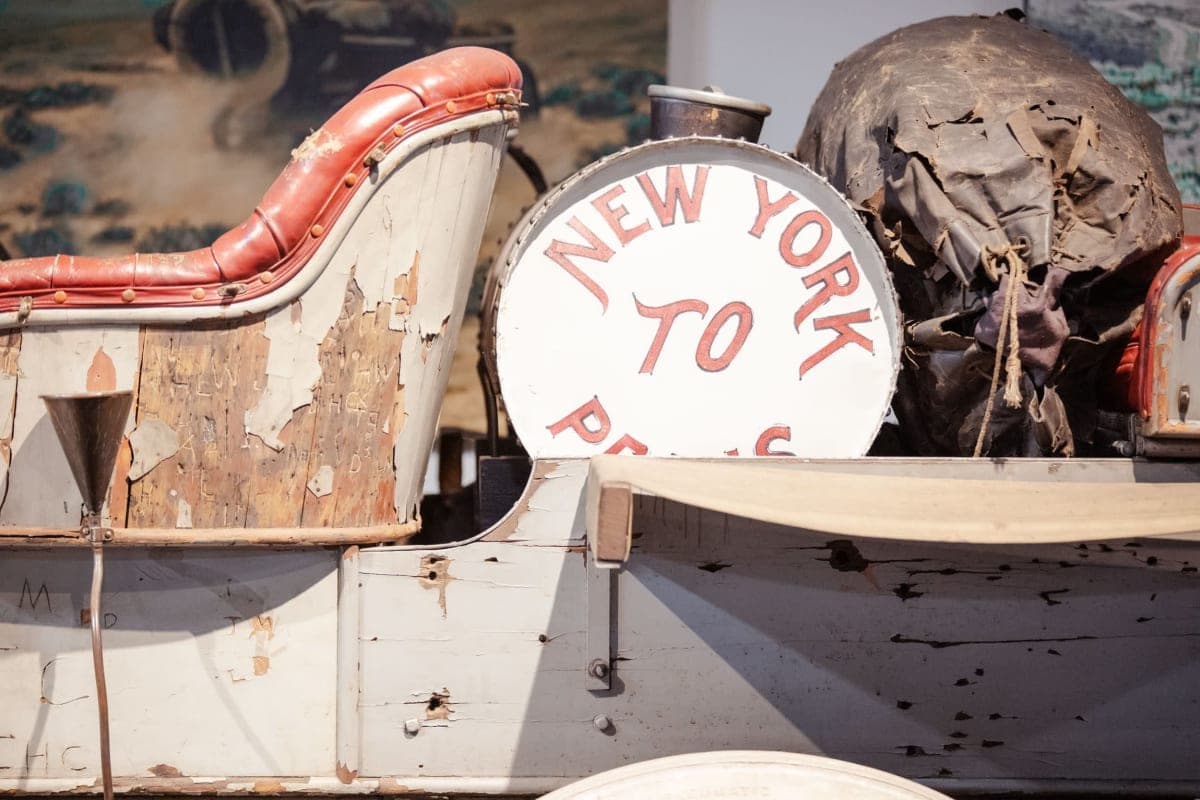
NEW YORK TO PARIS — the sign, intact
Painted by hand in 1908 and never repainted since. The varnish has its own century of weather in it.
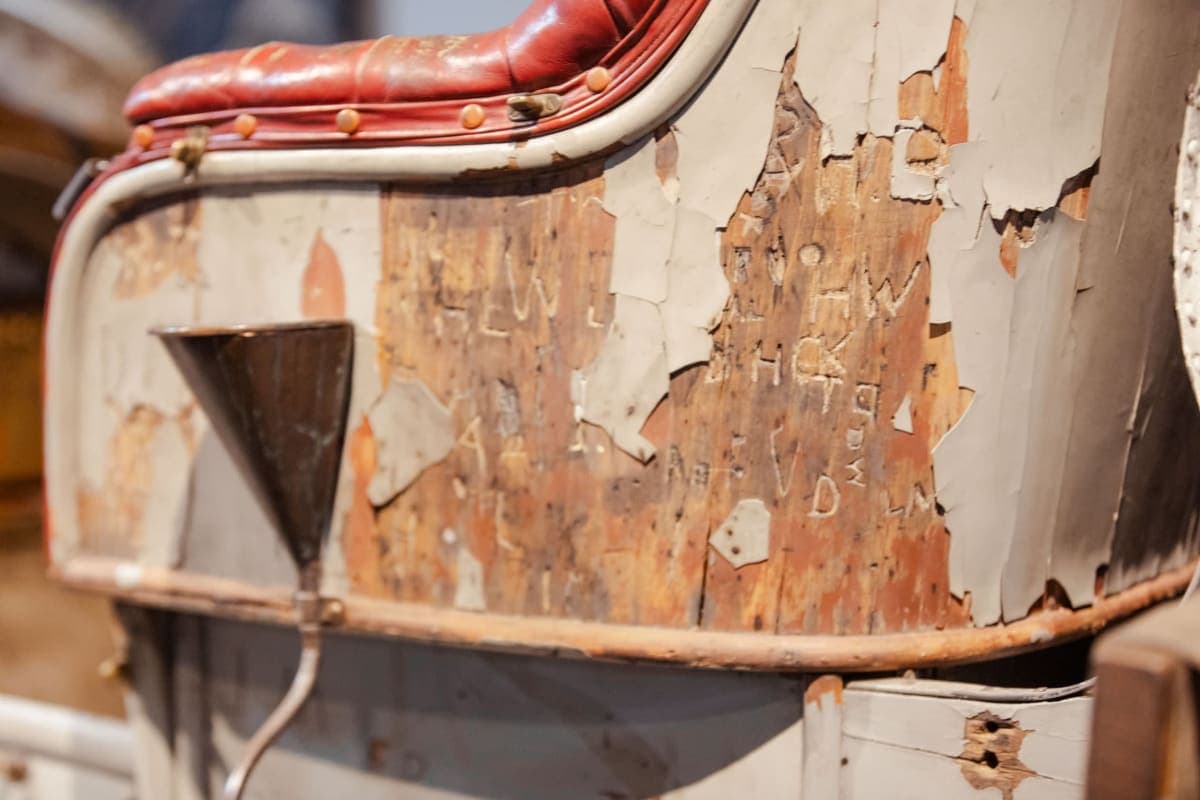
Initials carved by the crew
Schuster, Miller, Hansen and the rest of them. A century of fingernails left their names in the dashboard.
Chapter Four
Quiet luxury
A car was once a country house with an engine. There were wicker hampers, button-leather banquettes, brass speaking-tubes. The driver sat outside in the weather; the passenger sat inside with the door closed. These details have not entirely gone away.
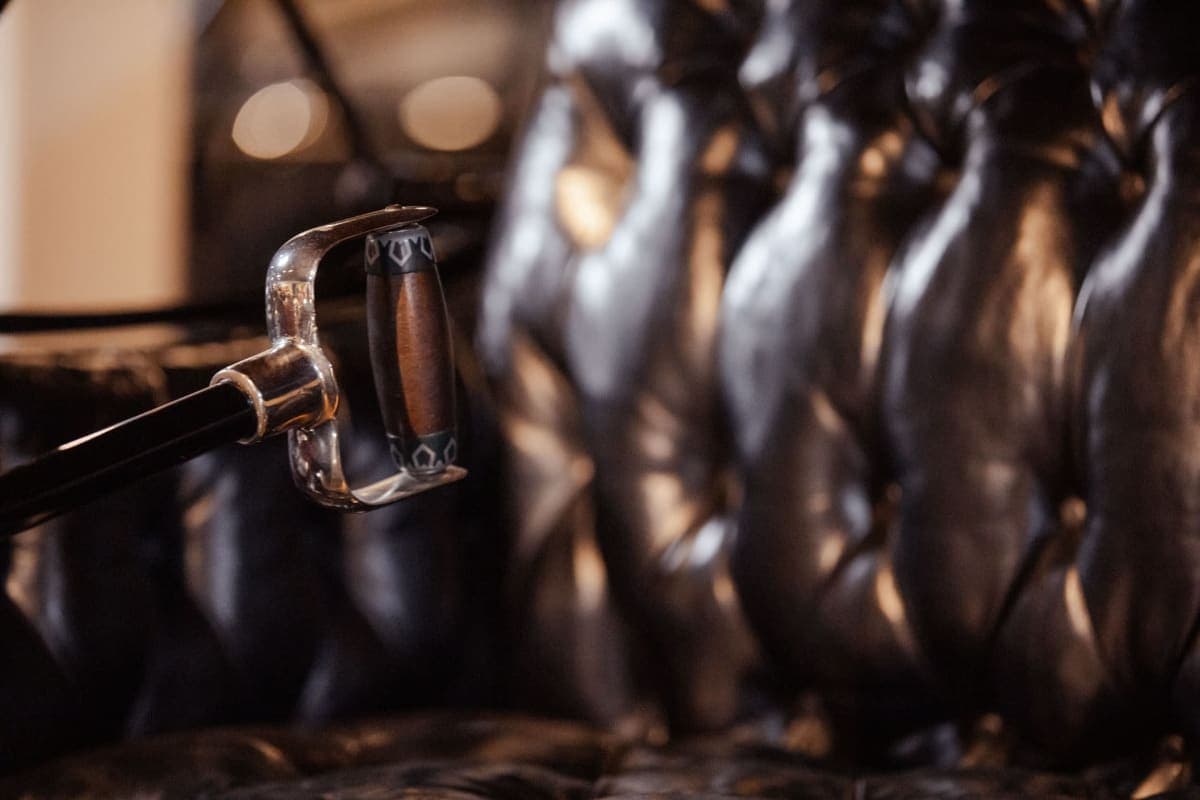
Door pull, hand-turned
A brass hook and a smooth wooden grip — the entire latch mechanism for a coachbuilt town car.
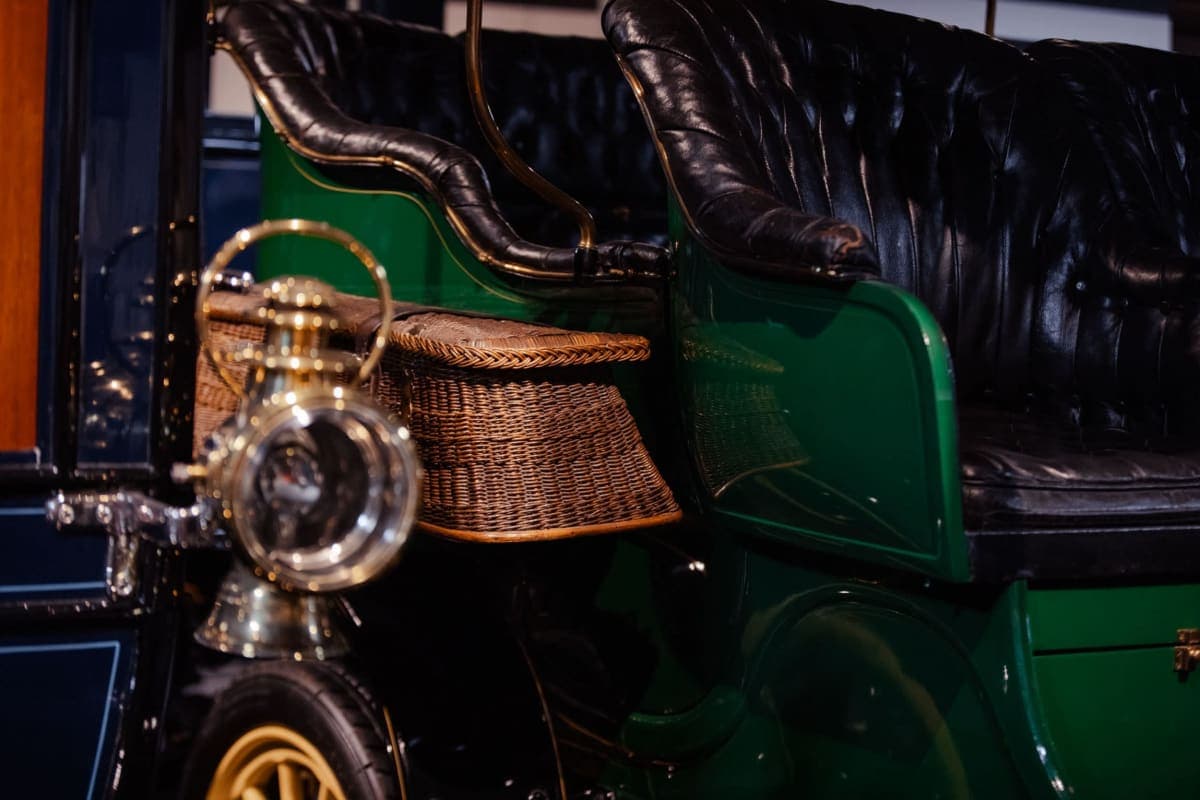
Wicker hamper, button leather
A picnic basket sat where the running board met the body. A car could be a country house with a destination.
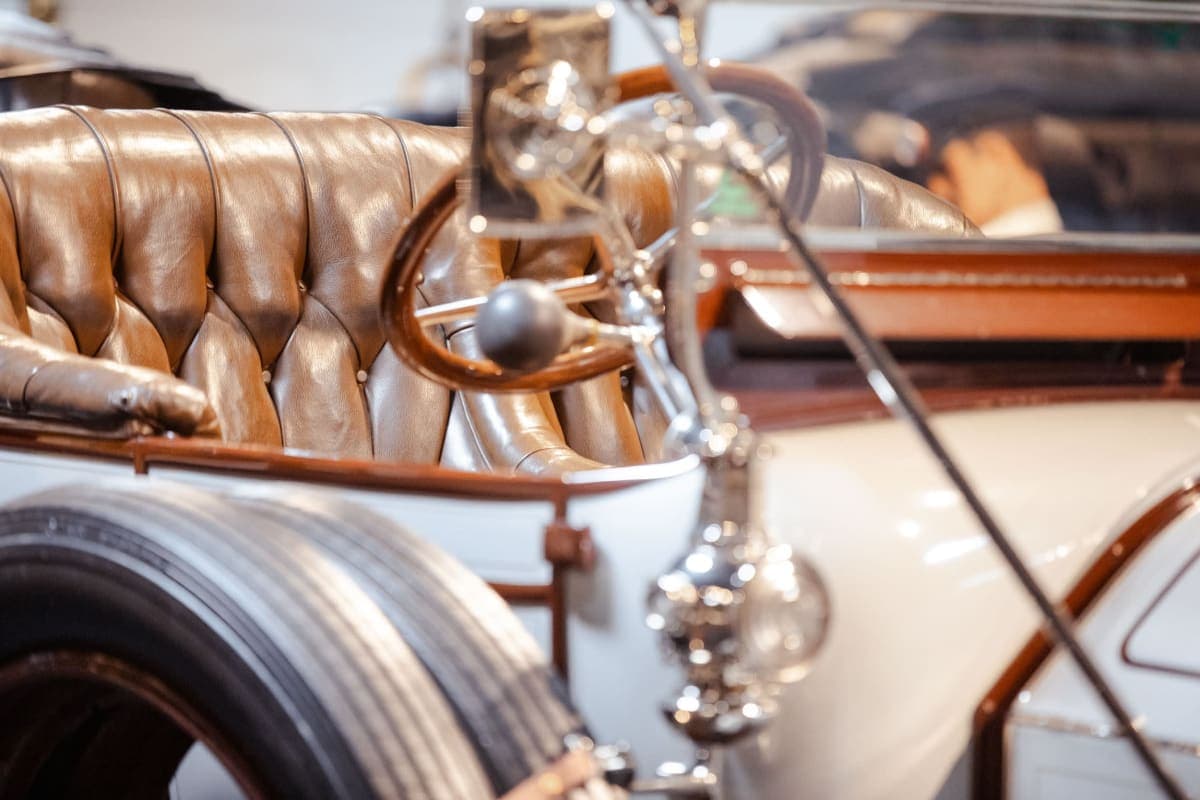
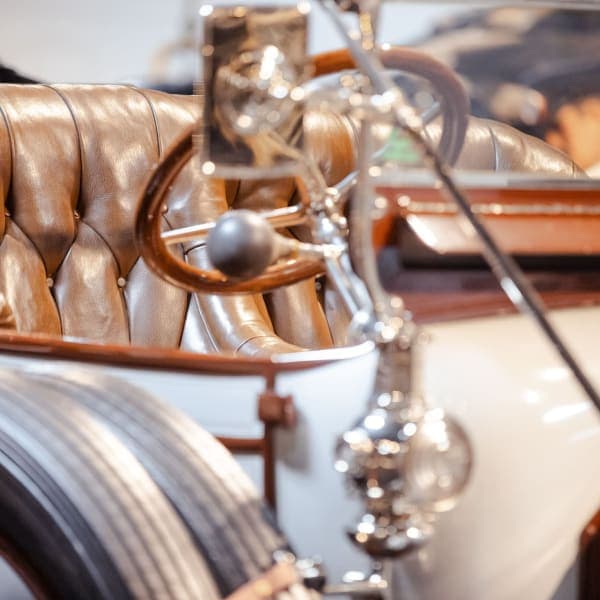
Cognac tufted interior, 1920s touring
Wood capping, rolled leather, a chrome stem — the language a closed car spoke to its driver.
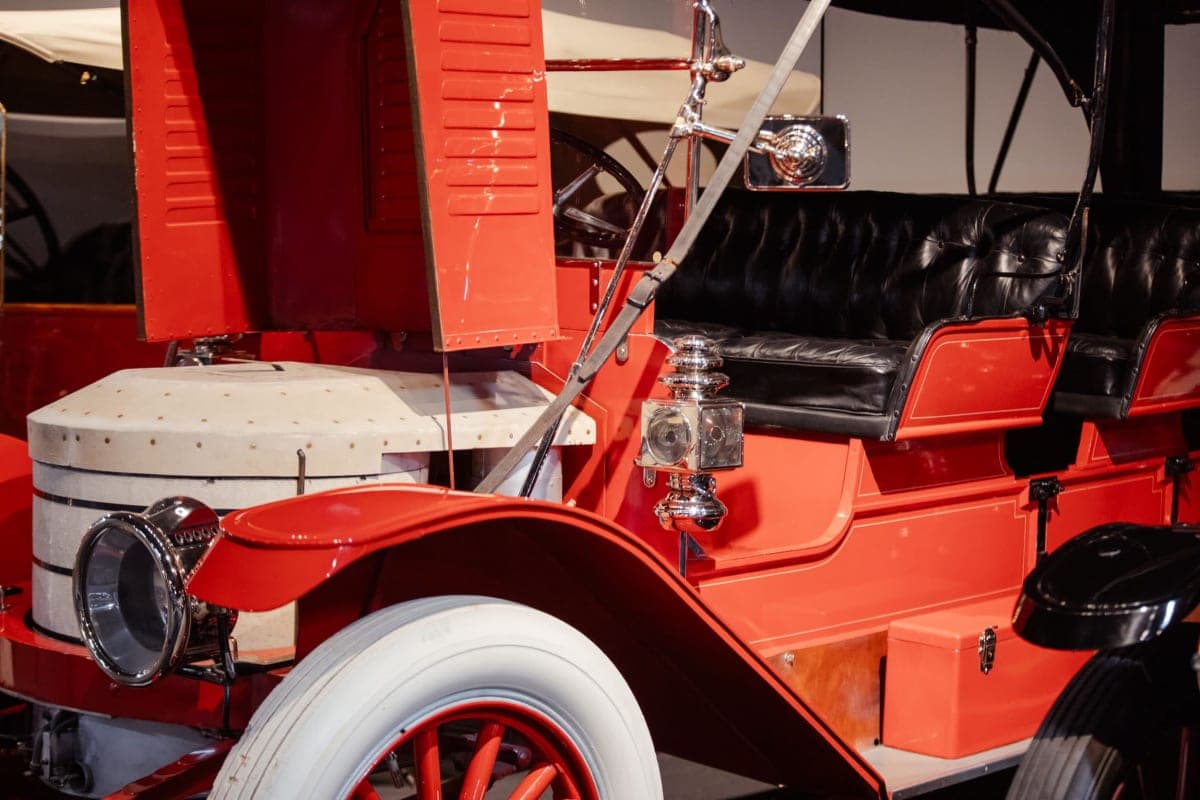
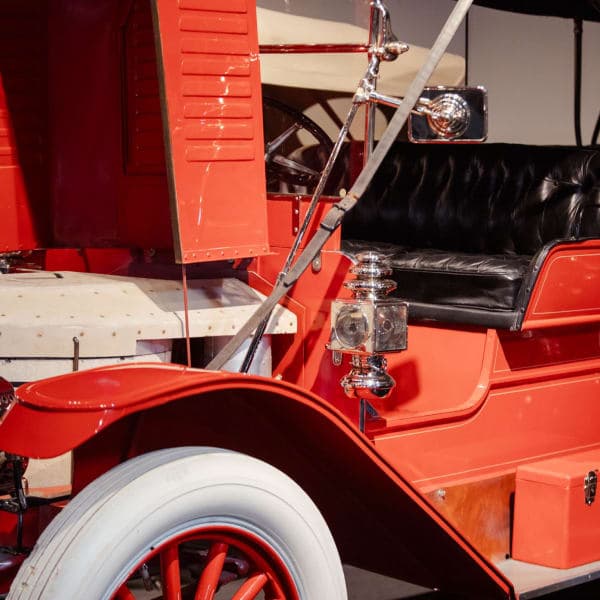
Red touring car, white-wall and brass
Louvered hood, white tyre, button-tufted bench. A weekend assembled in steel.
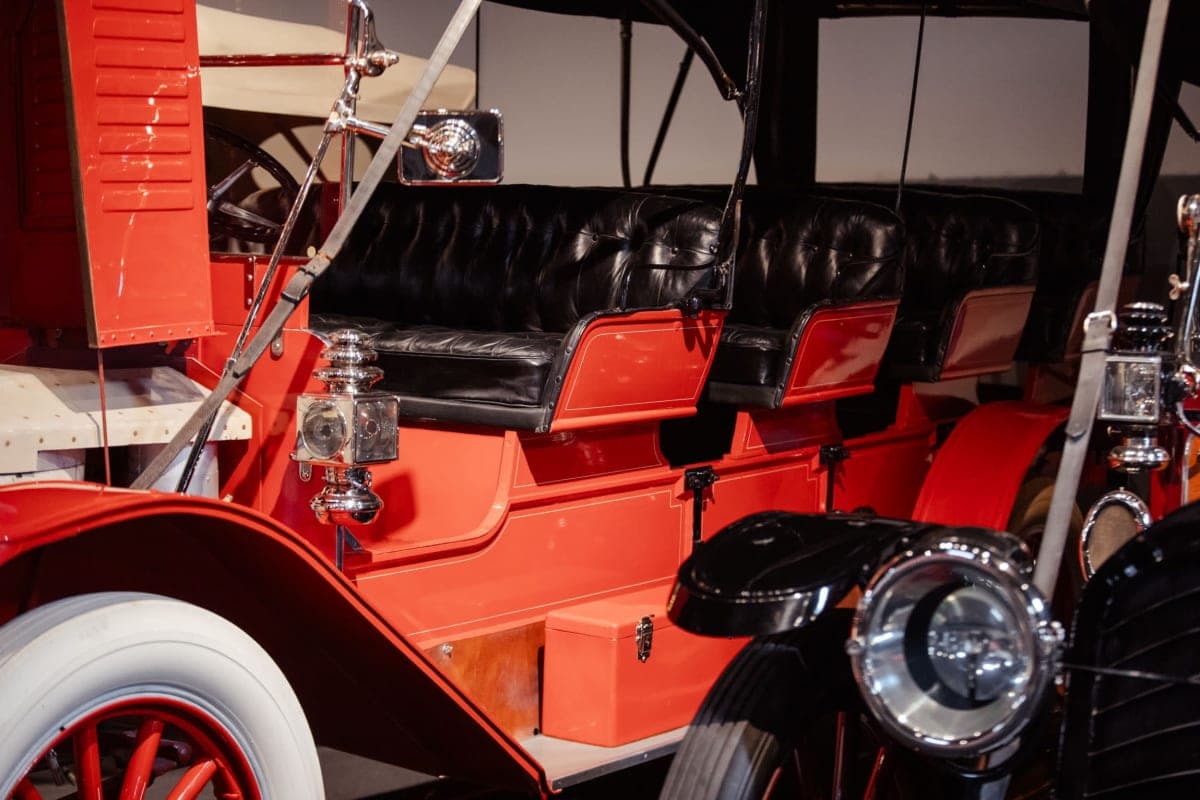
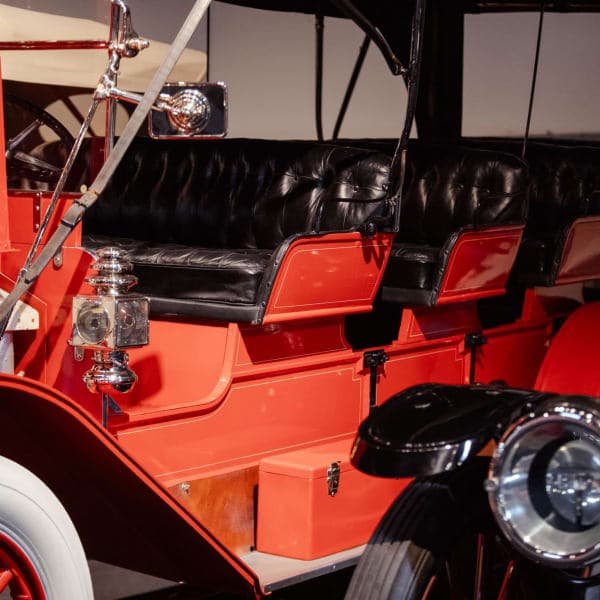
Three across the back
Tufted leather bench, varnished wood capping — Sunday afternoon transport for the entire household.
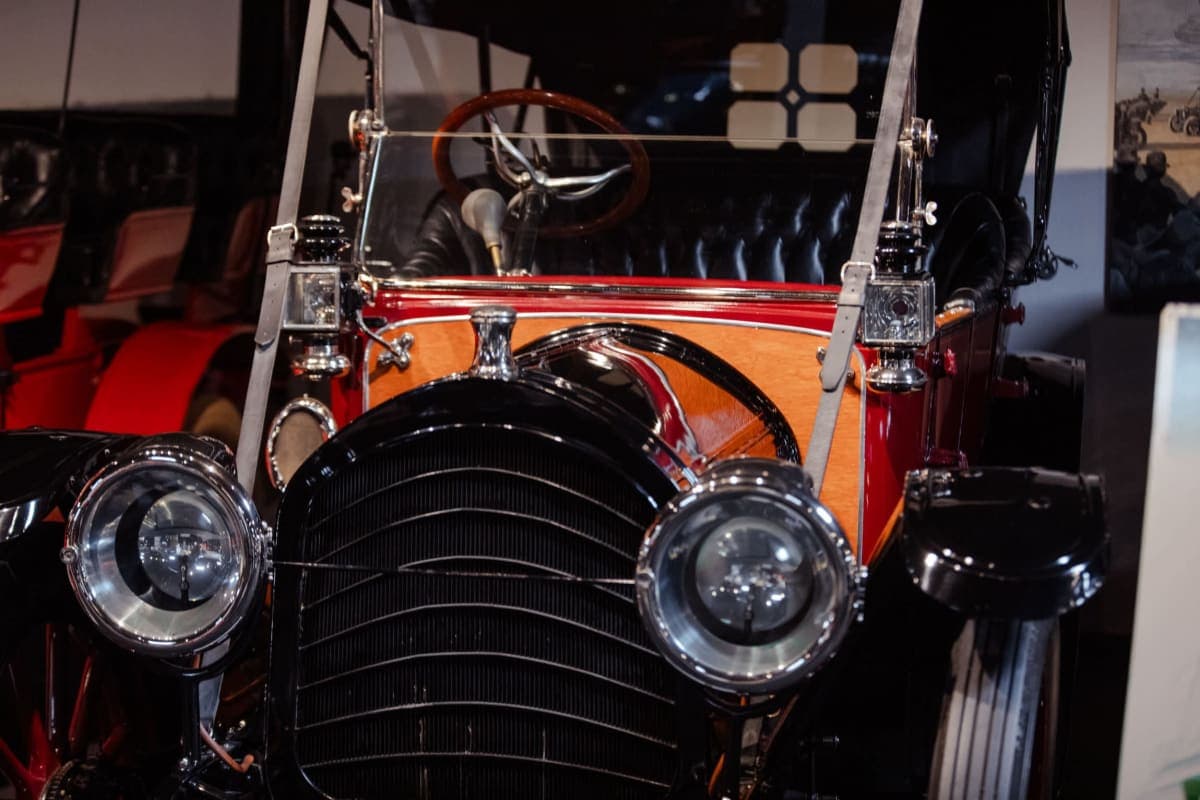
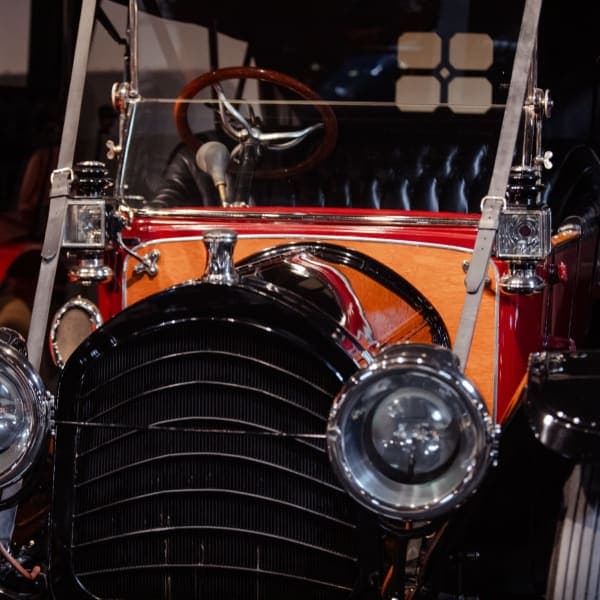
Veteran cabin, brass-rimmed lights
Folding glass windscreen, varnished dash, a single dome lamp. Driving as a kind of indoor weather.
Chapter Five
Sixteen marques, sixteen handwritings
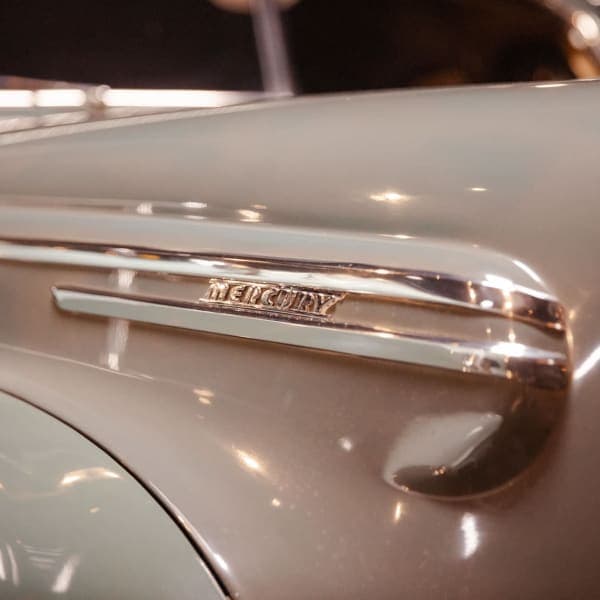
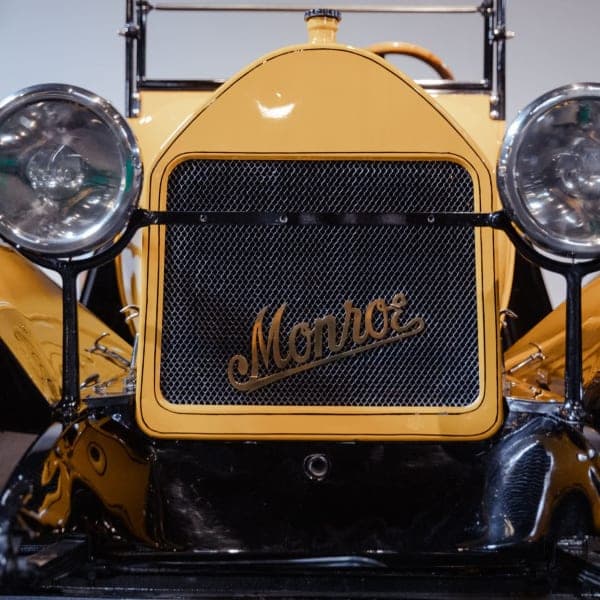
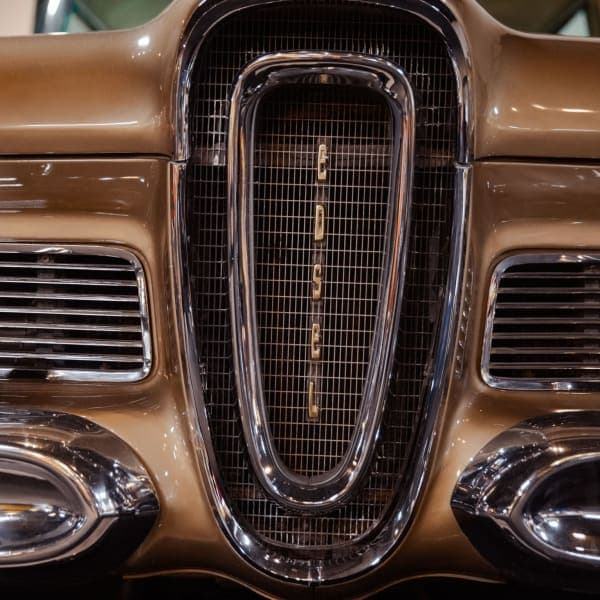
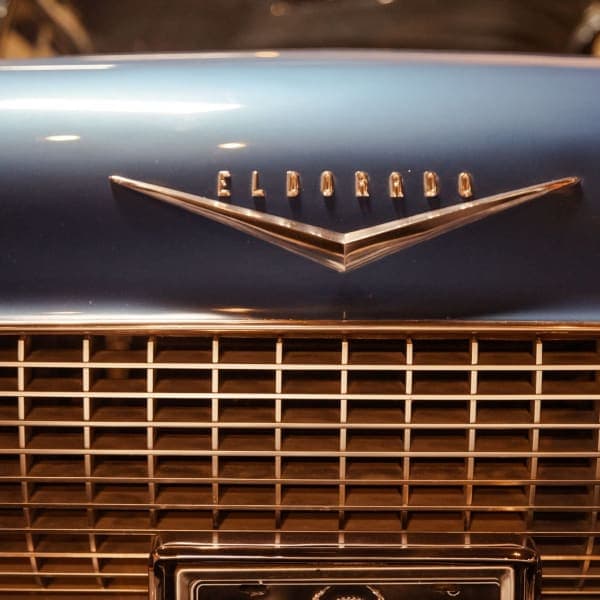
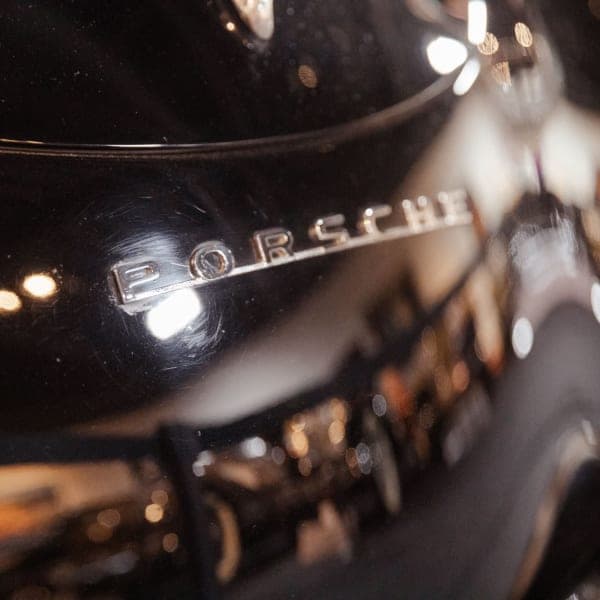
Mercer of Trenton built America's first true sports car. Bugatti of Molsheim treated an engine bay as a place for jewellery. Brooks, Mercury and Monroe each took a turn at putting a single chromed word on the front of a car and meaning it. Cole of Indianapolis put a V8 into production six years before Cadillac. Alvis of Coventry, Jaguar of Browns Lane. Plymouth of Detroit, written twice. Land Rover of Solihull, painted Bronze Green. Rolls-Royce of Crewe, with a temple for a grille. Edsel, the most expensive failure of 1958. Cadillac Eldorado, the cheapest victory of 1957. Porsche, written in fine chromed letters along the fender of a black coupé. Sixteen badges, photographed close enough to read.
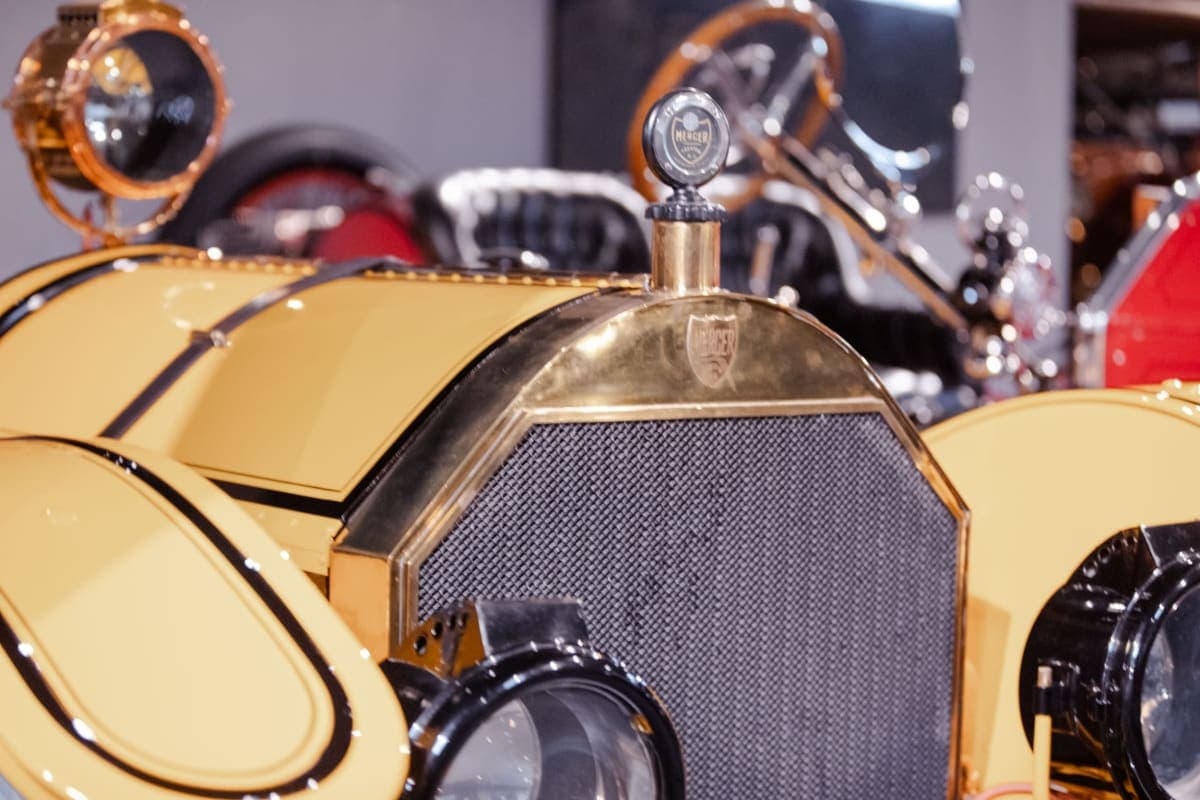
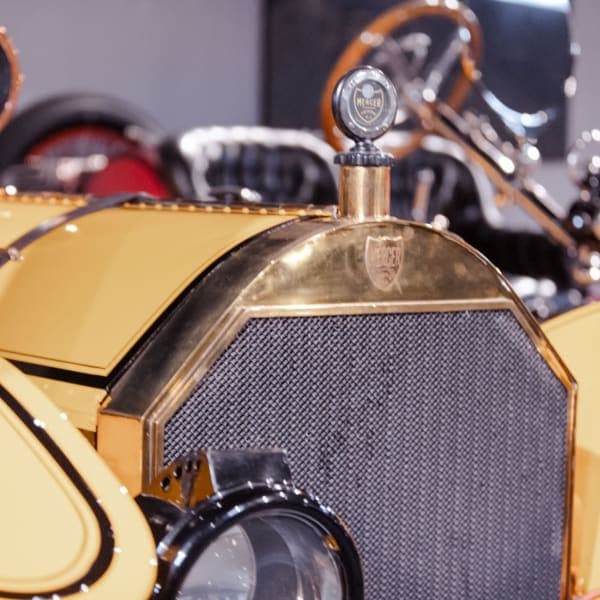
Mercer Raceabout, brass radiator
Yellow paint, monocle windshield, the Mercer shield centred on a brass header tank. The original American sports car.
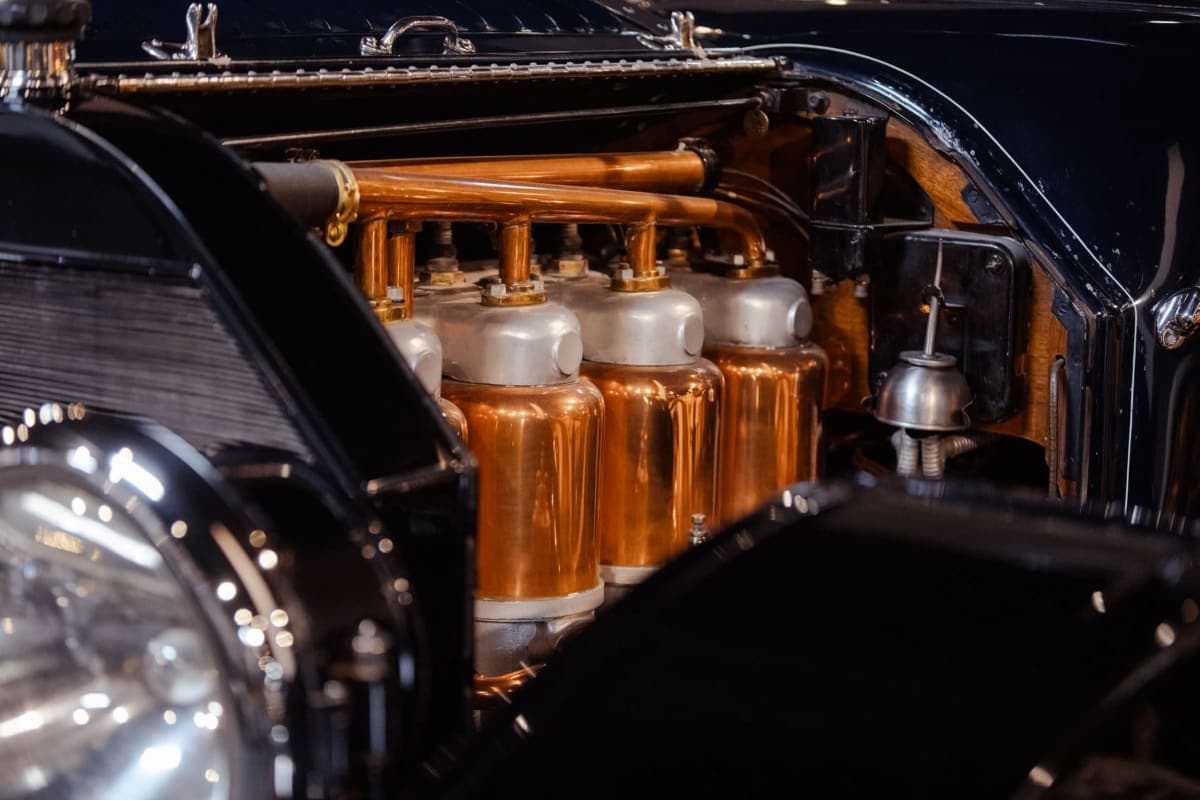
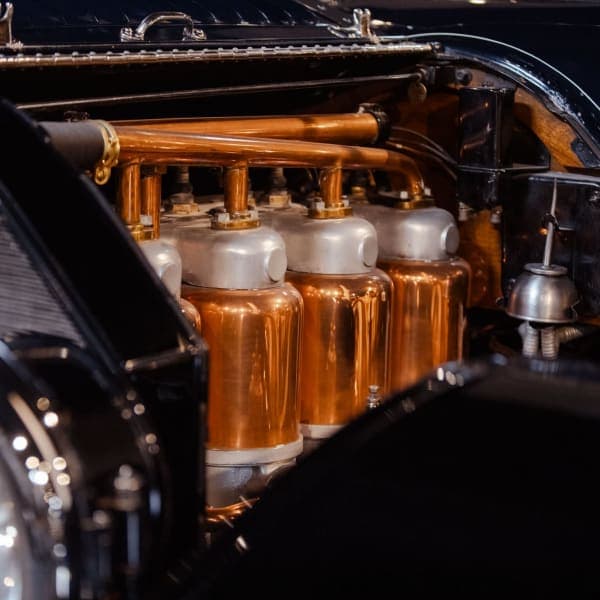
Bugatti, copper plumbing
Hand-spun copper bells crown each cylinder. Ettore considered the engine bay a place for jewellery.
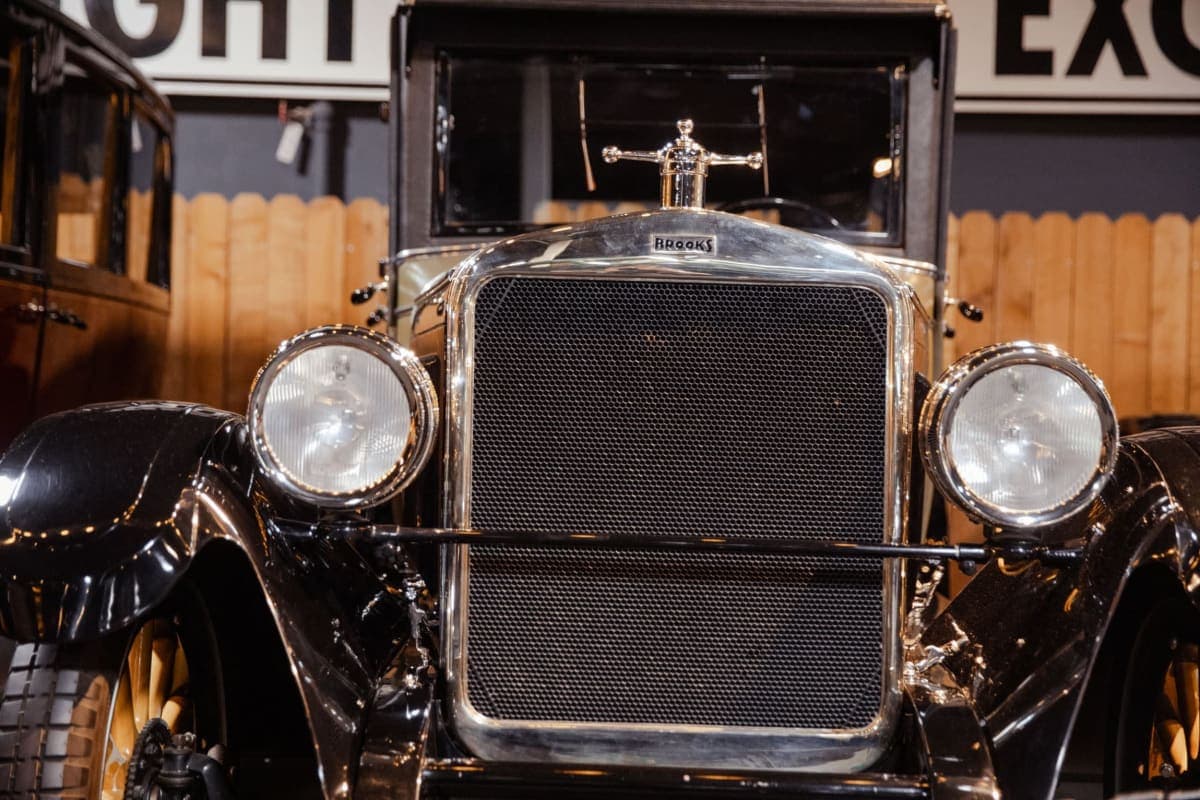
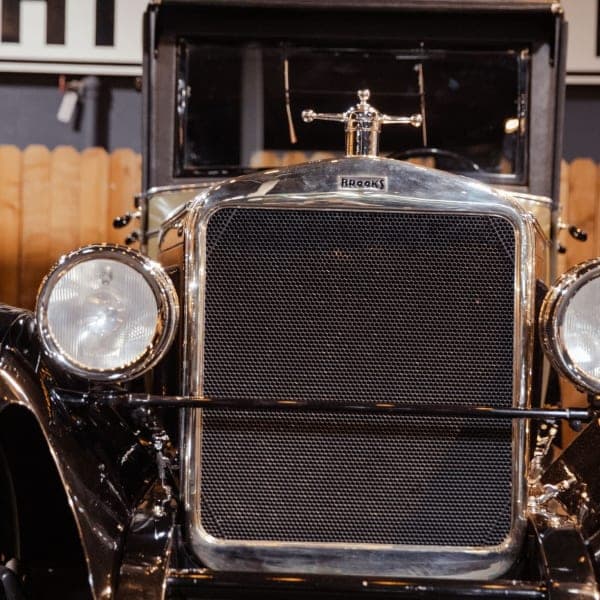
Brooks sedan, twin headlamps
A chromed grille, a centred badge, two large round eyes. The face of an automobile finding its features.
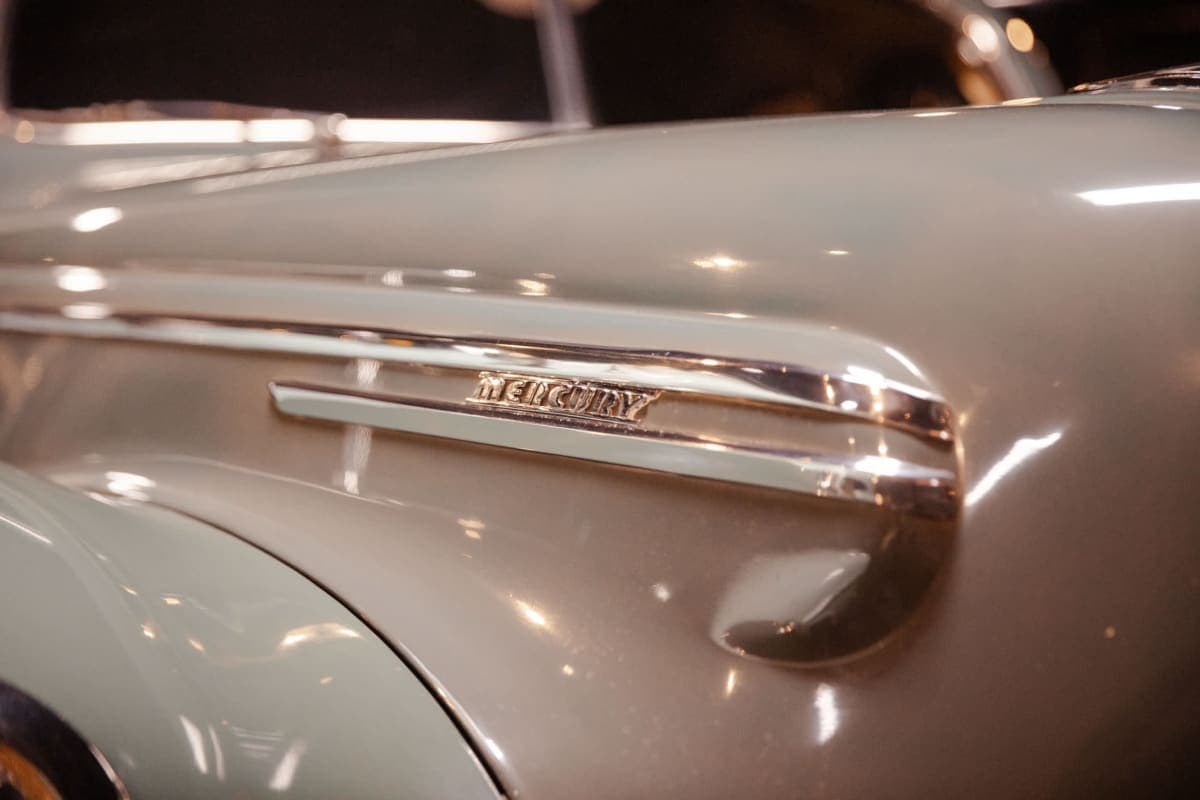
Mercury, in script
Sage-green coachwork and a single chromed word. Detroit found its handwriting in the late 1940s.
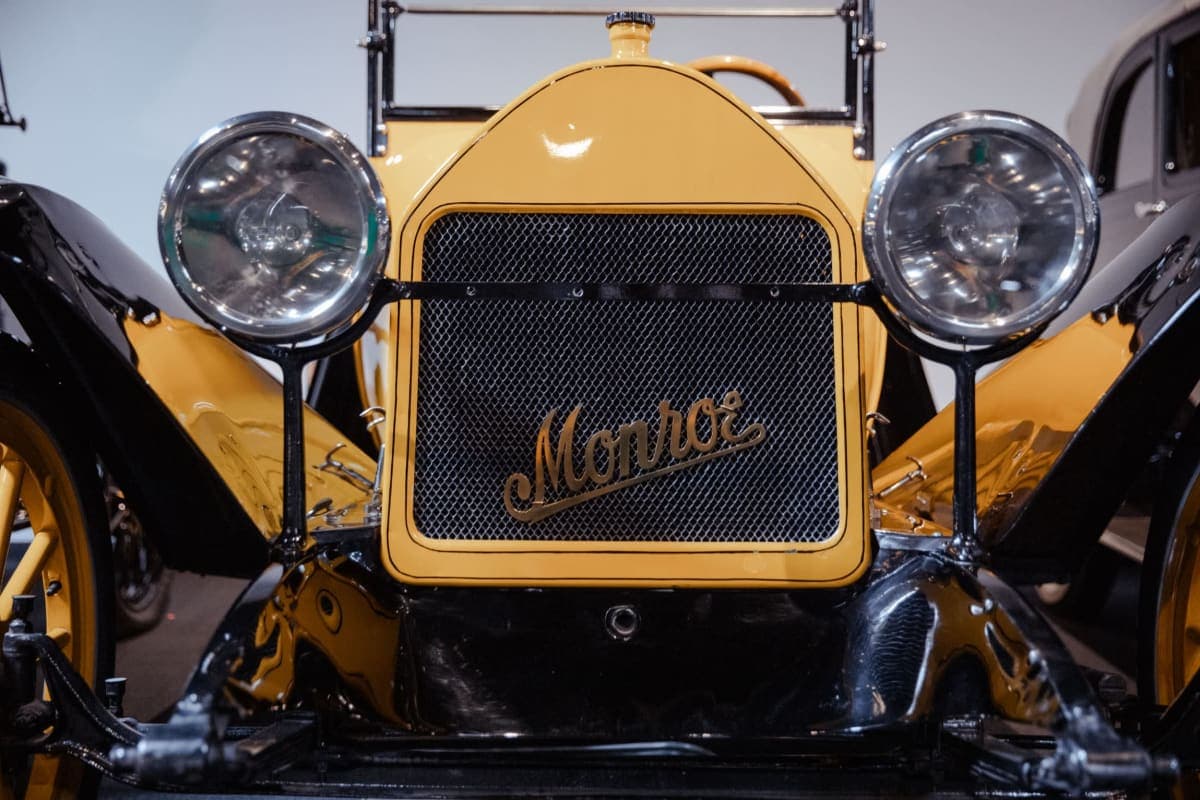
Monroe roadster, brass script
The Monroe took an Indy 500 win in 1920 with Gaston Chevrolet at the wheel. A small marque with a long shadow.
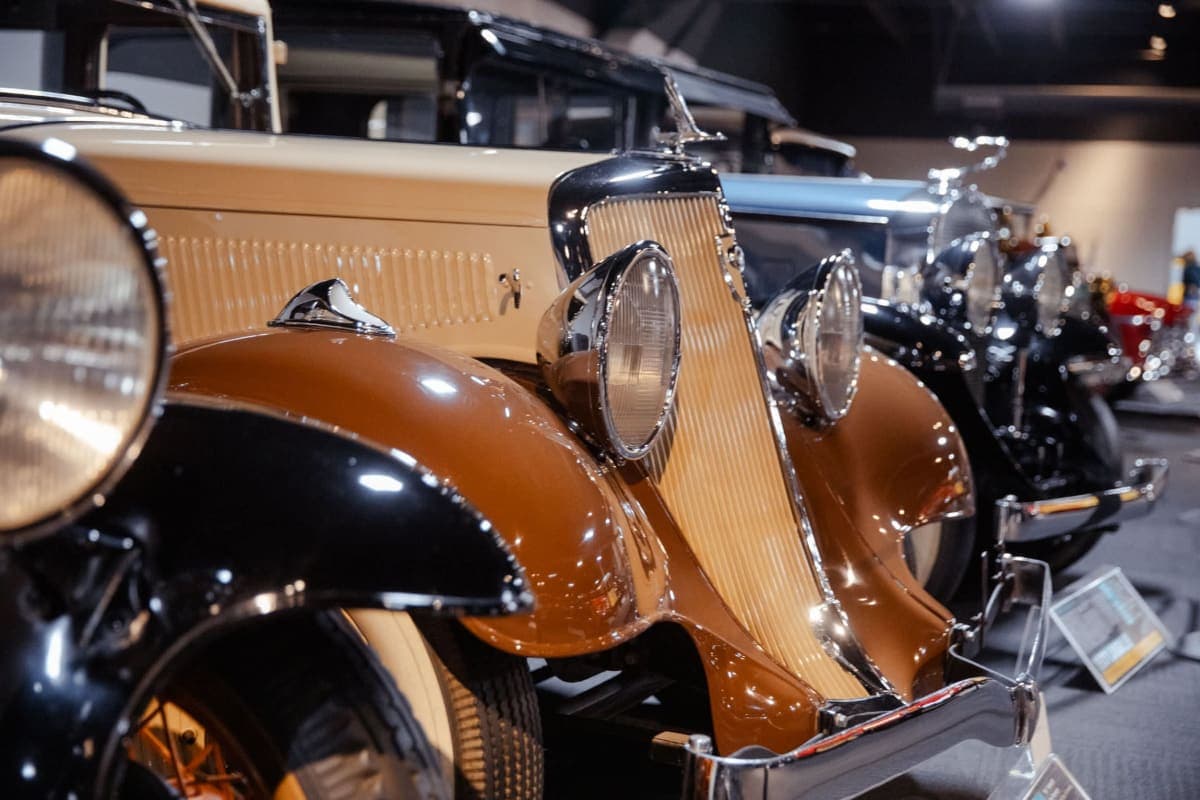
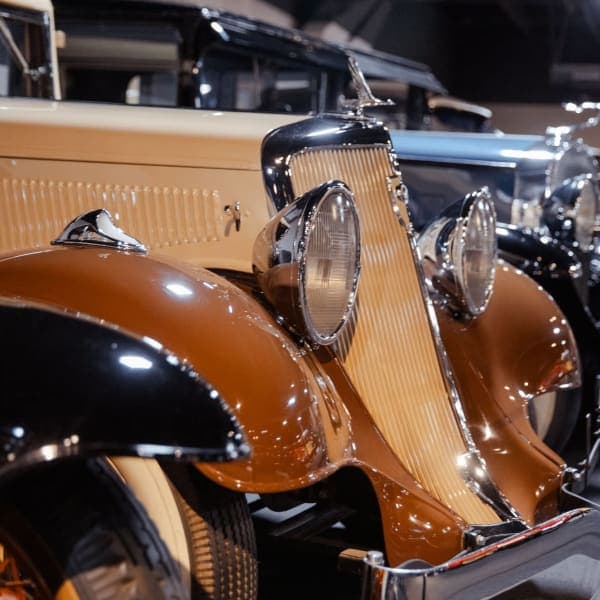
Two-tone coupe in the long hall
Cream over black, the museum's parquet runway behind it — a car arranged like a sentence.
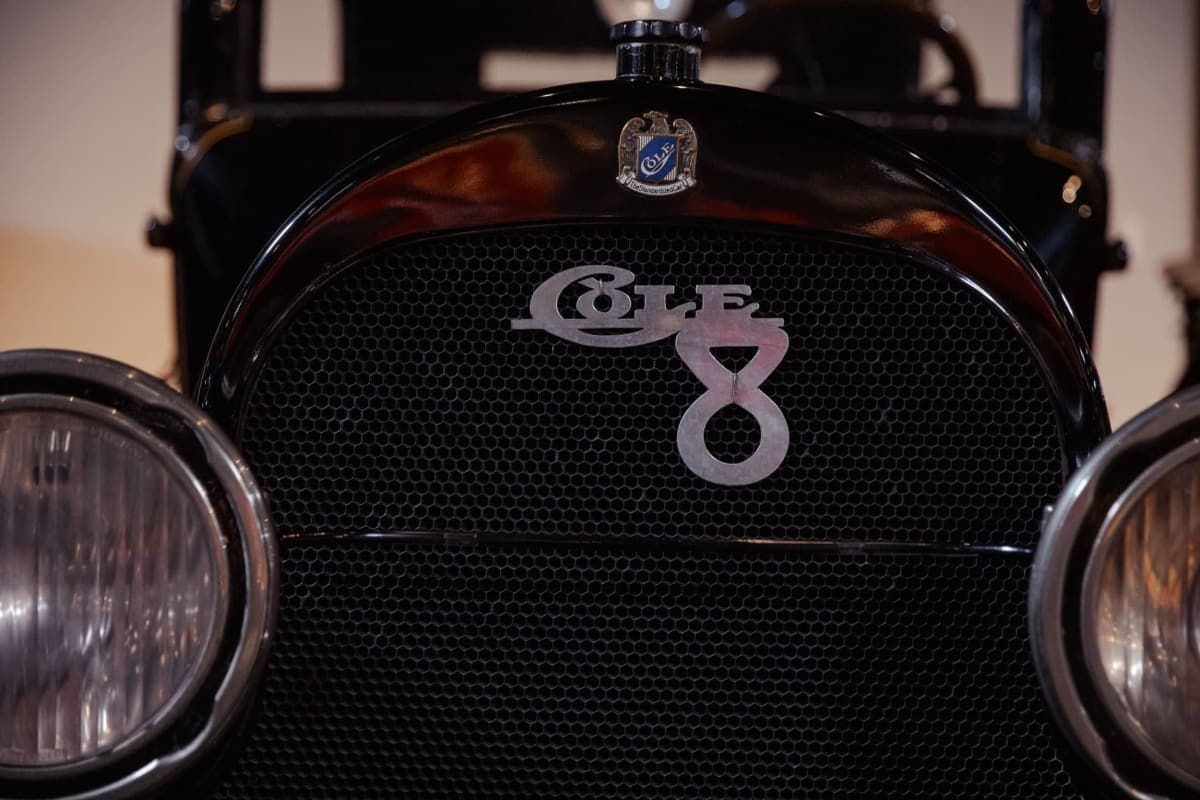
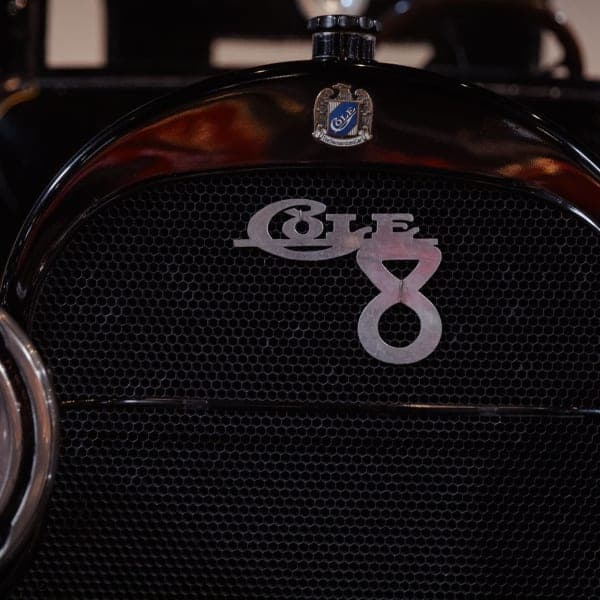
Cole 8 — Indianapolis, 1922
Cole Motor Car of Indianapolis built America's first production V8 in 1915. The badge has the figure-eight built into the lettering.
ALVIS, in chrome
Coventry's quietest sports car — a chromed inverted-V grille, a small enamel badge, two driving lamps slung low. The British answer to a continental tourer.
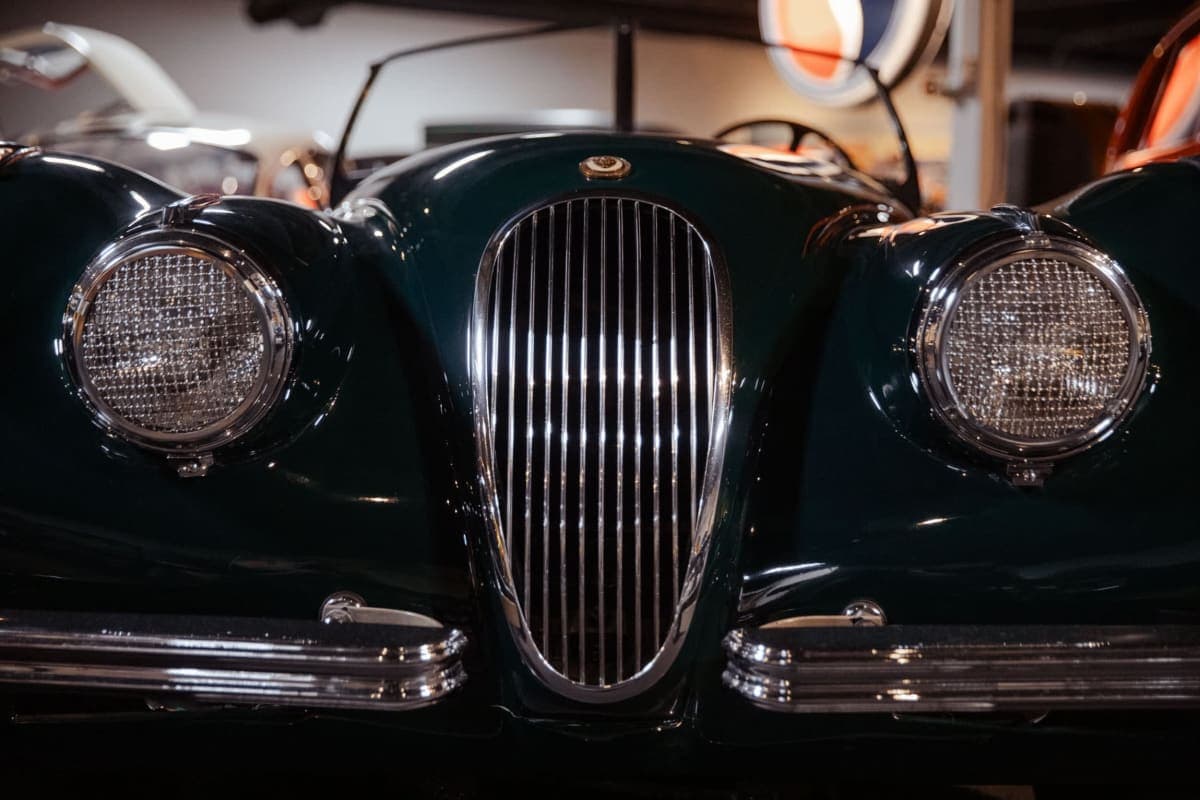
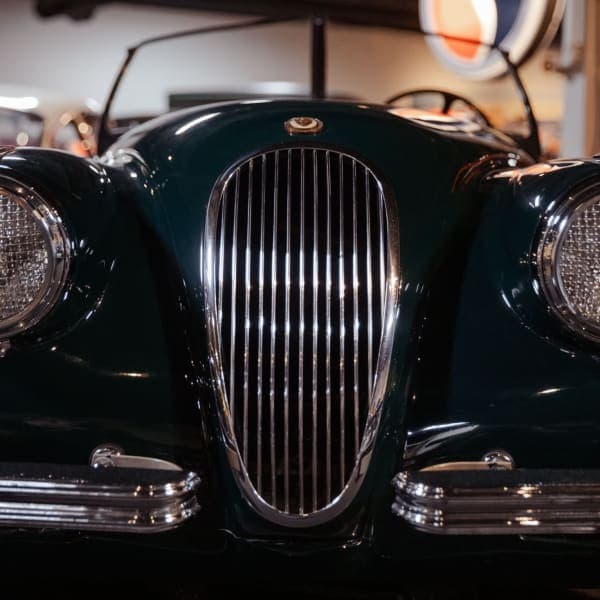
Jaguar XK120 — British Racing Green
Twin chromed headlamp pods, the long oval grille, a small silver leaper at the centre top. The car that announced England was back in the sports-car business.
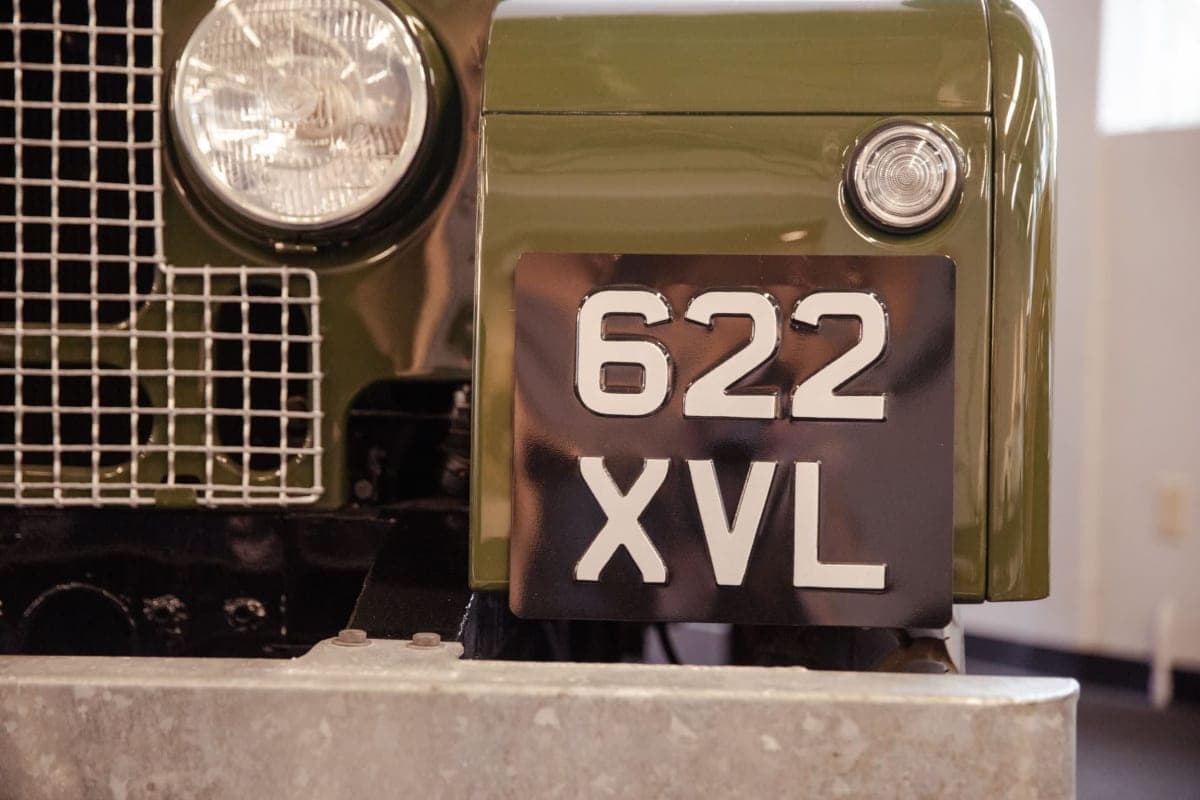
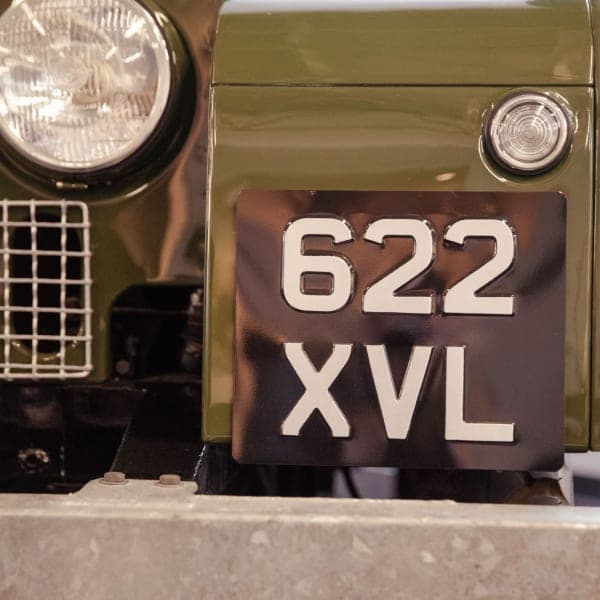
Land Rover Series I — 622 XVL
Bronze Green paint, a mesh stone-guard over the headlamp, a black plate with raised silver numerals. The car the British Empire used to drive home in.
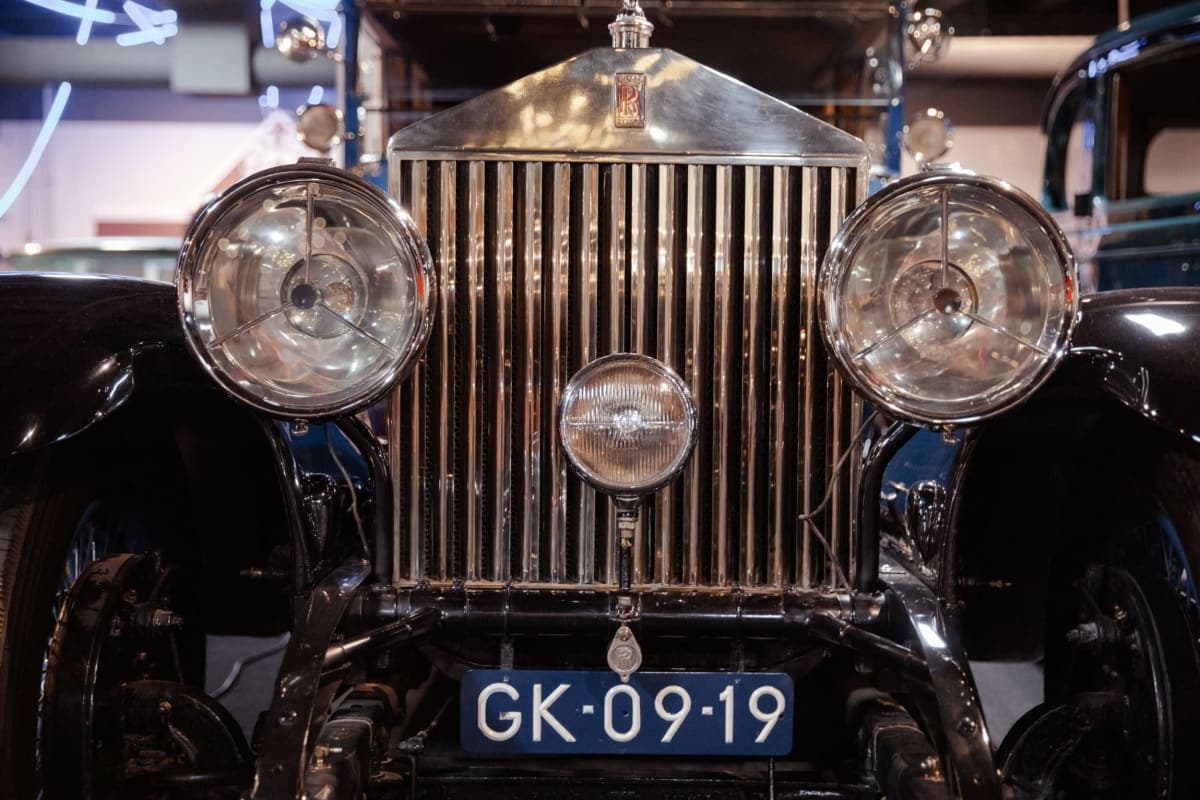
Rolls-Royce Phantom — the temple grille
GK·09·19 on the Dutch plate, the small enamelled R-R badge above, twin headlamps the size of dinner plates. The grille is shaped like the Parthenon for a reason.
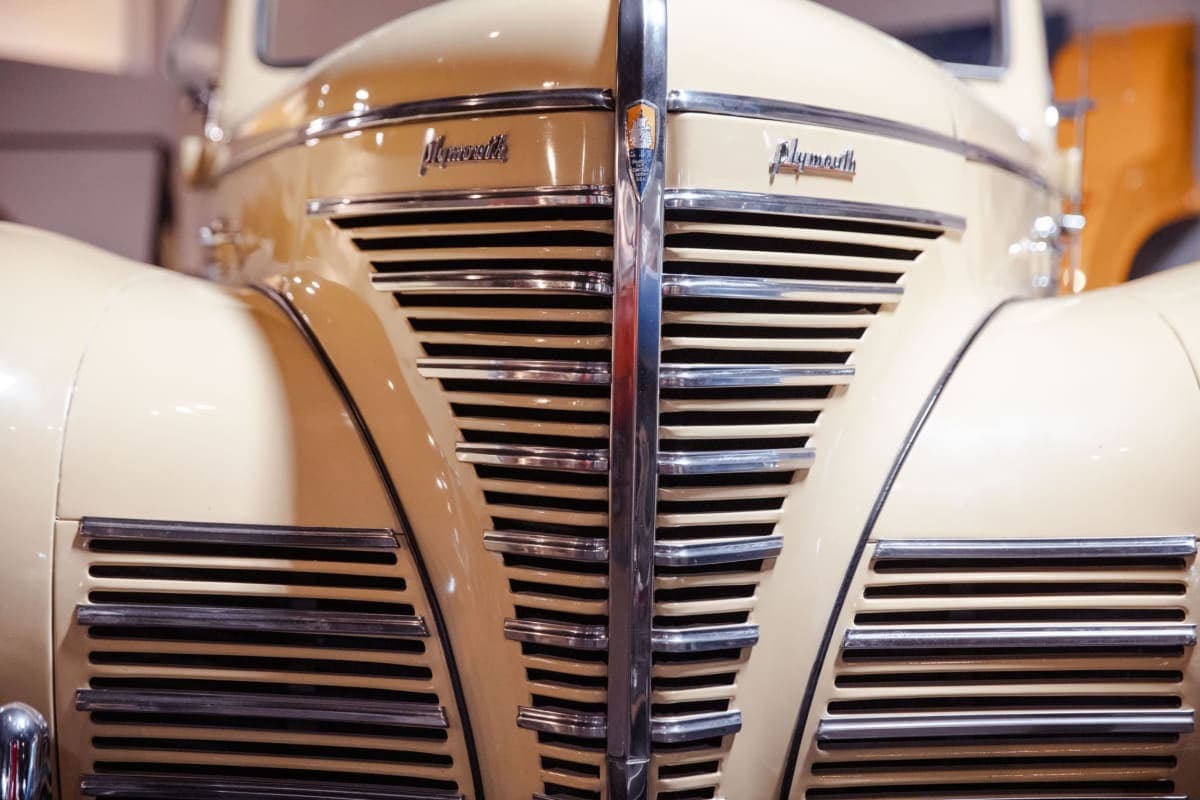
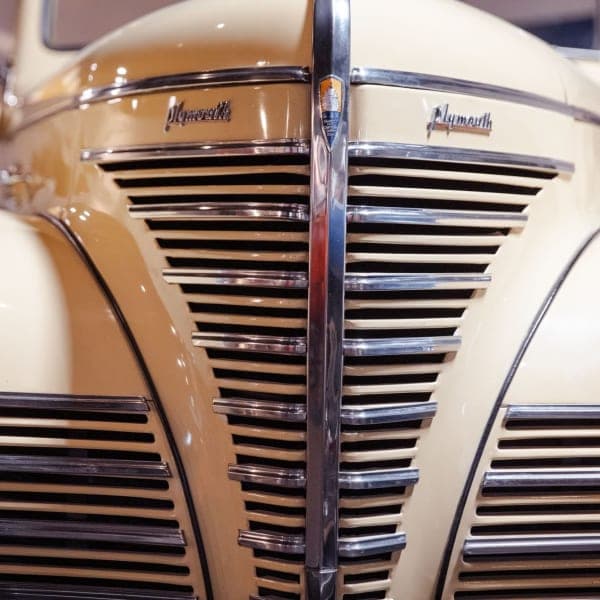
1939 Plymouth, the waterfall
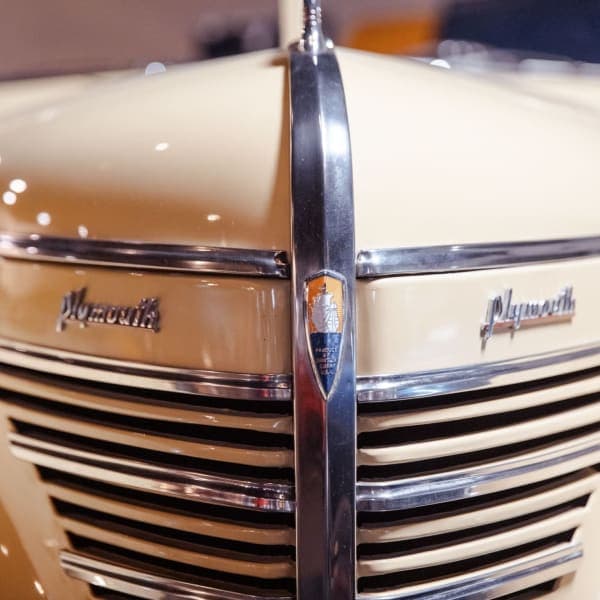
Cream coachwork, twin chromed bars splitting a louvered grille, the marque written twice in flowing script. Detroit's late-1930s answer to the streamliner.
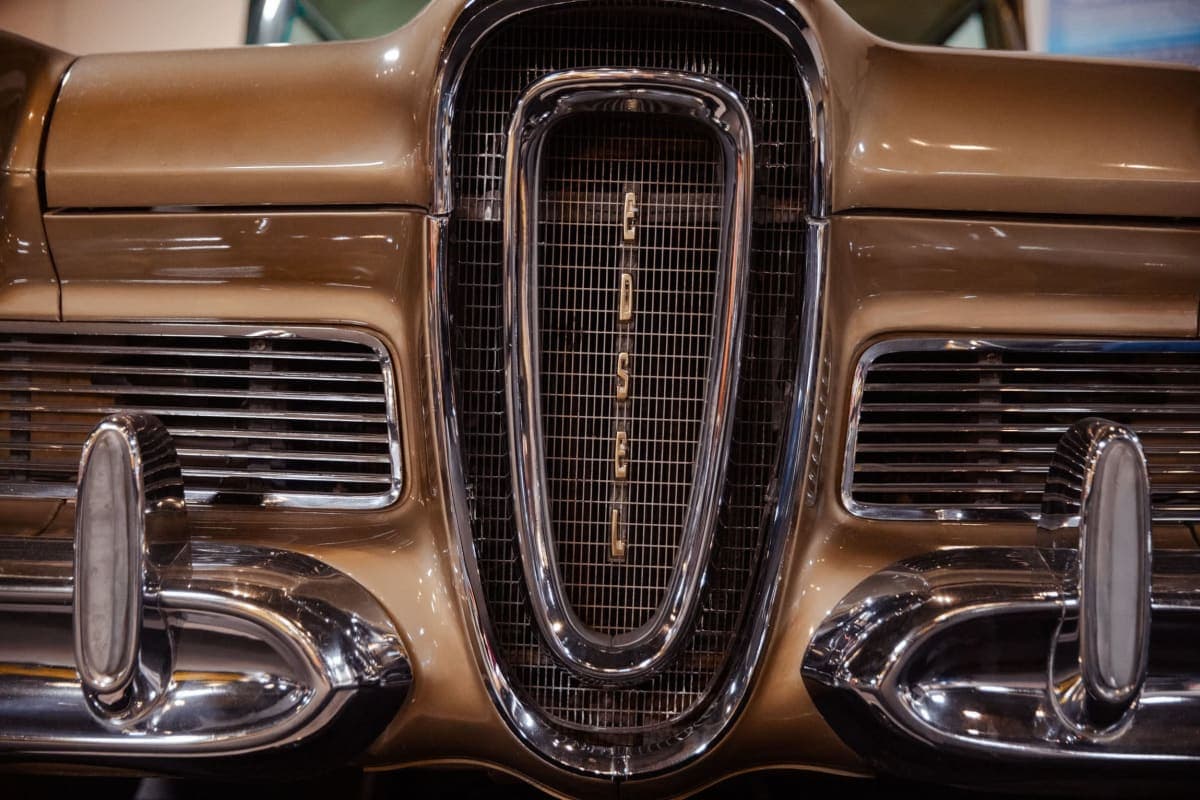
Edsel — the horse-collar grille
Ford bet $250 million on the Edsel in 1958. The vertical chromed mouth was the most-mocked detail of the year. Reno has one. The grille is, in person, beautiful.
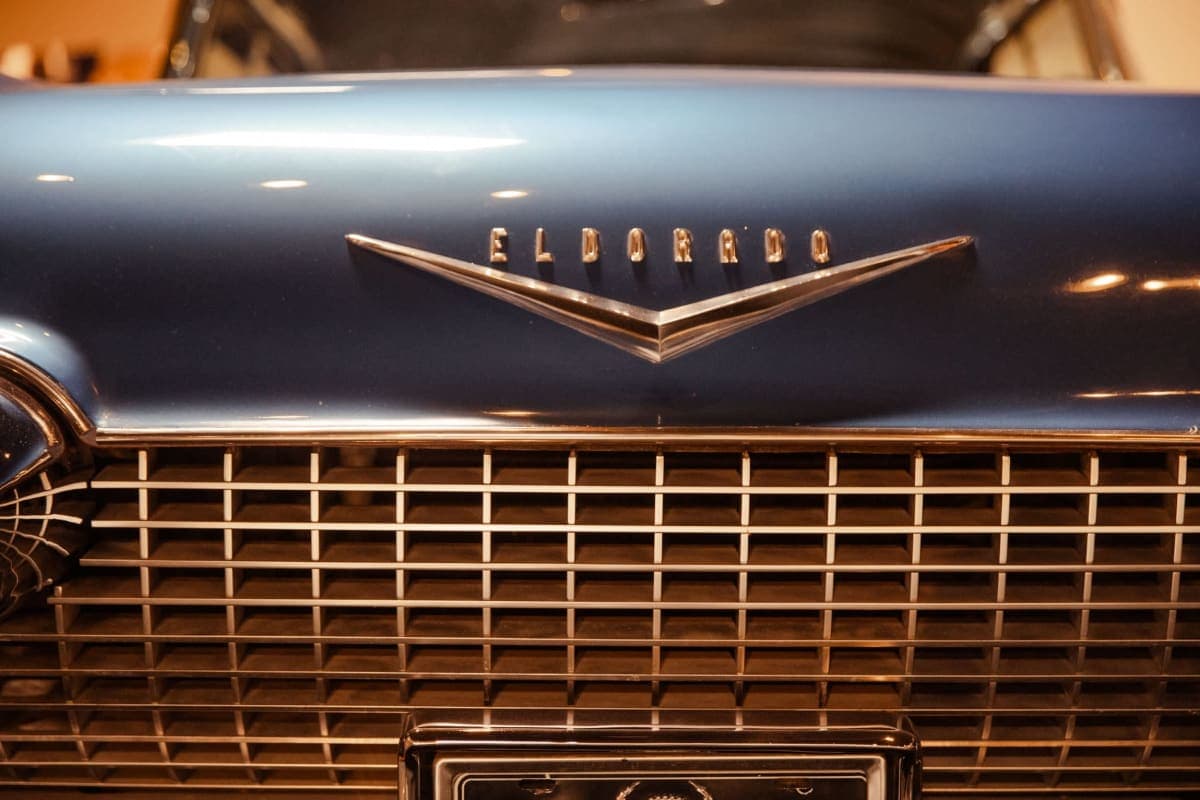
Cadillac Eldorado, '57
Metallic blue, a chevron of chromed letters across the brow, a fine-mesh grille below. Detroit at the absolute moment it believed in itself.
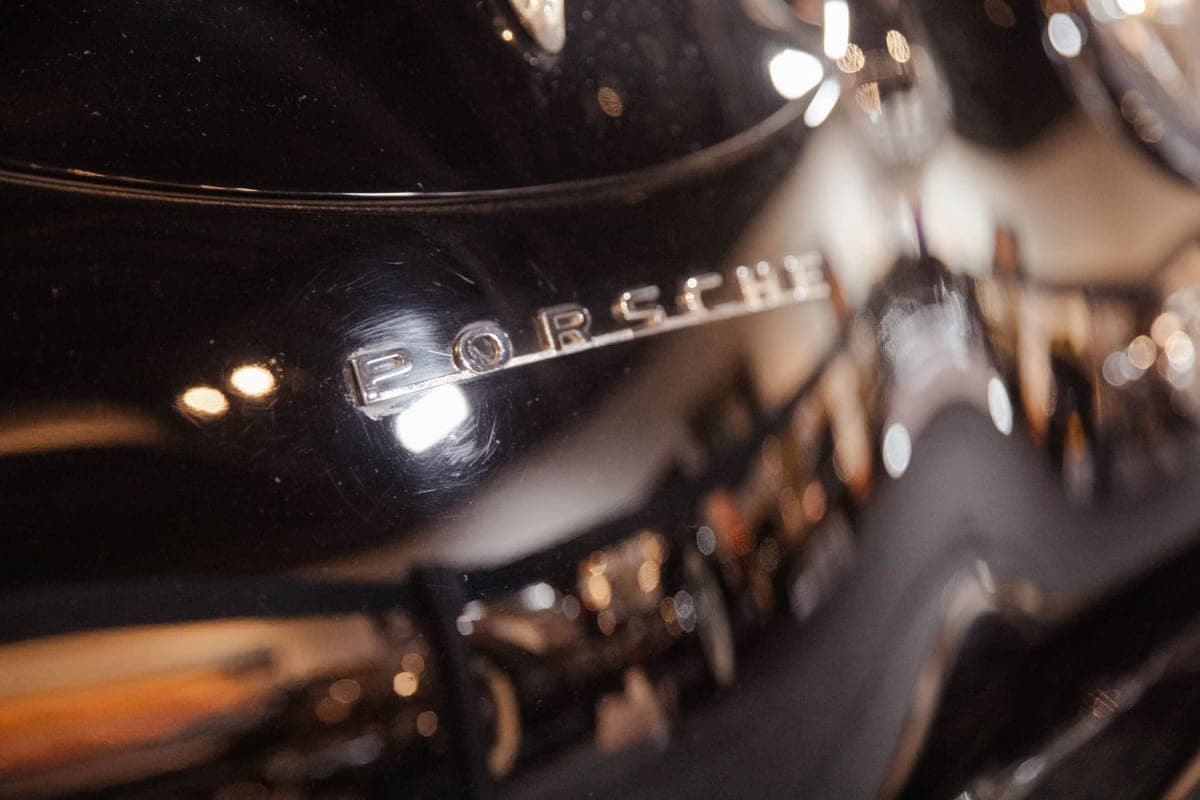
Porsche — script in chrome
Black lacquer, the Stuttgart wordmark in fine chromed letters along a fender. The car is somewhere behind the badge, but the badge is the point.
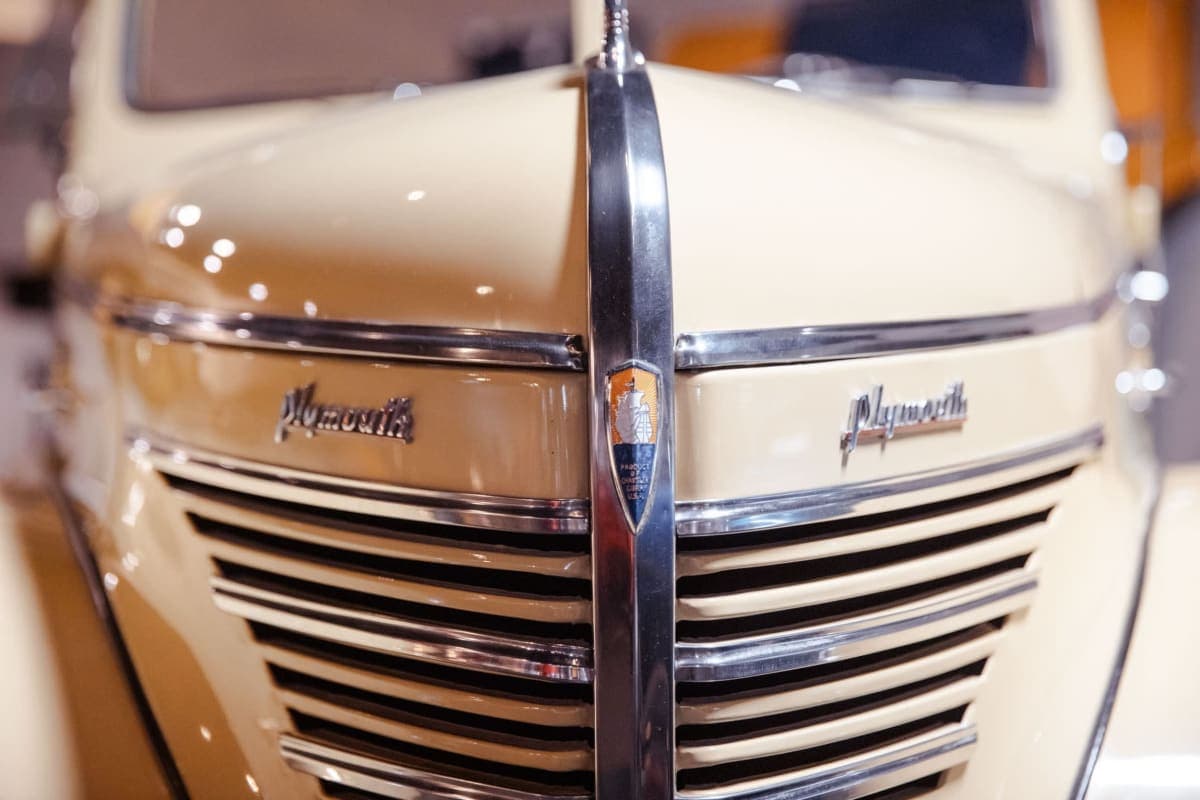
1939 Plymouth — Mayflower badge
Cream coachwork, twin chromed bars, the Mayflower built into a small enamel shield in the centre. Plymouth always wrote its name twice.
Chapter Six
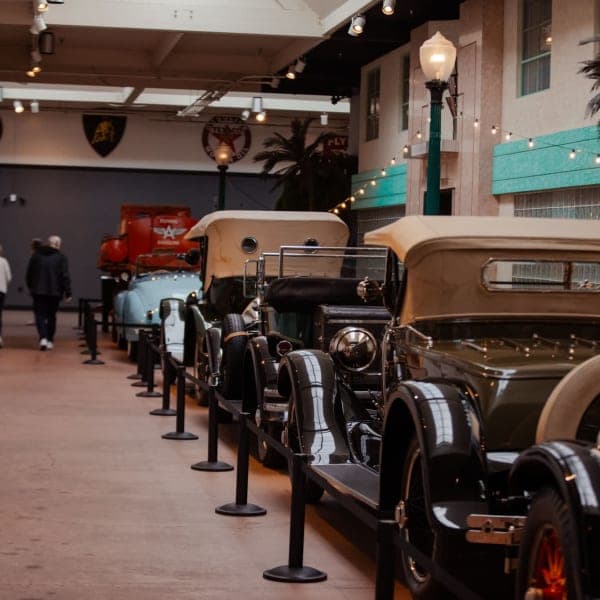
Main Street, recreated
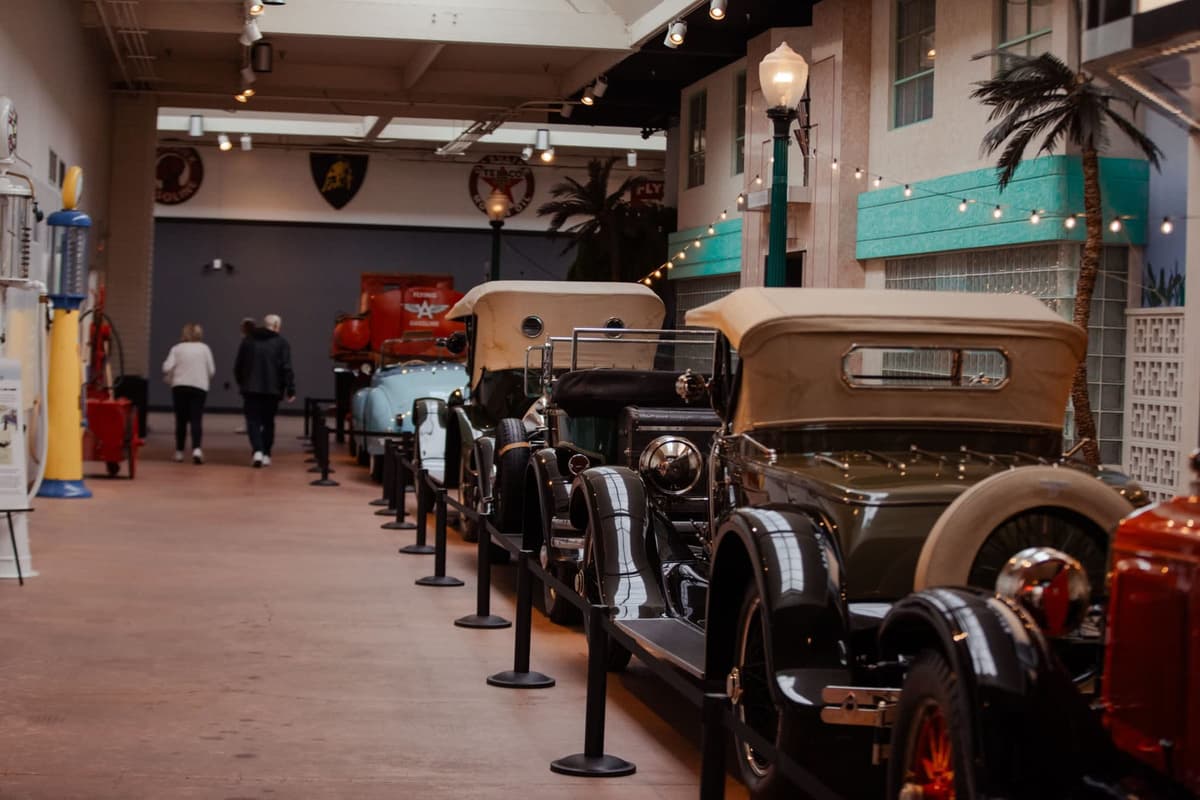
The museum's signature trick is its scenery. Four full city streets, a 1900s town, a 1910s boulevard, a 1930s drive-in strip and a 1950s suburb, have been built up around the cars, complete with shopfronts, palm trees, gas pumps and street furniture pulled from estate sales up and down the West. The Flying A globe glows red against the Reno light. The Cab Stand sign stands on a curb that no longer exists. You can read a city in painted enamel.
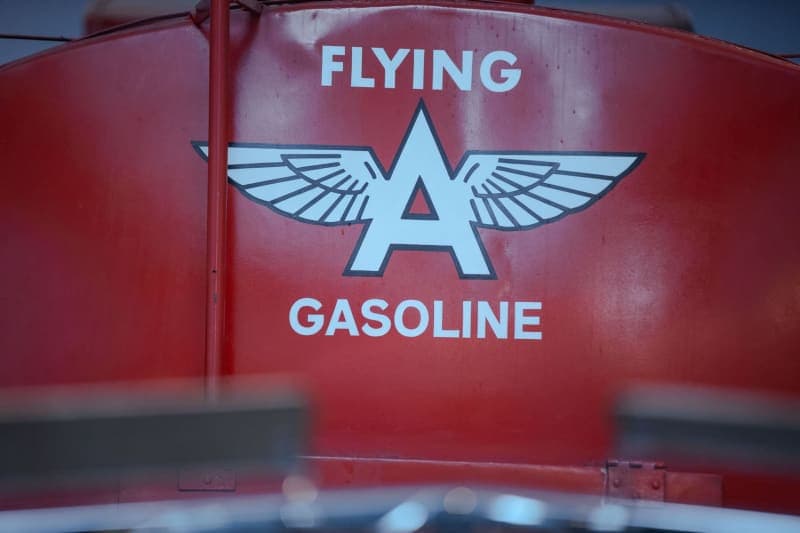
FLYING A Gasoline globe
A red glass sun bolted to the top of a gas pump — Associated Oil's calling card up and down the West Coast.
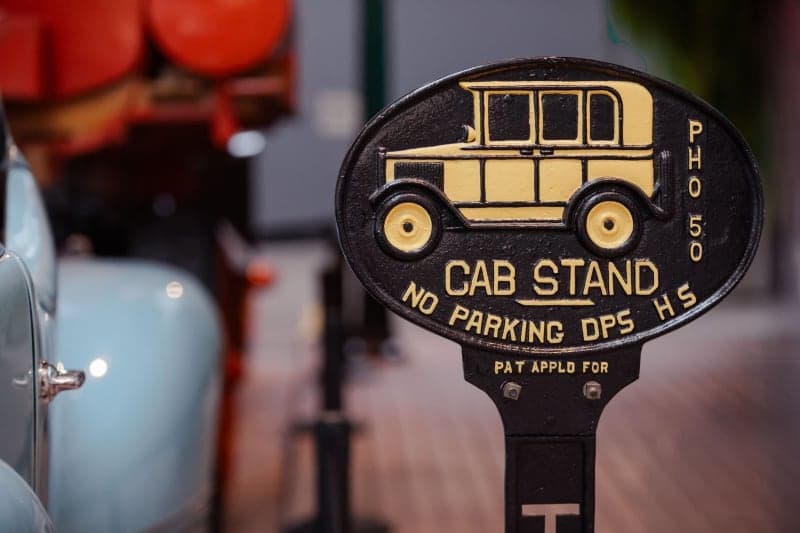
Cab Stand — No Parking
Cast iron, painted black and gold, mounted on a curb that no longer exists. The street furniture of an evaporated city.
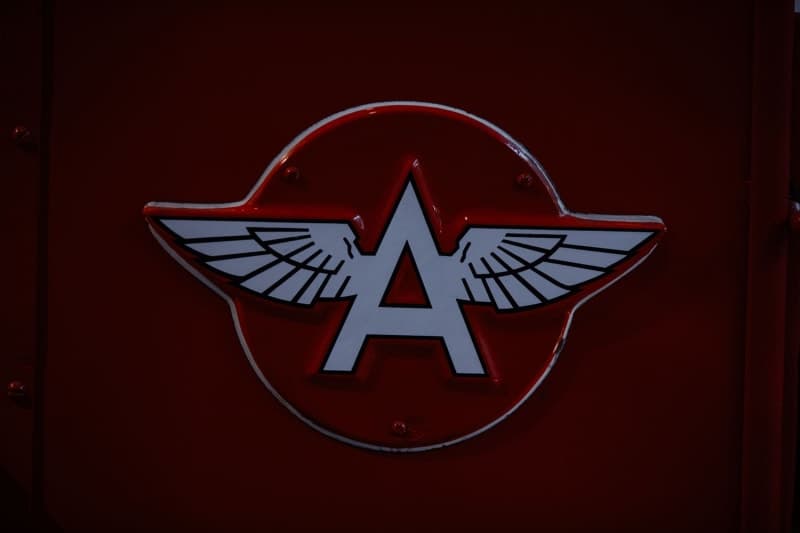
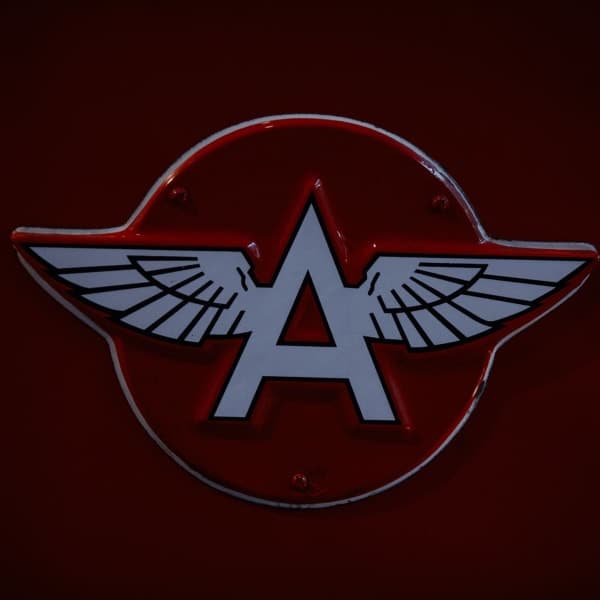
Flying A logo on enamel
Associated Oil. The serif, the chevron, the red — a brand that flew across the West for half a century.
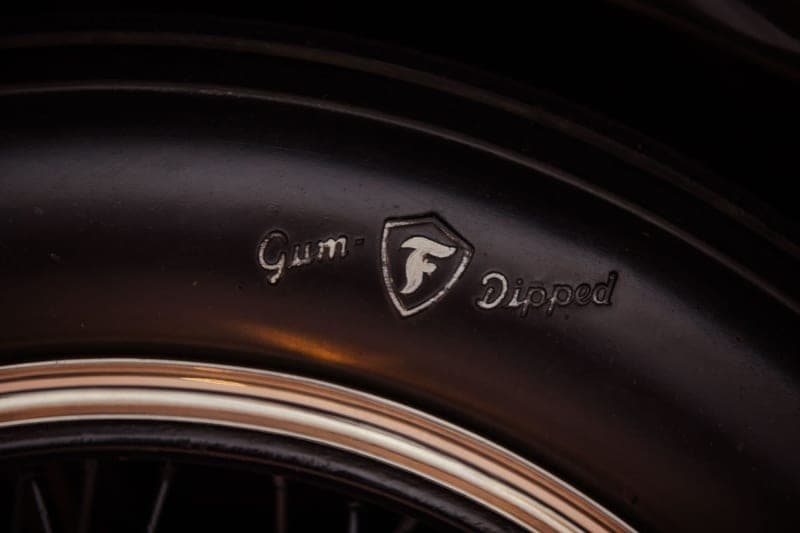
Firestone Gum-Dipped sidewall
Before steel-belted radials, Firestone soaked their cords in liquid rubber and put the words right on the tyre.
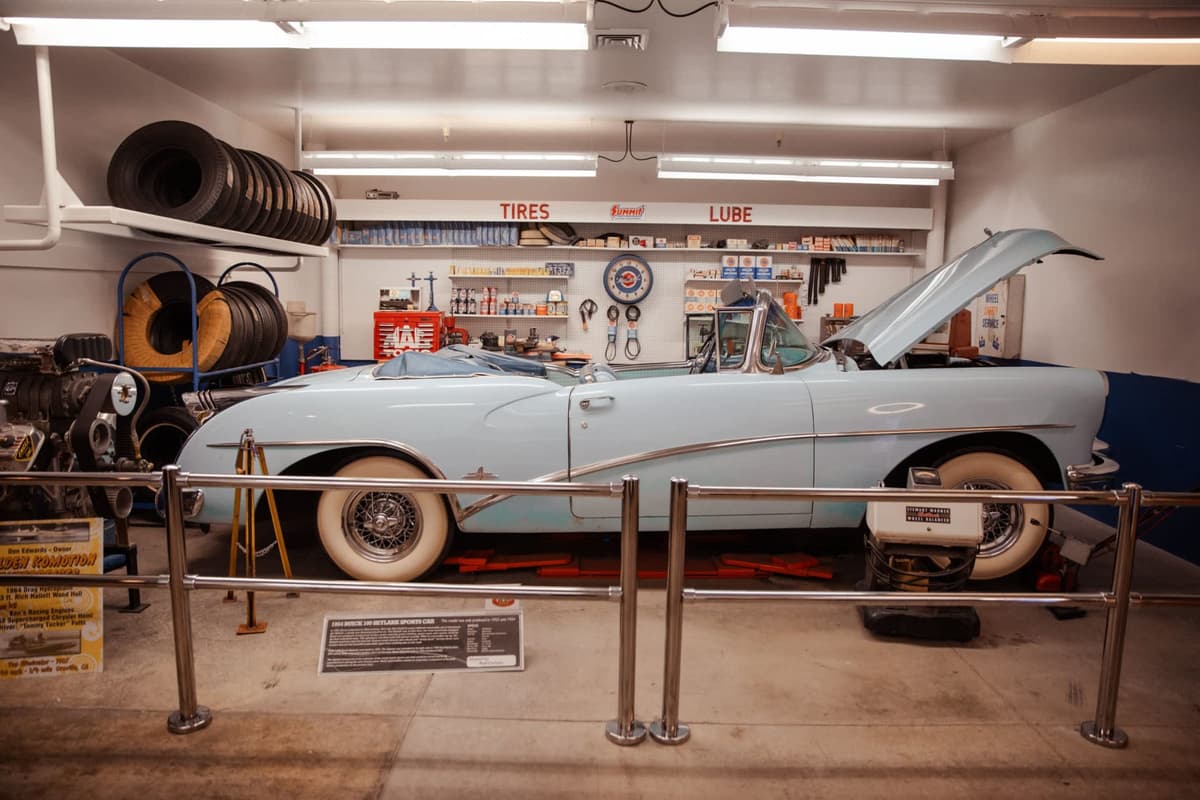
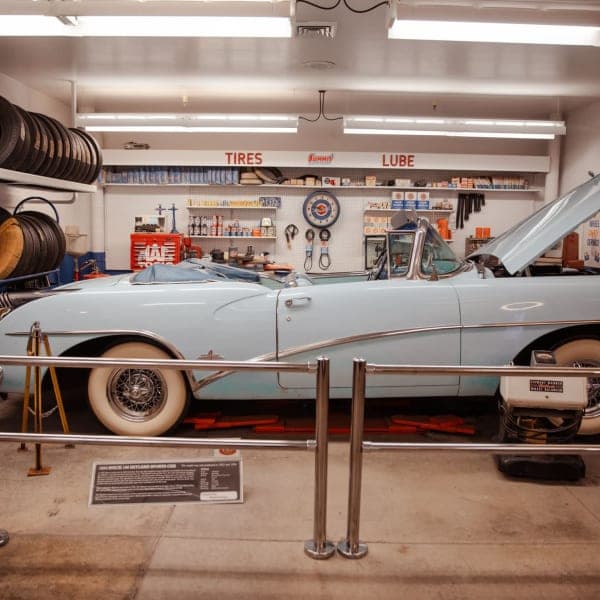
1954 Buick Skylark, in the lube bay
The museum's 1950s street has a working garage scene at one end — the Skylark sits over the lift, hood up, as if waiting on a Tuesday.
Chapter Seven
The Hollywood cars
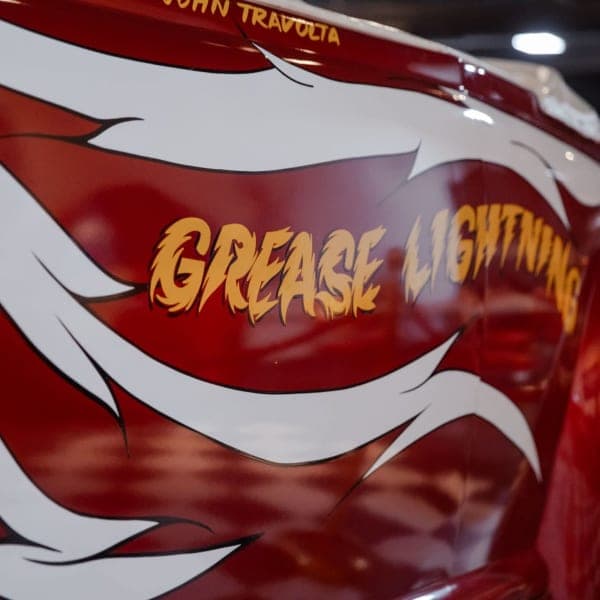
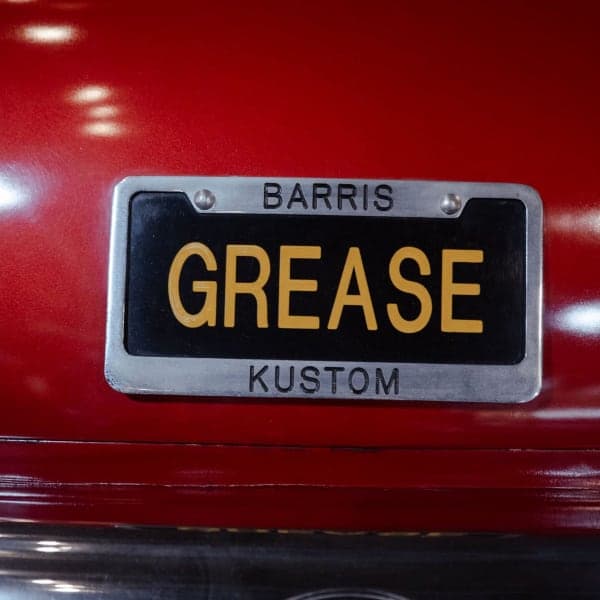
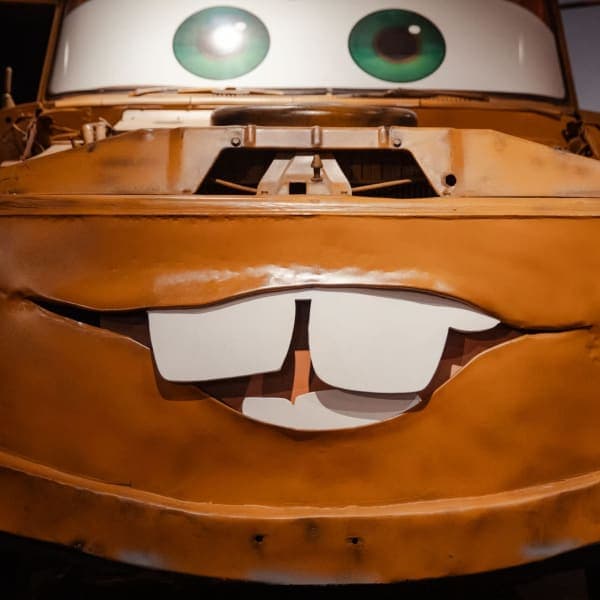
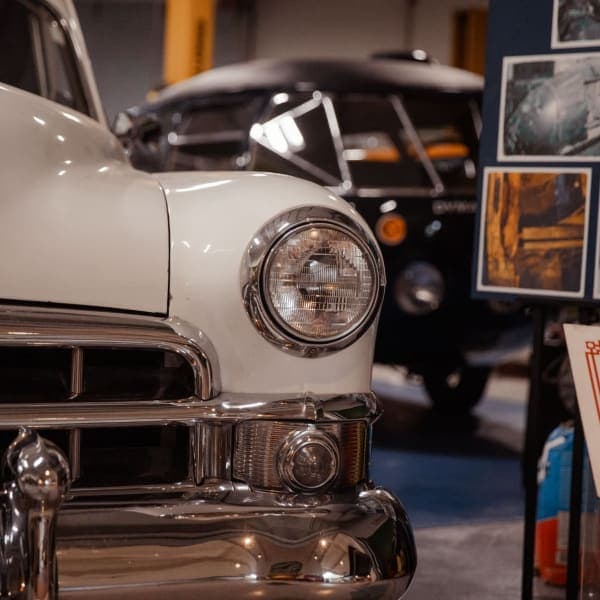
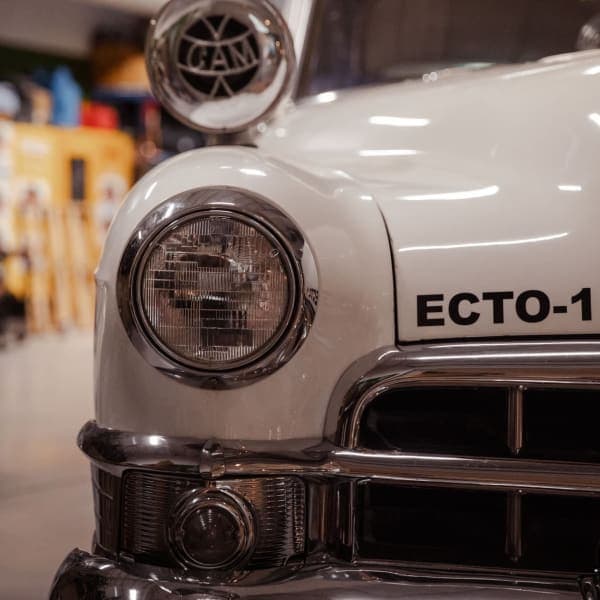
Reno keeps four Hollywood cars in one hall. George Barris built the candy-apple-red 1948 Ford De Luxe from Grease. Walt Disney built a white 1963 VW Beetle with a number 53 on the door for The Love Bug. Ivan Reitman bought a $4,800 1959 Cadillac Miller-Meteor ambulance, called it ECTO-1, and used it to bust ghosts in 1984. And Pixar built a full-scale, drivable Tow Mater for Cars in 2006, the only one of the four with eyes.
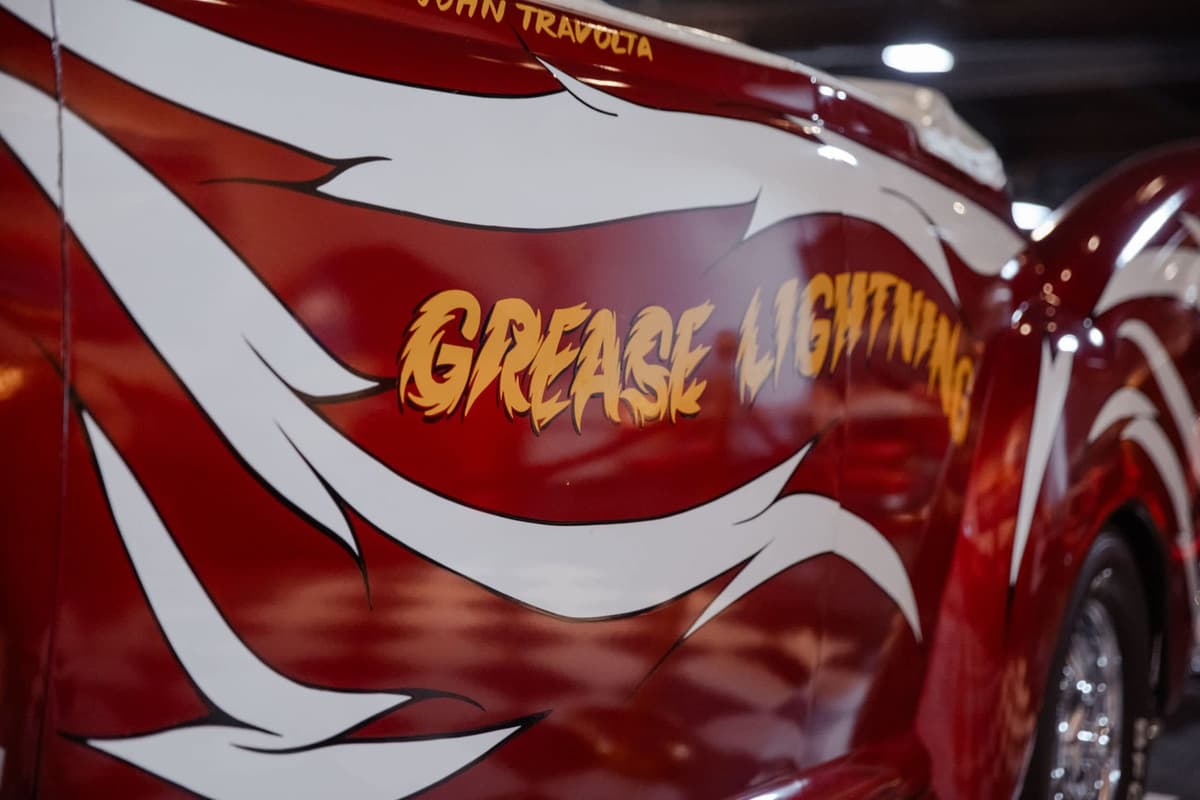
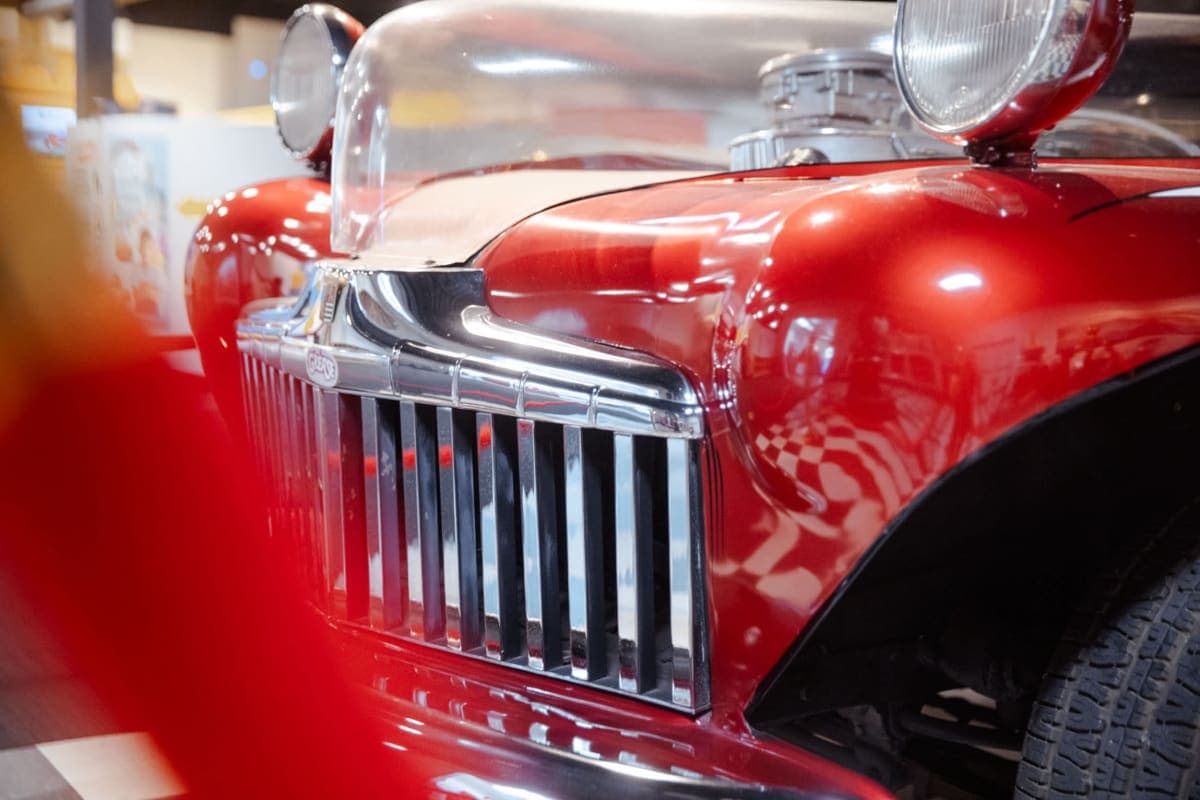
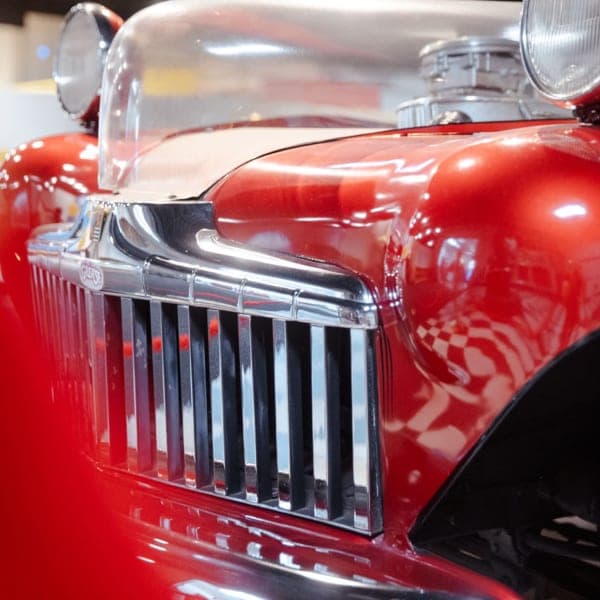
Grease Lightning, three-quarter front
George Barris built the white-then-red 1948 Ford De Luxe convertible used in the dance number. Twin headlamps under perspex, chromed bars, a hood-mounted scoop.
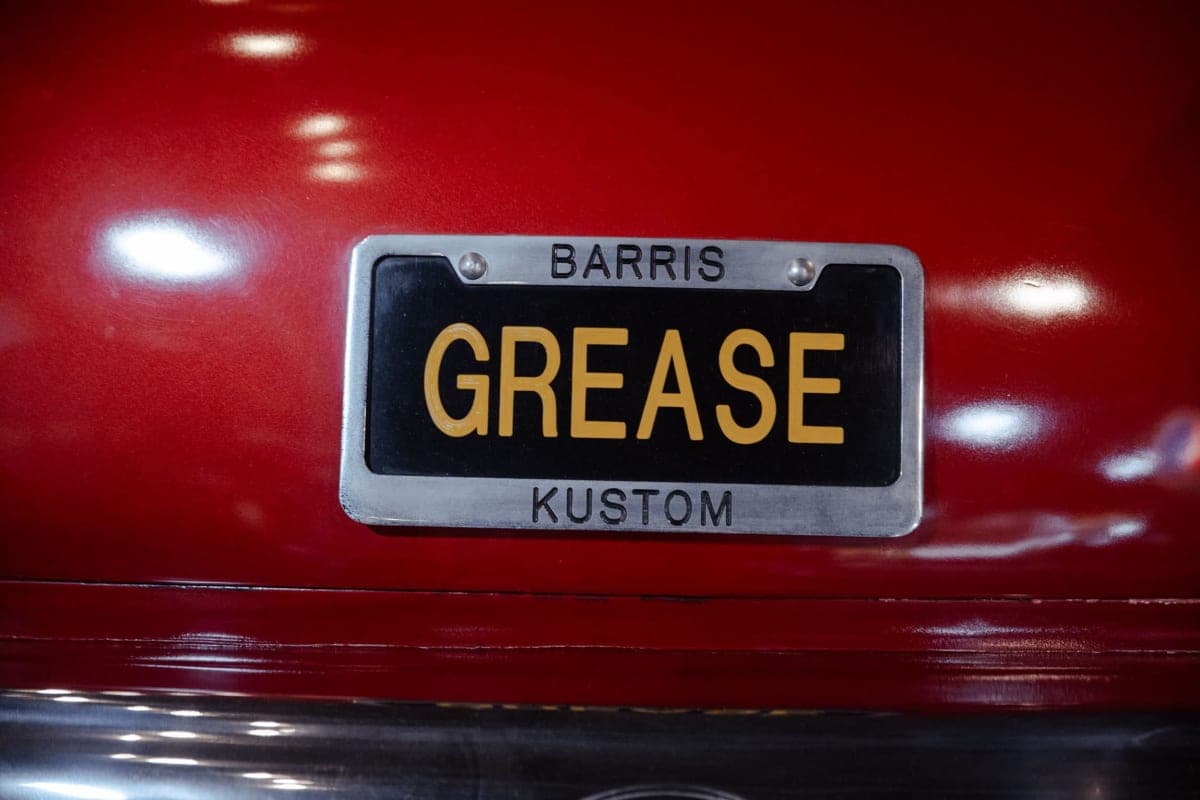
GREASE · Barris Kustom
The license plate is also the workshop's signature. Barris built the Batmobile, the Munster Koach, and this.
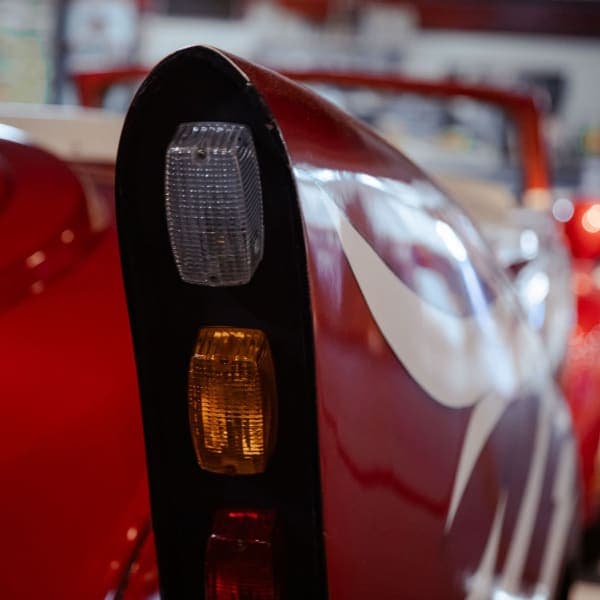
Grease Lightning — taillight cluster
Black-painted fin, three lenses stacked like notes on a stave. Custom car-builders treated the back of a car as the front of a song.
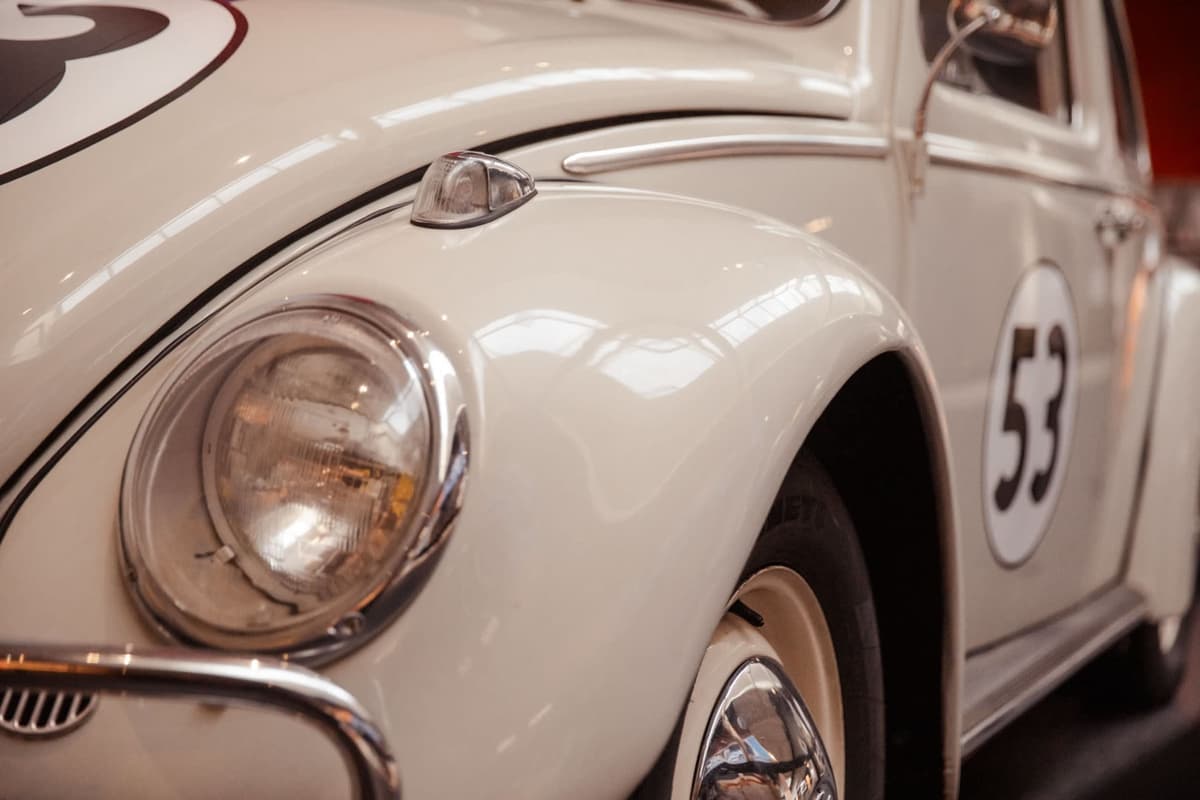
Herbie — number 53
Walt Disney's 1968 "Love Bug" was a 1963 VW Beetle, white with a single black stripe and the racing roundel from Buddy Hackett's spare on the door. Reno keeps one of the original cars.
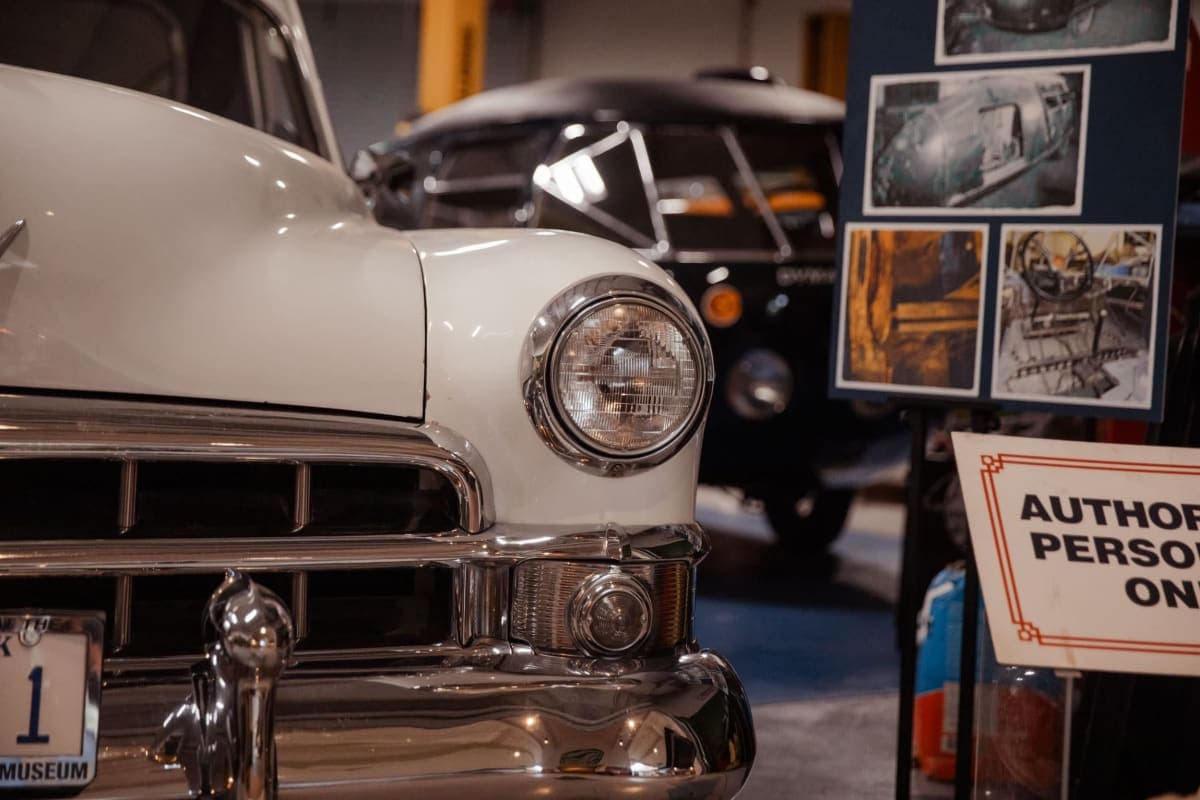
ECTO-1, in profile
The white 1959 Cadillac Miller-Meteor that Ray Stantz bought for $4,800 in the 1984 film. Reno has the museum-spec restoration, parked next to a story-board easel of the conversion.
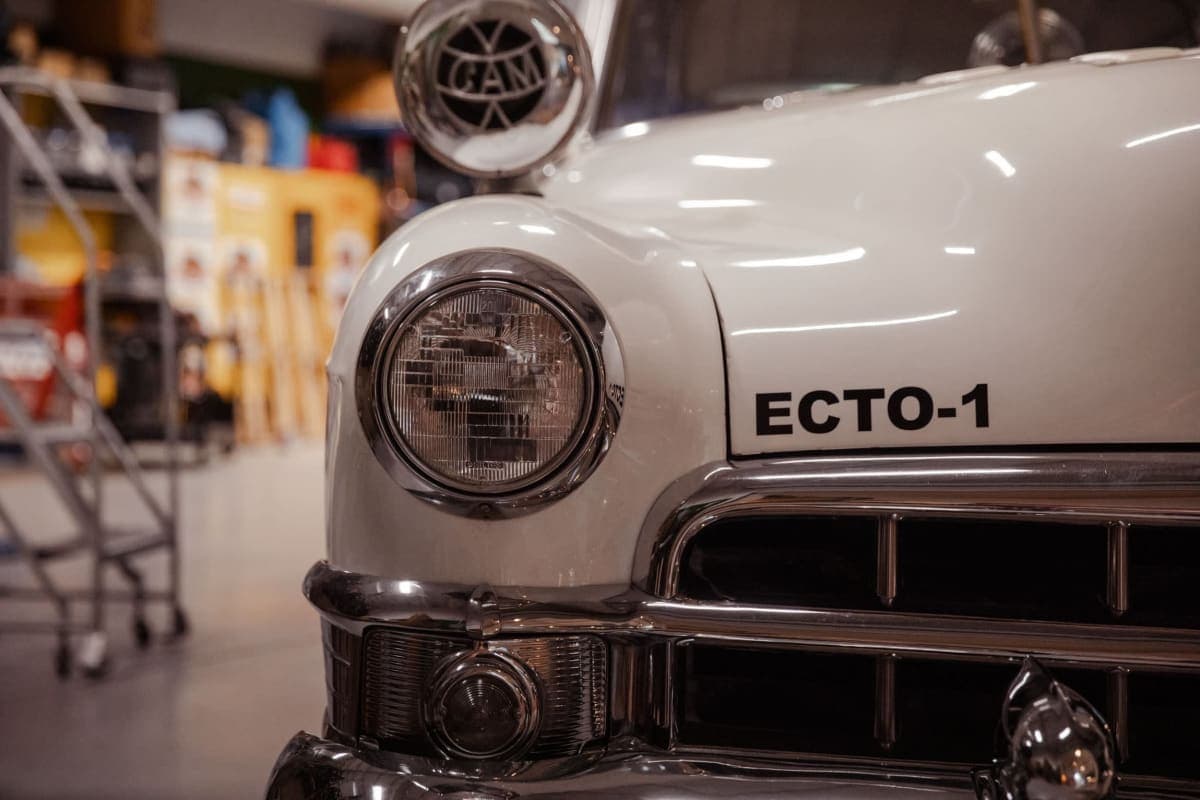
ECTO-1, the badge
Ghost Trap, ProtonPak, and one carefully painted decal on the front fender. The lettering is the same Helvetica the prop department used in 1984.
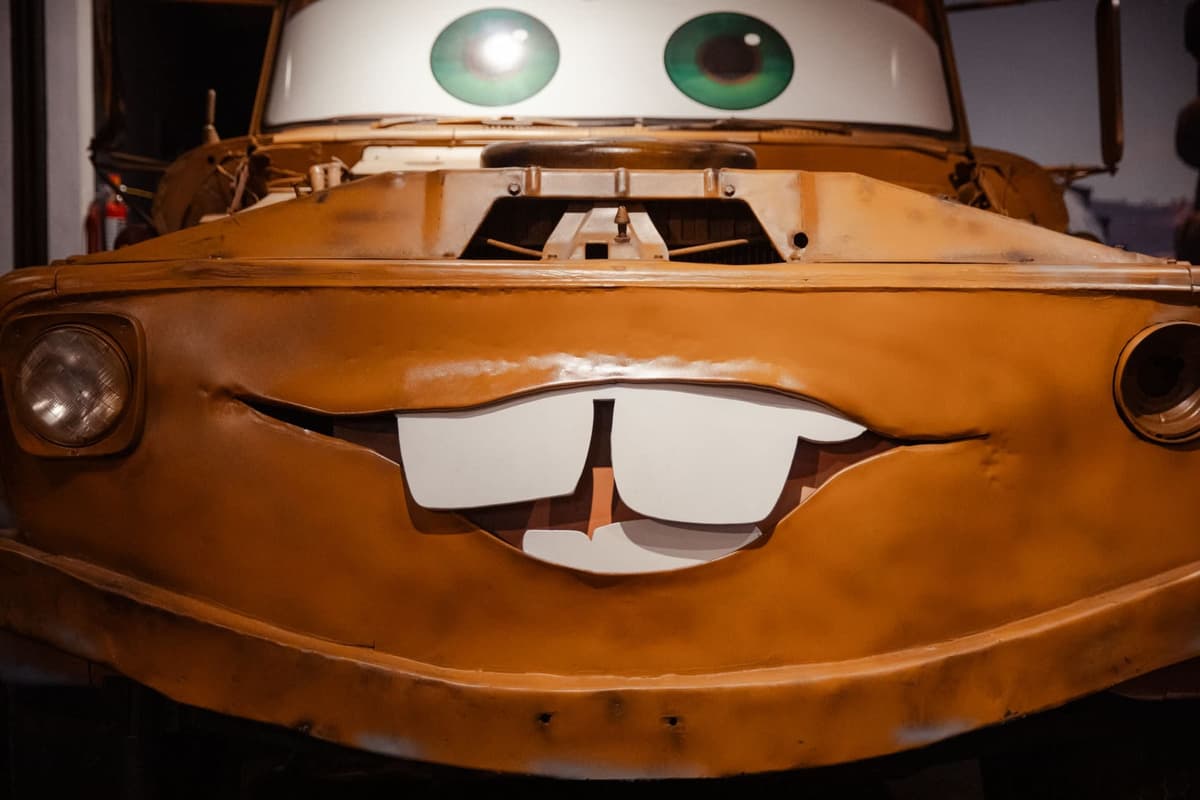
Tow Mater, in the flesh
Pixar built a full-scale, drivable Tow Mater from the 2006 film Cars — rusted orange, two front teeth, eyes the size of dinner plates. Reno keeps him parked in the Hollywood hall.
Chapter Eight
The Gullwing, with luggage
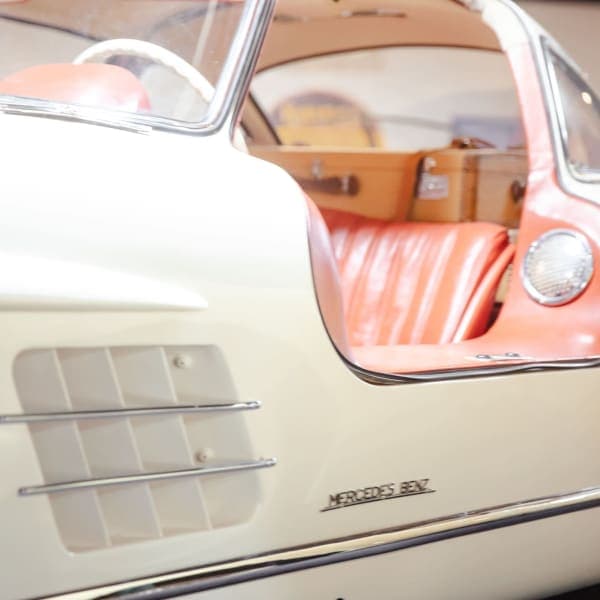
Mercedes-Benz built 1,400 of the 300 SL Gullwing between 1954 and 1957, an aluminium body over a tubular space-frame, doors hinged at the roof because the frame went straight through where a door sill would. Reno's example sits with its left door up and a four-piece set of fitted Hartmann luggage on the parcel shelf. It has been packed for the same trip since 1989.
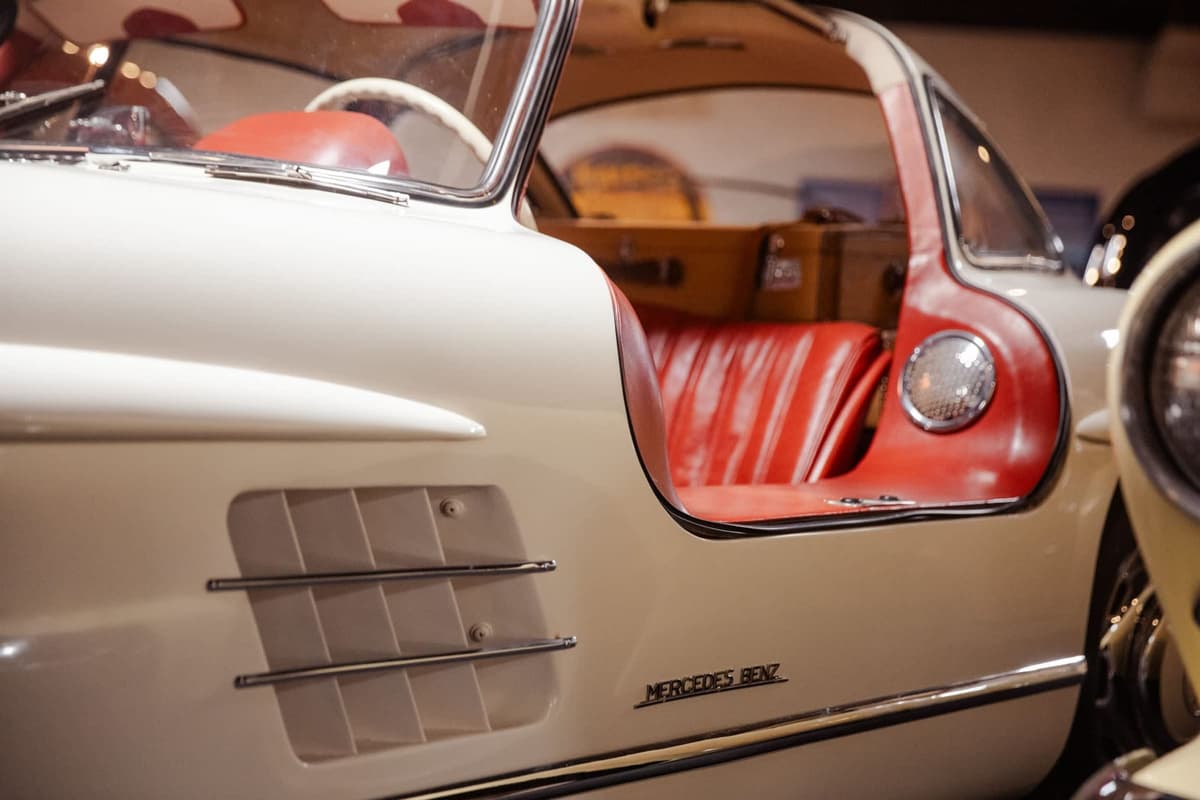
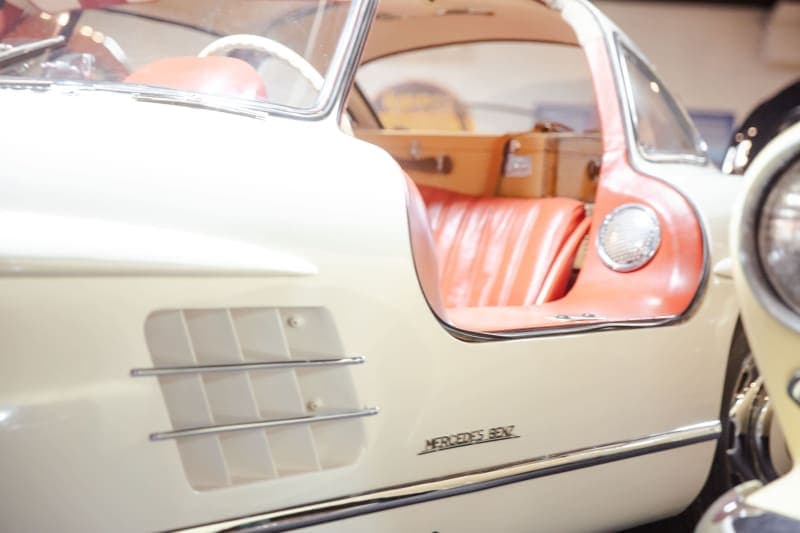
Gullwing door, open
Red leather, fitted Hartmann luggage on the parcel shelf, a small reading lamp in the door pillar. The 300 SL was always a journey, not a commute.
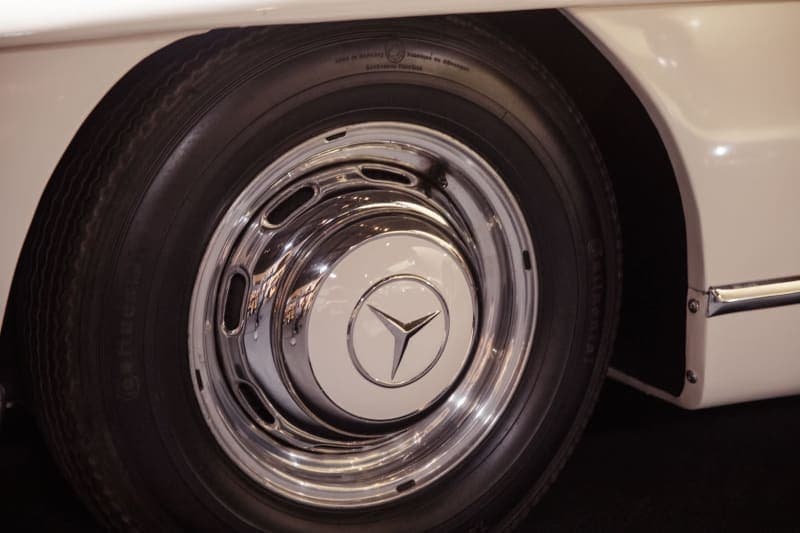
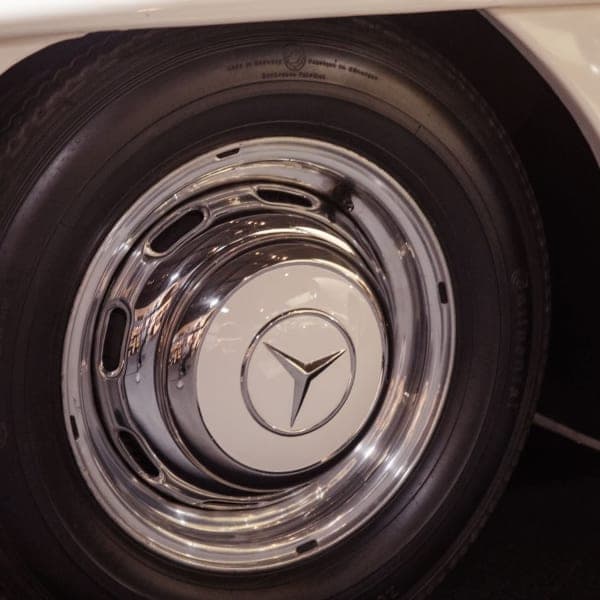
300 SL Gullwing — Continental tyre
Continental of Hannover wrote the maker's address into the rubber. The Mercedes star is centred on a polished disc above it.
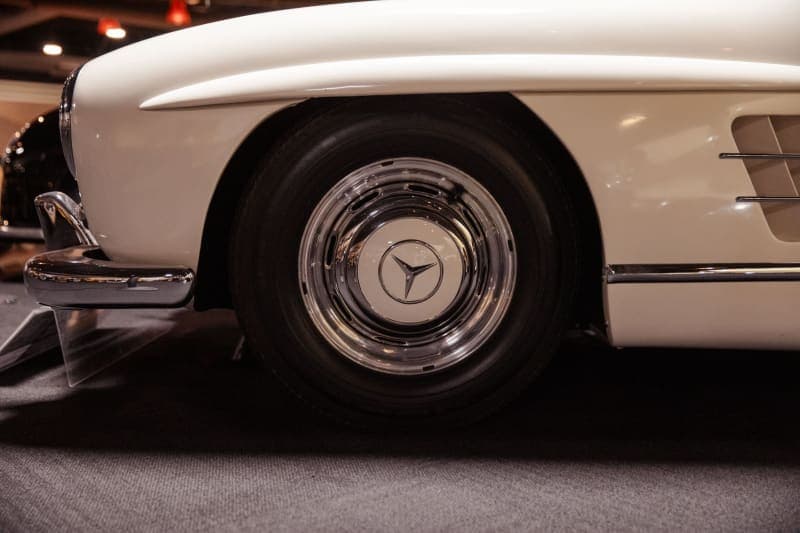
Gullwing — front wheel
Polished chrome hubcap, three-pointed star, fender skirt cleared above. The geometry of an aluminium-bodied car at rest.
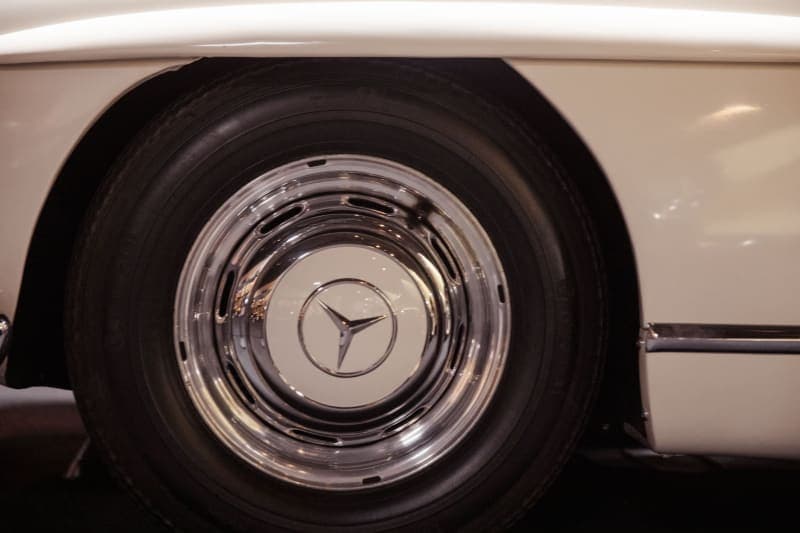
Gullwing — rear wheel
Same hubcap, different angle. The 300 SL came with a swing-axle in the back; you treated it with respect.
Chapter Nine
The Tucker '48
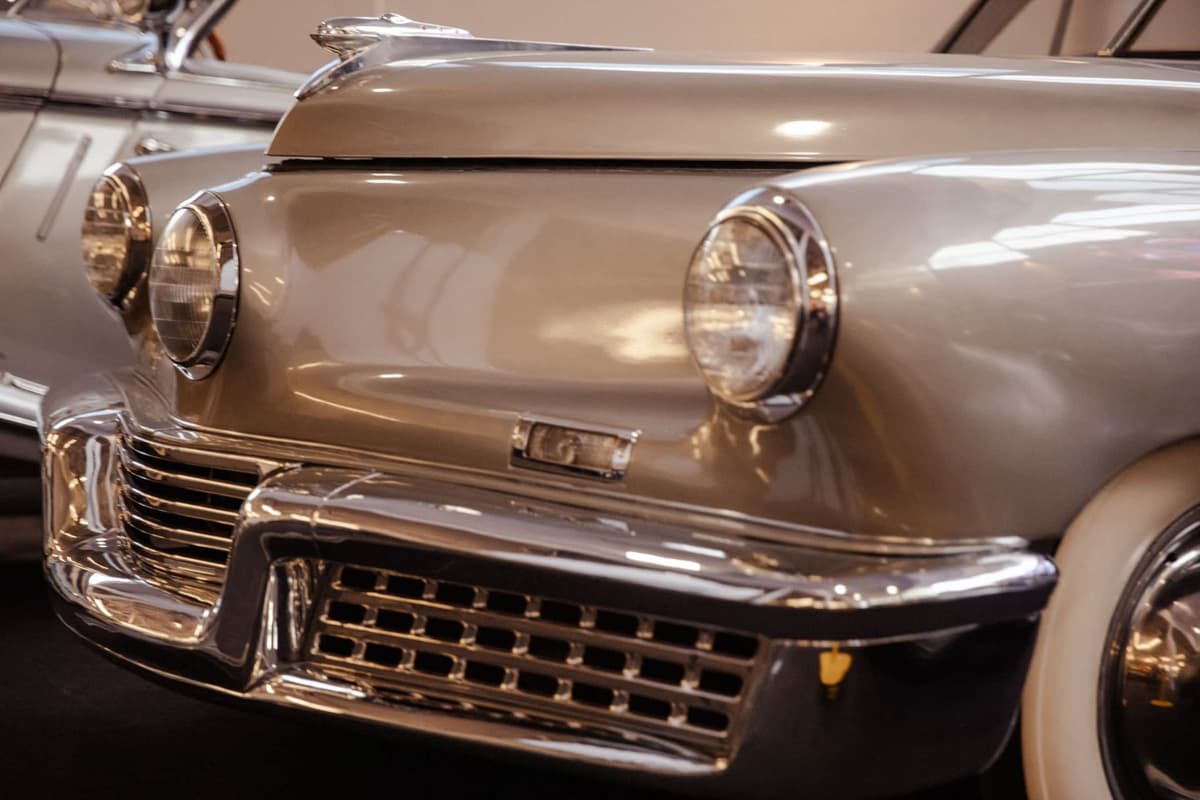
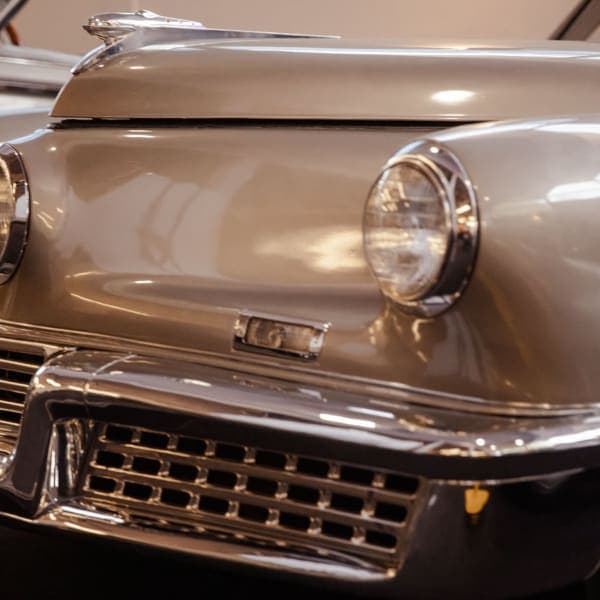
Preston Tucker proposed a rear-engined sedan with a centre headlamp that steered with the front wheels, a padded dash, and a windshield designed to pop out in a crash. He built fifty-one before the SEC and a hostile press ended the company in 1949. The car at Reno is one of forty-seven that survived. The centre lamp still steers.
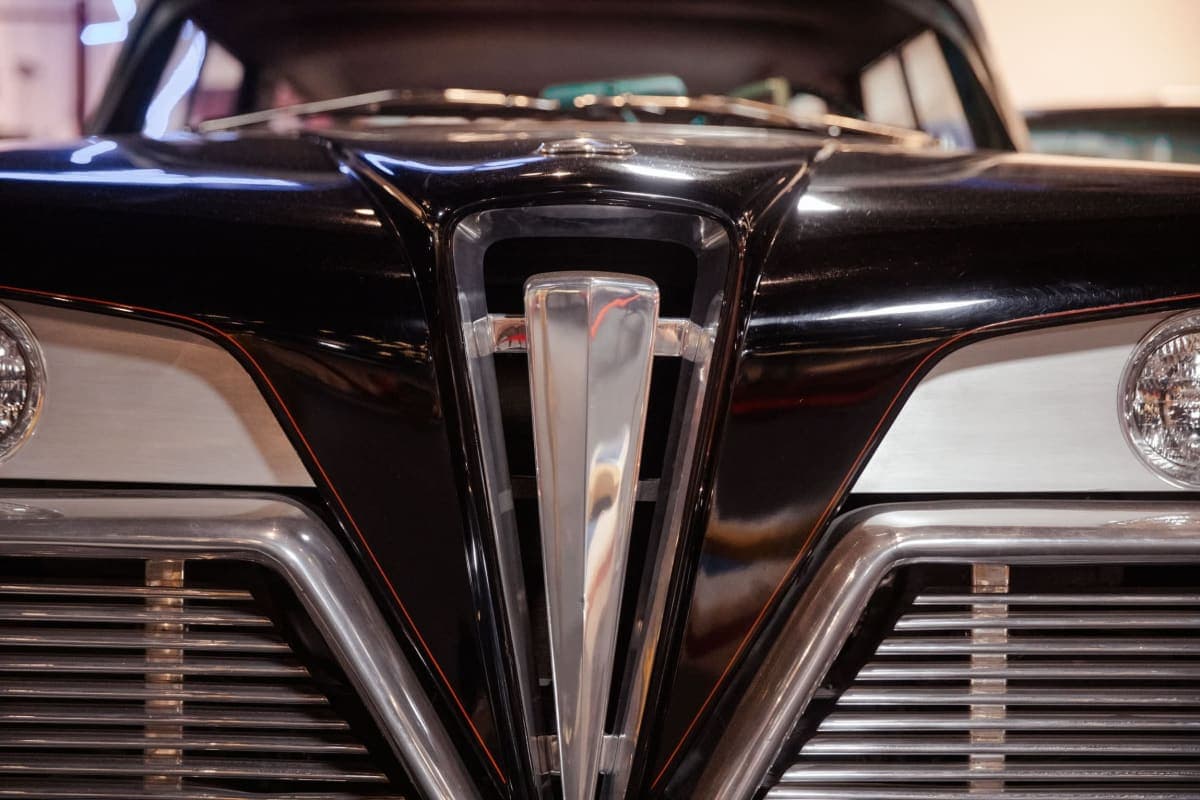
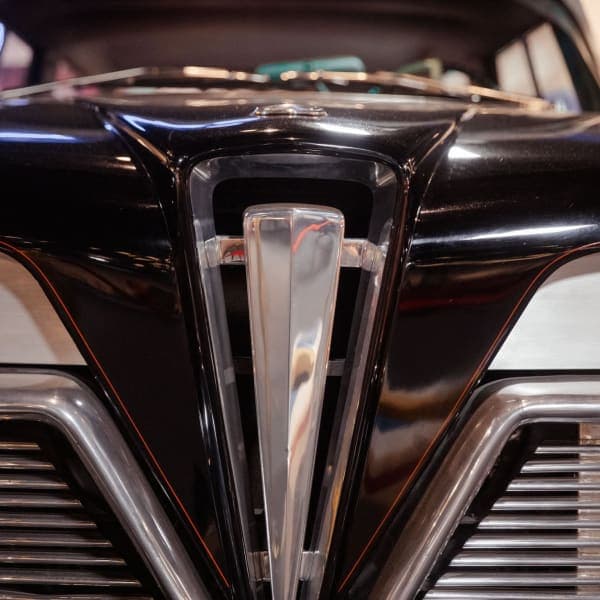
Black custom, centre-divided grille
Black lacquer, brushed-aluminium inserts, fine red pinstriping along every edge. A 1950s custom car has no straight lines that aren't on purpose.
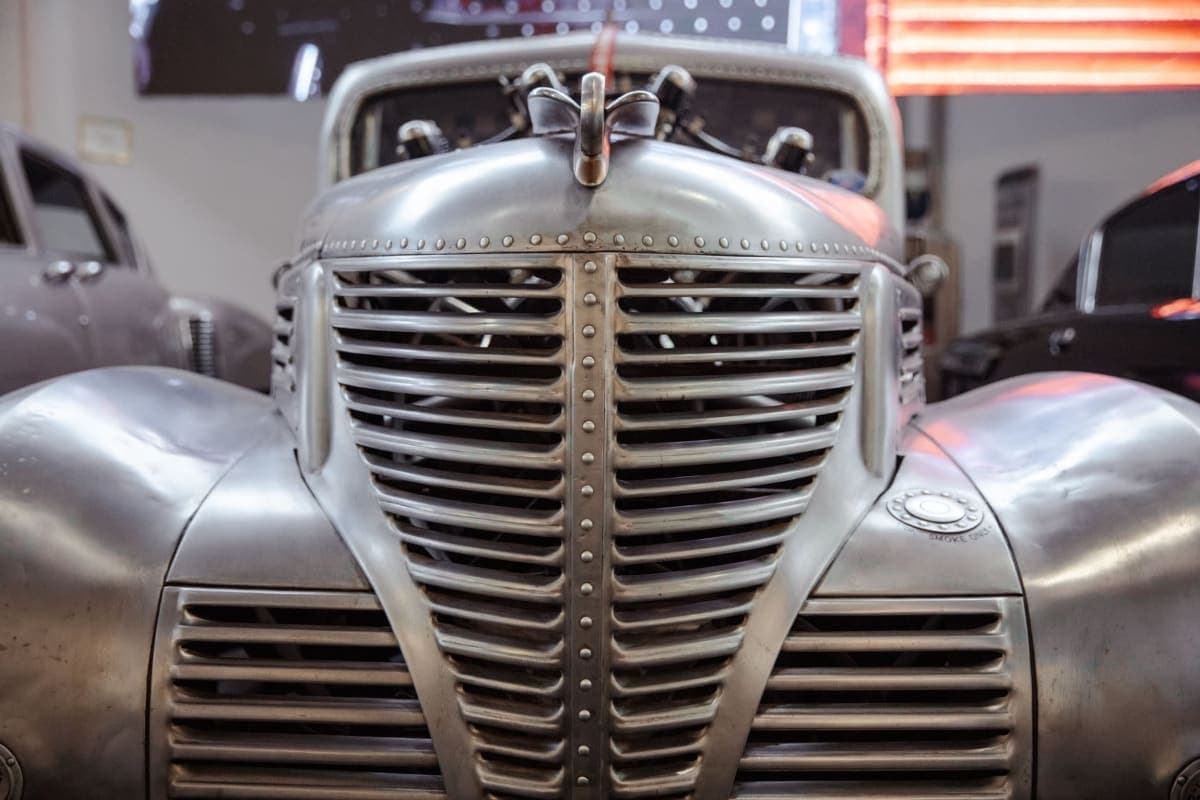
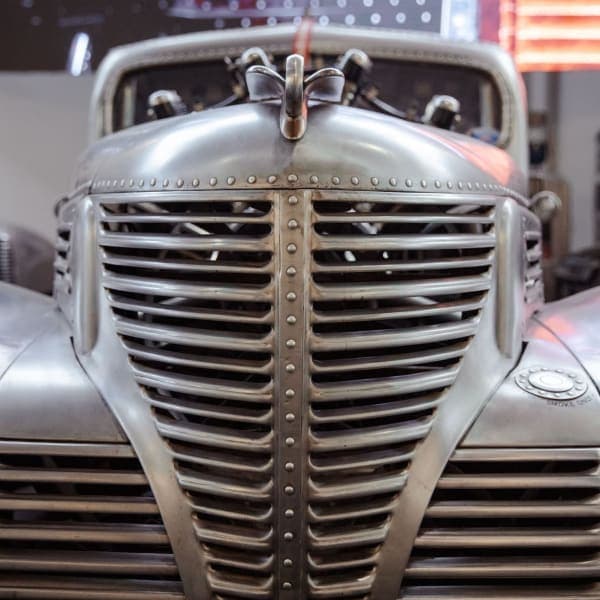
Riveted aluminium, radial engine
A custom truck built around an aircraft radial, the hood riveted like a B-17 fuselage. Aerospace and automotive borrowed each other's vocabulary all through the 1940s.
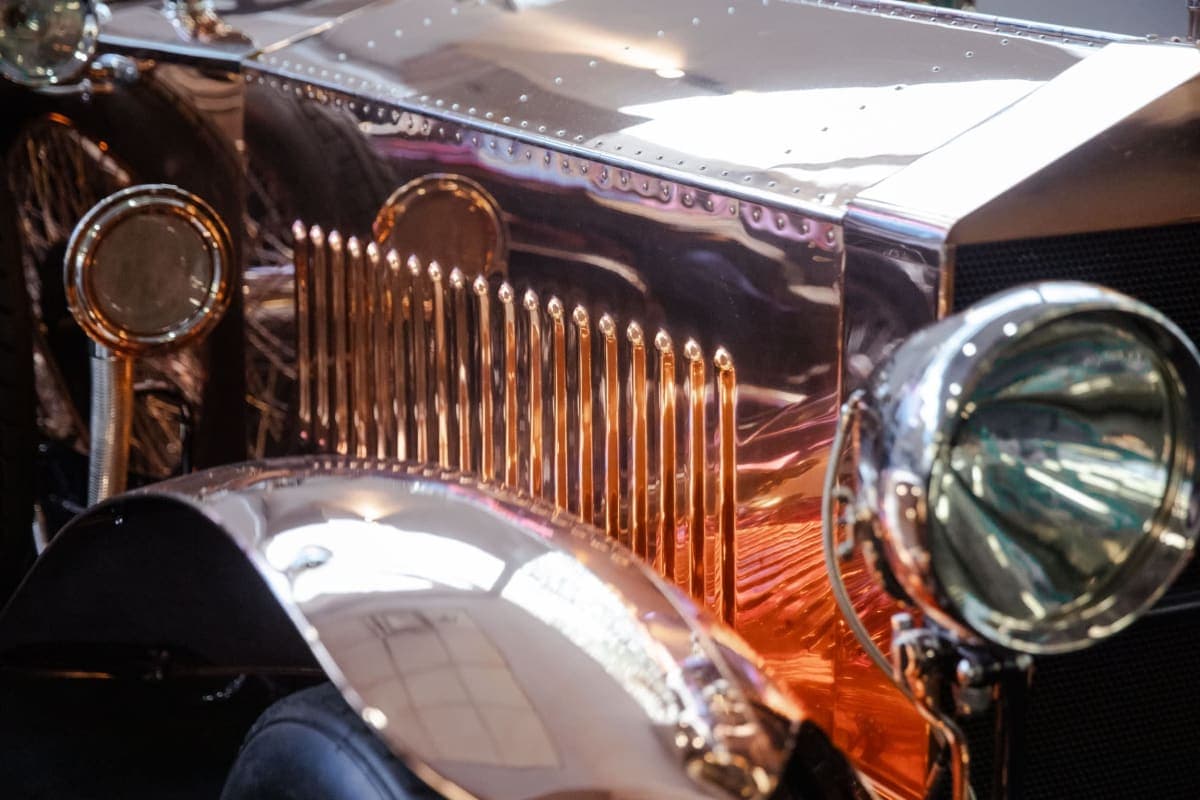
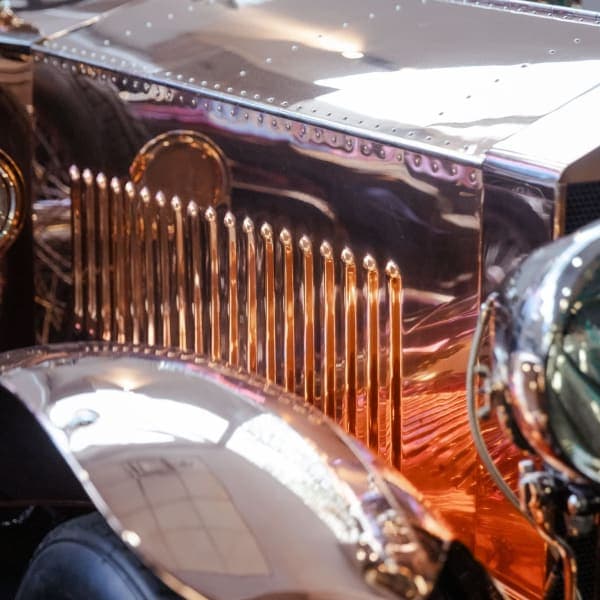
Copper louvres, polished aluminium
Another panel from the museum's coachbuilt collection — copper standing proud of brushed-aluminium body panels. Materials chosen for the way they catch light in a hall.
Mercedes-Benz 540K — twin Bosch trumpets
Three lamps stacked above two chromed road horns, the three-pointed star sitting calmly on top of the radiator. Stuttgart announcing itself in 1936.
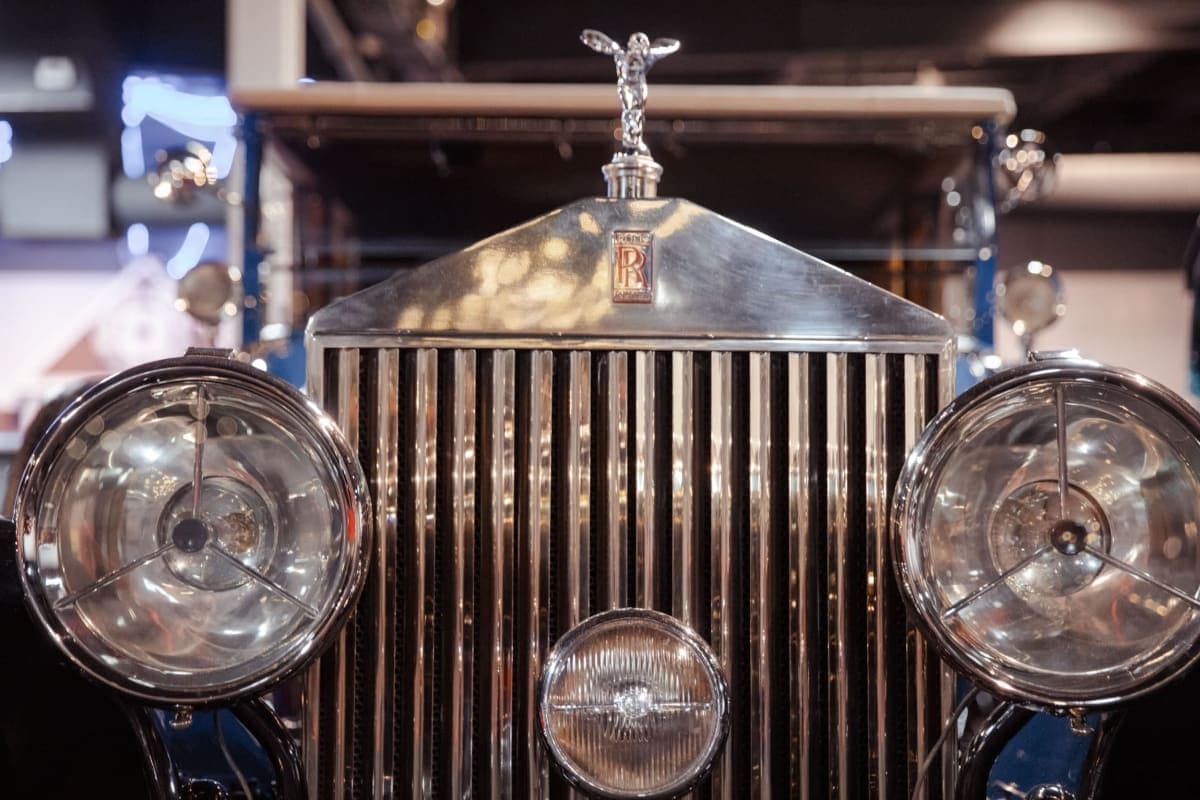
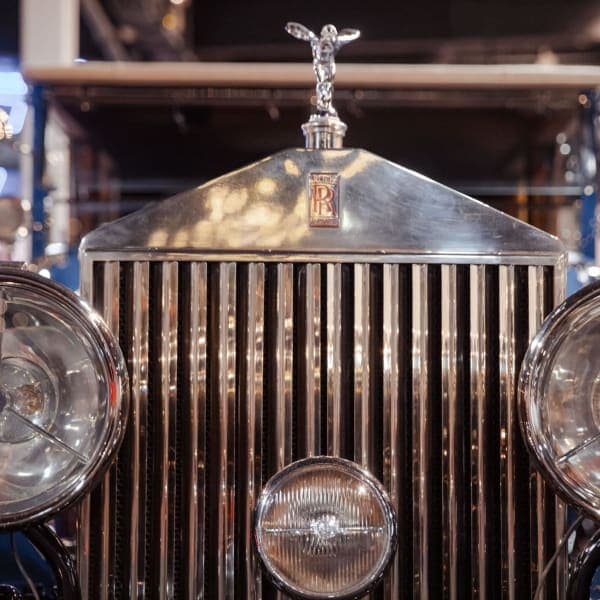
Spirit of Ecstasy
Charles Sykes modelled her on Eleanor Velasco Thornton in 1911. She has stood on every Rolls-Royce since, leaning into a wind that never lets up.
Chevrolet teardrop, 1940
A red-and-chrome teardrop tail light with the word CHEVROLET cast into the centre bar. The lamp is a brand statement and a turn signal at the same time.
Chapter Ten
The French
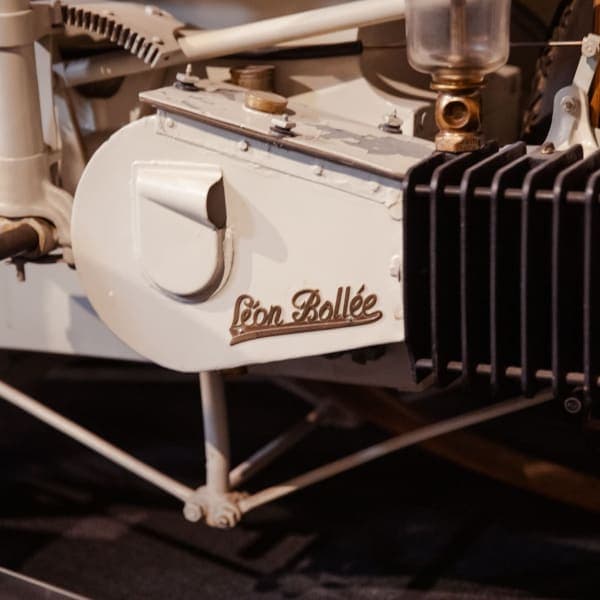
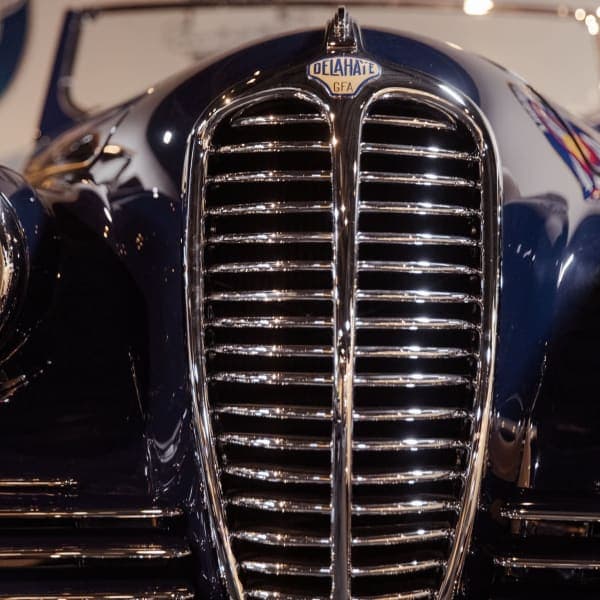
Léon Bollée built his first car in 1895; the badge here is in copper, in his own handwriting. Forty years later, Delahaye's Type 135 went around the world wearing coachwork by Saoutchik, Figoni & Falaschi and Chapron, bodies that treated steel like a couture fabric. Reno keeps both ends of the French story in the same room, each photographed close enough to mistake for sculpture.
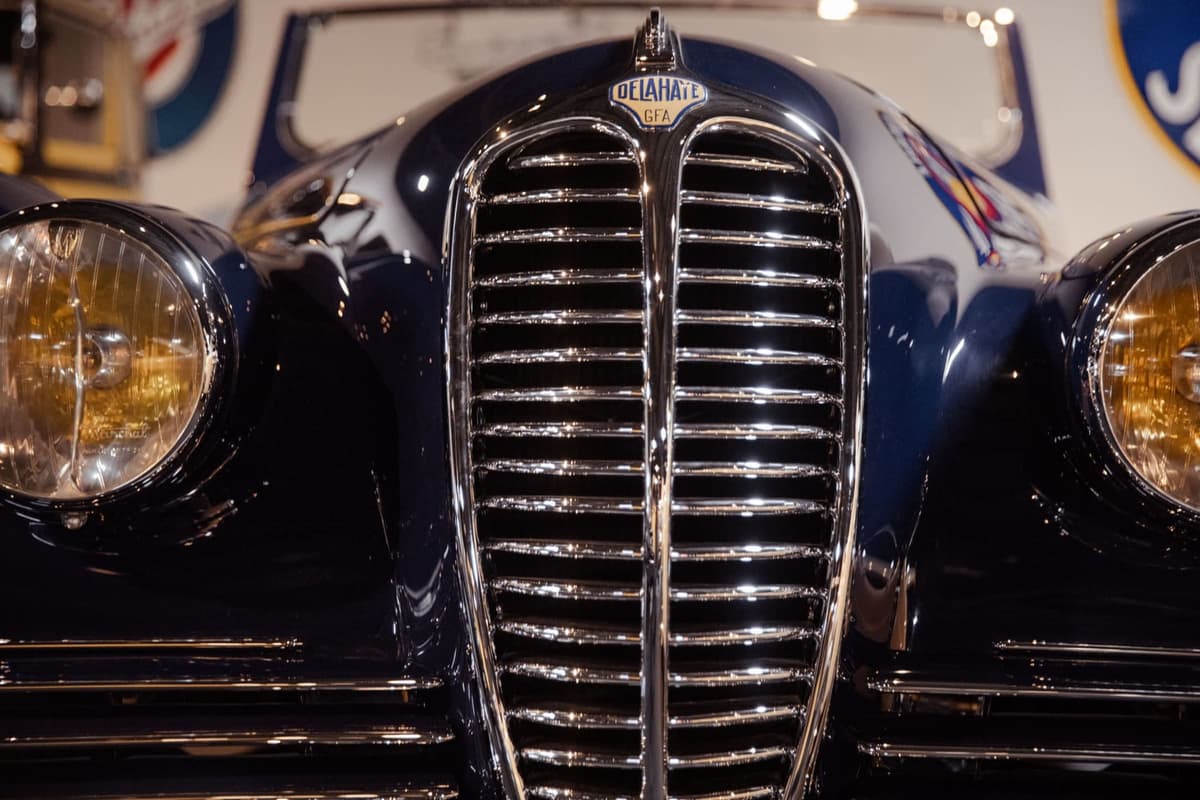
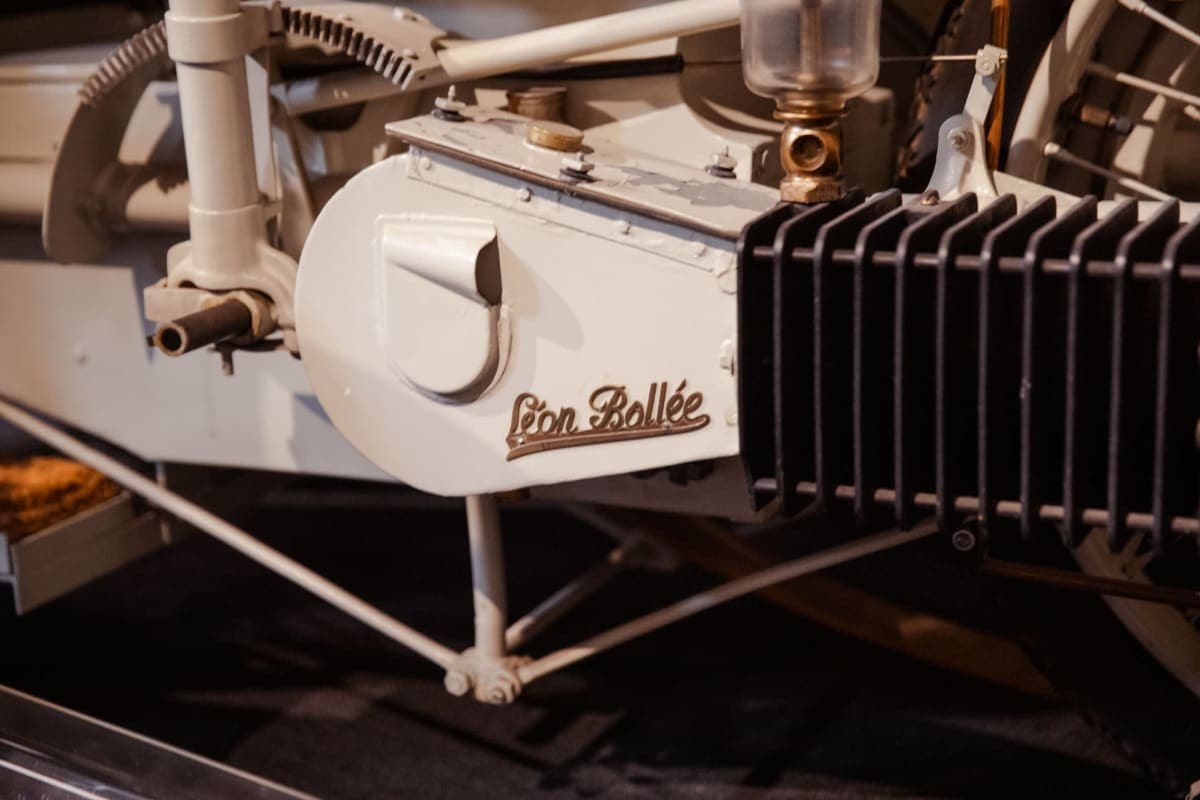
Léon Bollée — script in copper
Bollée built his first car in 1895, his first racing car the year after. The script badge is a small advertisement for the elegance of the engineering behind it.
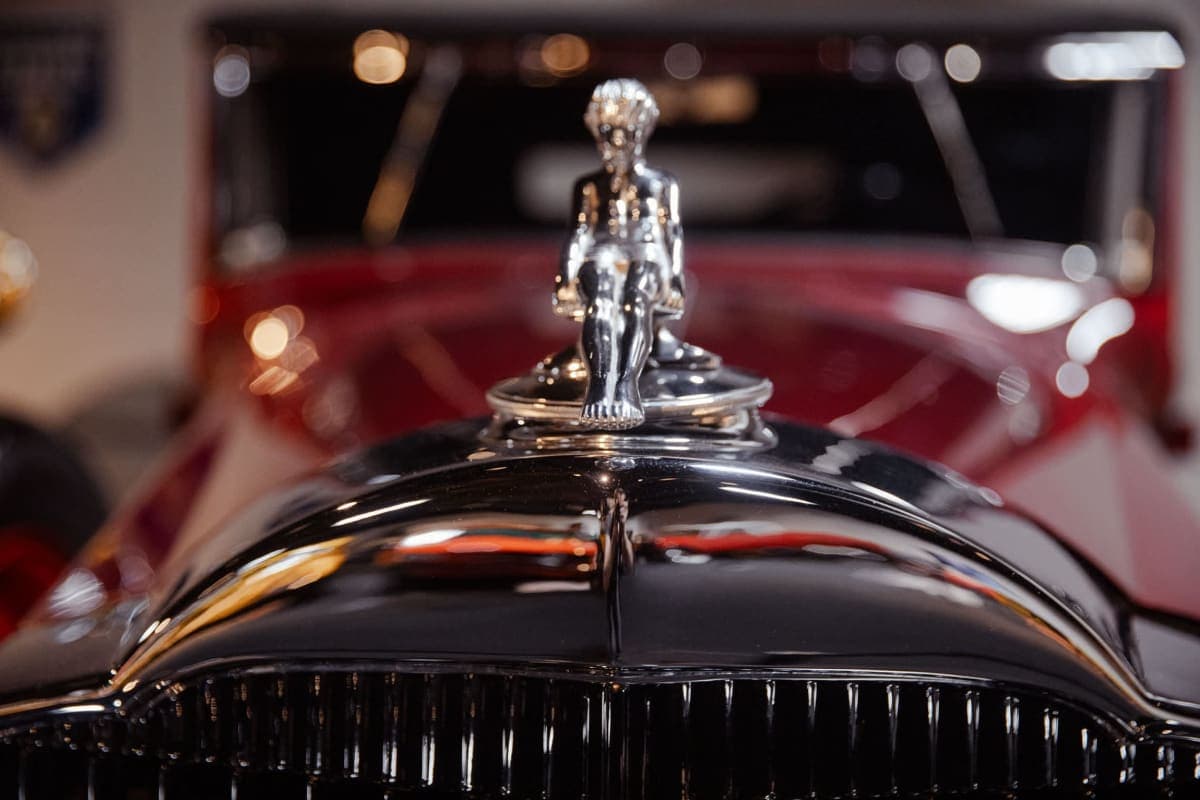
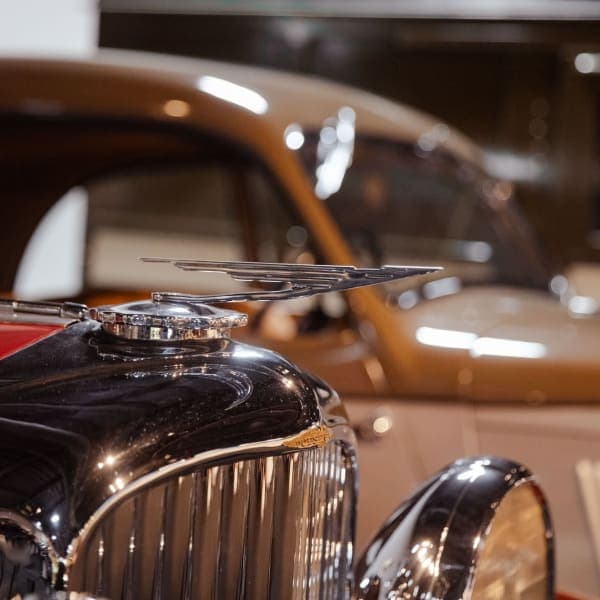
The Goddess of Speed
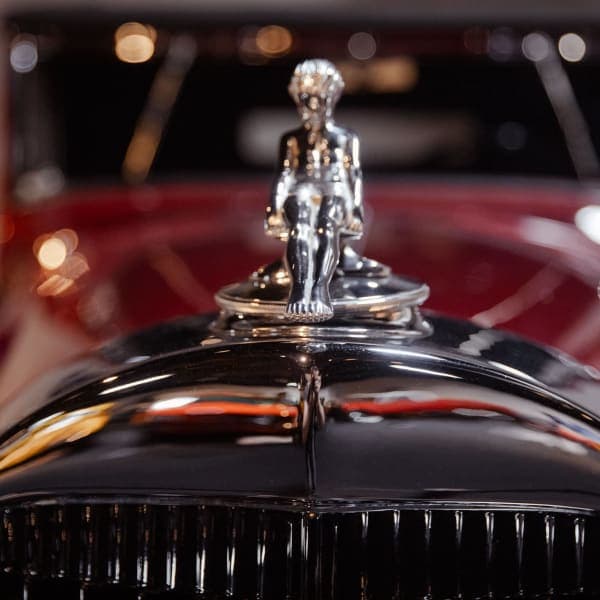
A nude figure cast in chrome, knees up, leaning into nothing. The 1930s put a small sculpture on top of every fast car they made.
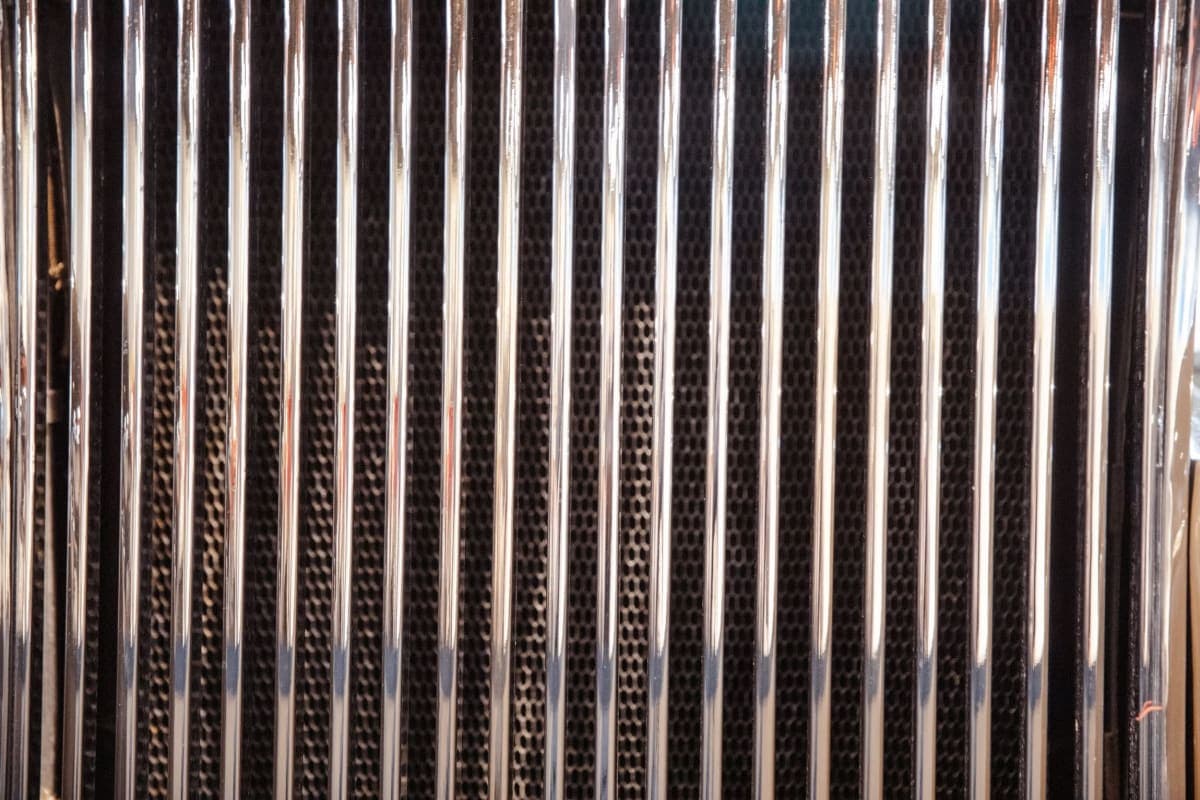
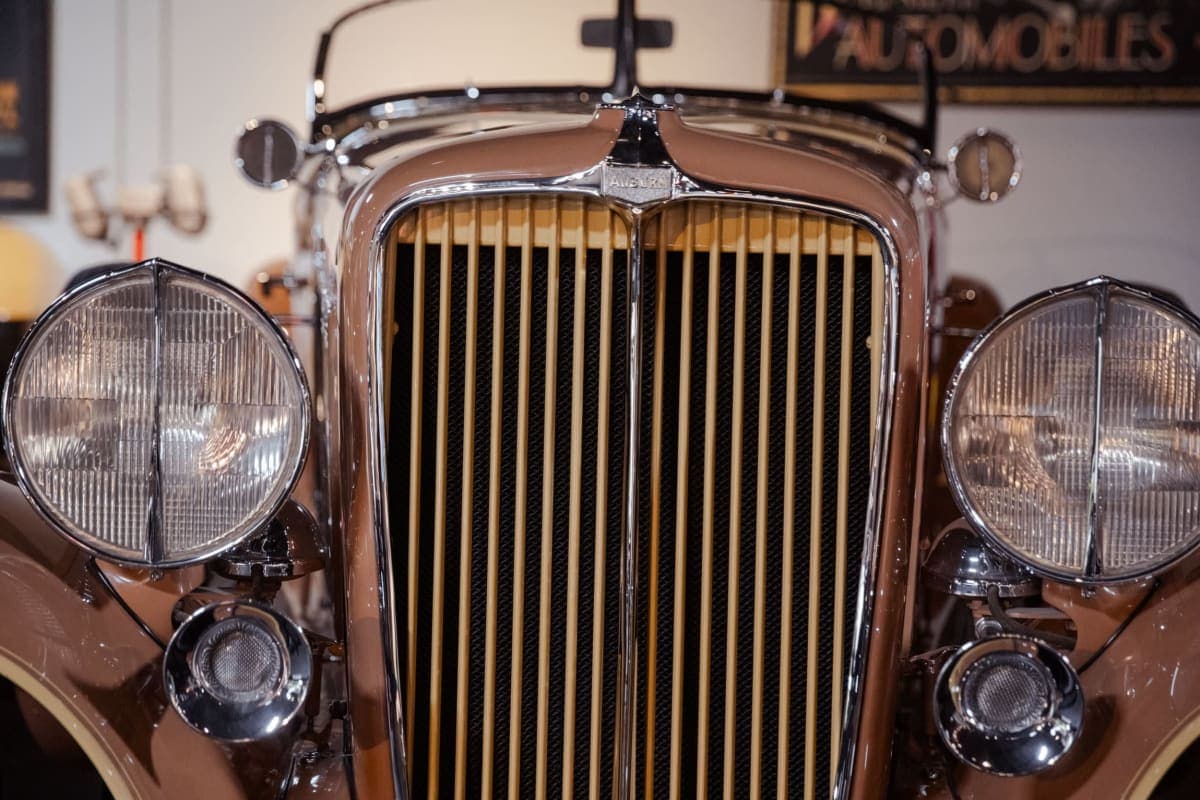
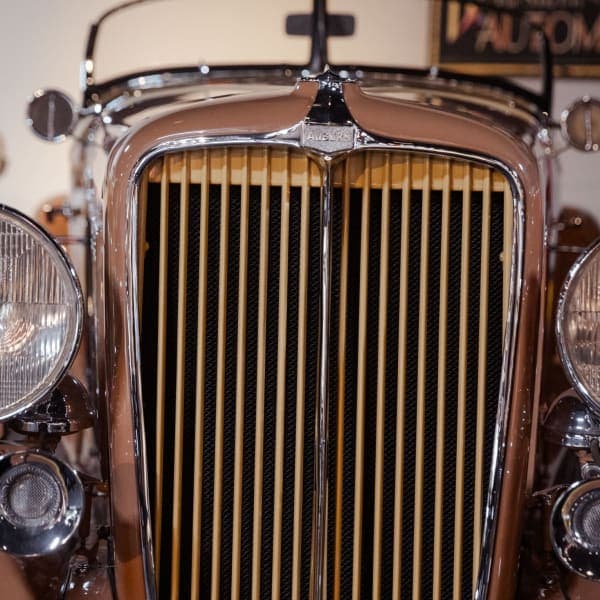
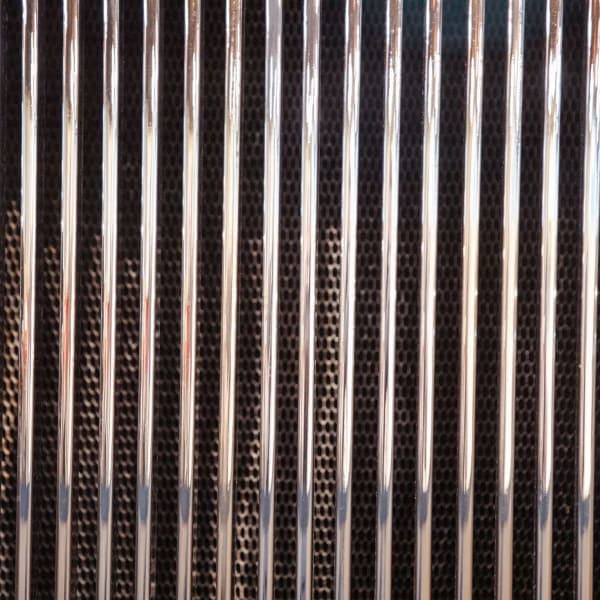
Auburn — vertical bars
Twenty chromed bars over a perforated brass screen, photographed close enough to lose the rest of the car. Indiana coachwork at its highest pitch.
Amber teardrop on chocolate
A clear-domed driving lamp set into a brown fender — almond above polished chocolate, glass on lacquer.
Chapter Eleven
Wheels, lamps, a cockpit
The last walk through the hall, looking down. A wooden steering wheel from the 1907 Thomas Flyer. A sky-blue cockpit with a Cadillac wreath at the centre. A Packard Safari wire wheel. And a small set of lamps that, photographed close, stop being lamps and start being objects, a yellow Ford teardrop, brass-era spokes, a cut-glass marker.
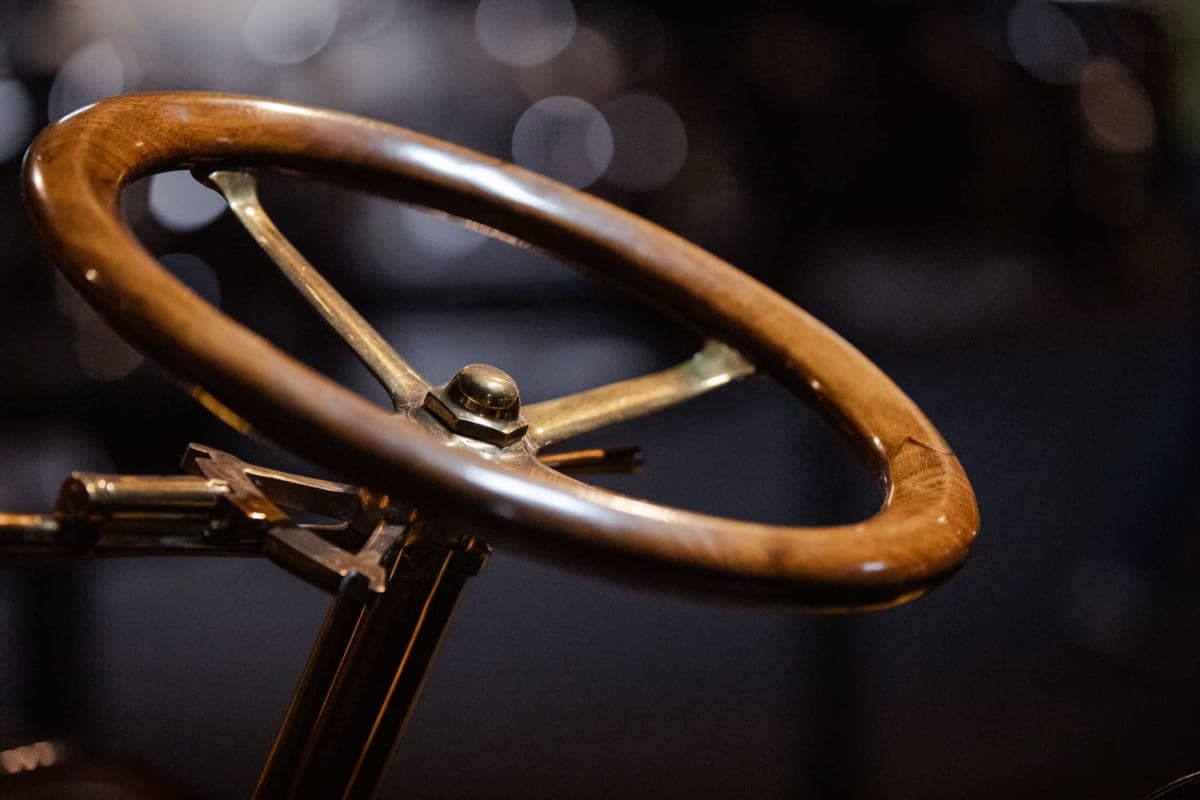
Wood and brass, 1907
A wooden wheel with brass spokes and a small brass horn-button at the centre. The Thomas Flyer was steered by hand around the world like this.
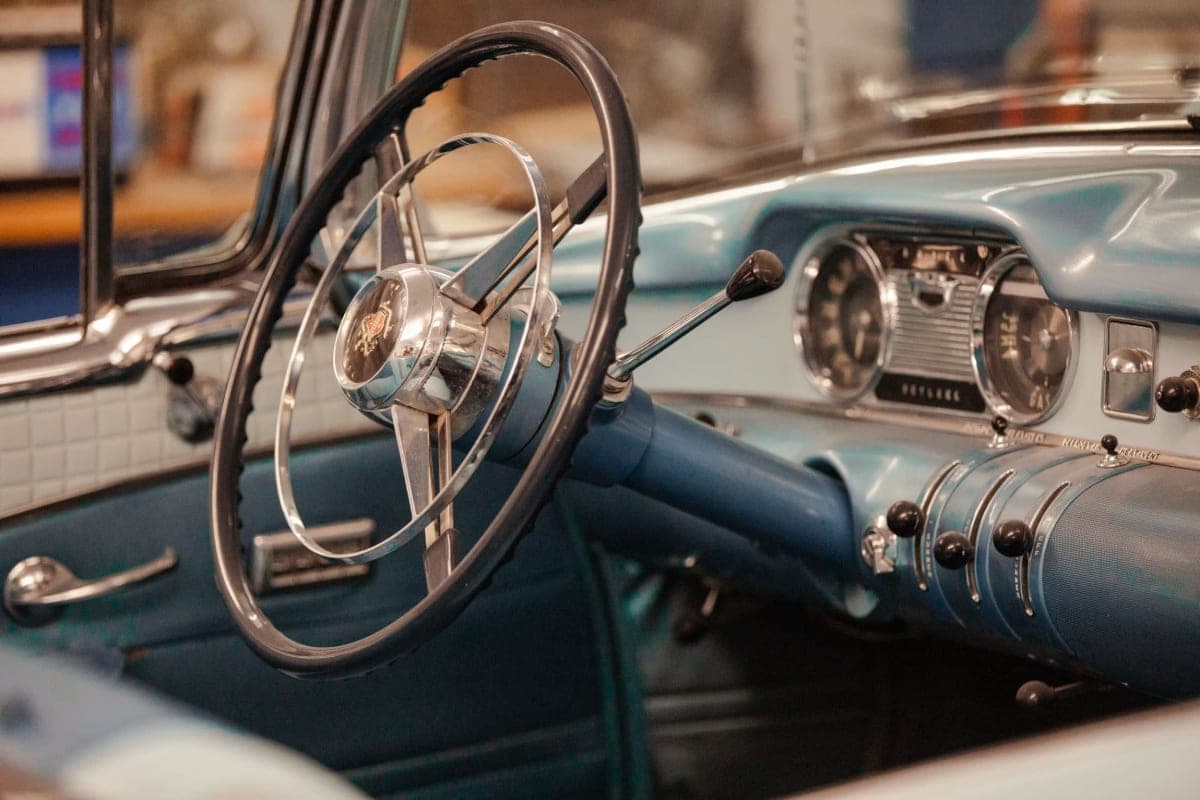
Sky-blue cockpit
A four-spoke wheel with the Cadillac wreath at the centre, two large dials on a horizontal dash, blue leather front to back. The 1950s sat very low.
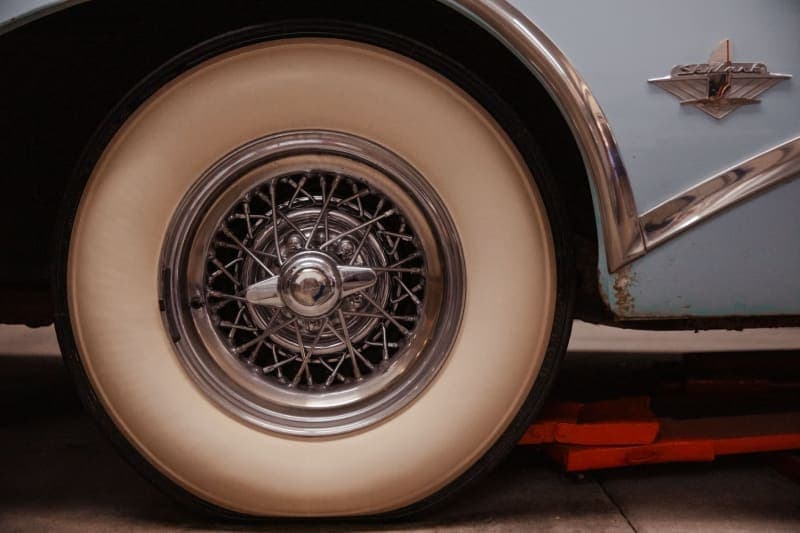
Packard Safari — wire wheel
Packard's last great wagon got a Safari badge over each rear quarter. The wire wheel is original; the whitewall is the museum's idea.
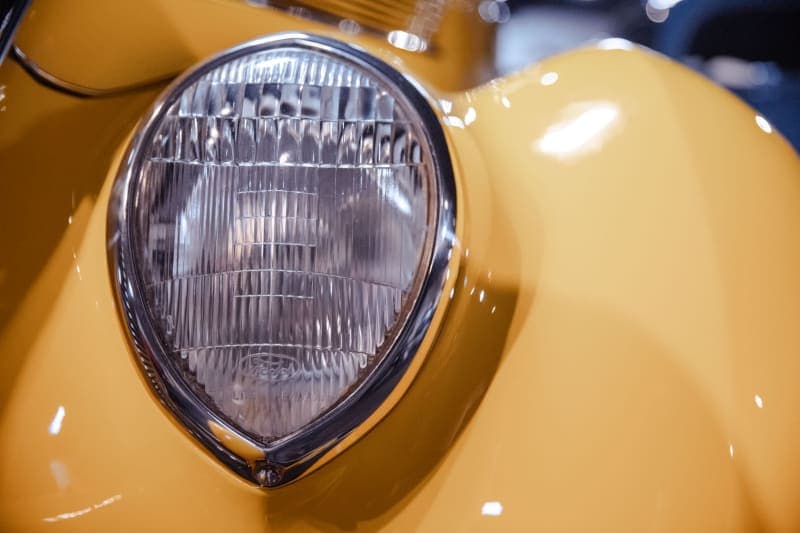
Ford headlamp, in yellow
FORD LIFE-GUARD HEADLAMP cast into the lens, a teardrop chromed bezel, the surrounding fender painted goldenrod. Detroit caught up to art-deco around 1939.
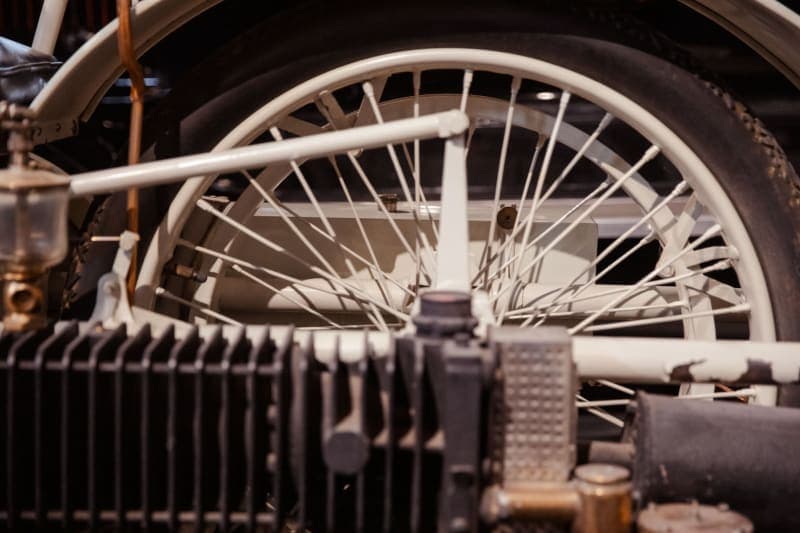
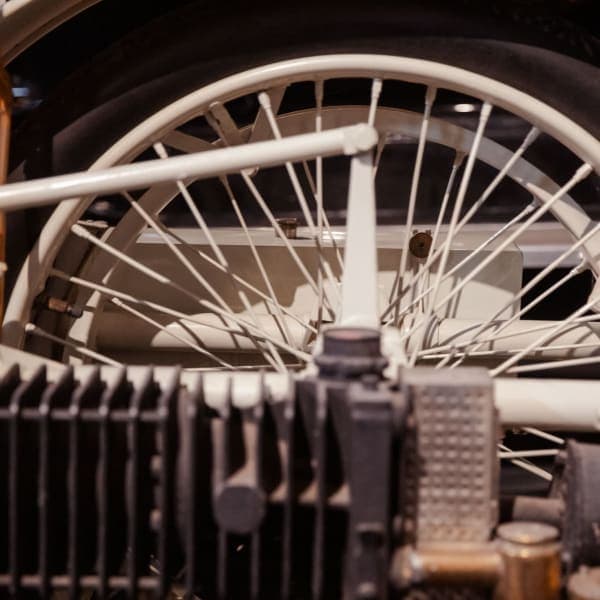
Brass-era spokes, painted white
Wire wheel painted white, behind it a finned black radiator core. Brass-era cars wore their cooling on the outside.
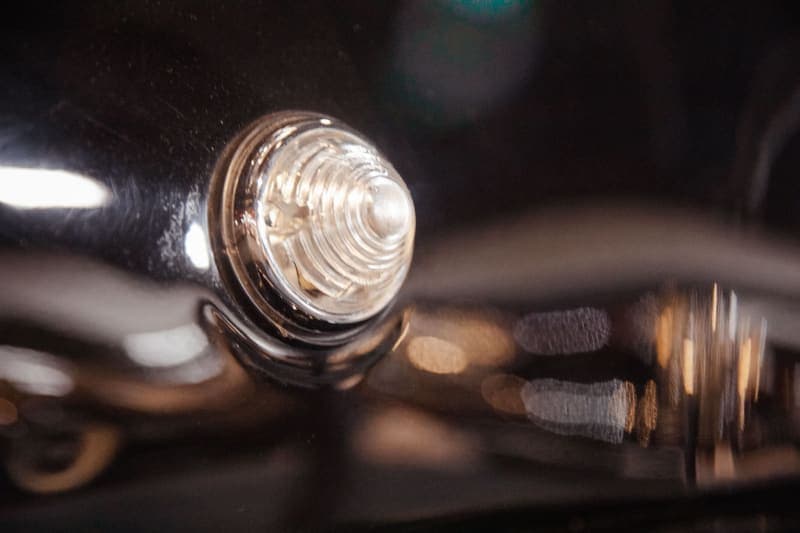
Cut-glass marker lamp
A clear-domed marker light pressed into a chromed bezel — a parking lamp from the 1930s, the kind you turned on by hand.
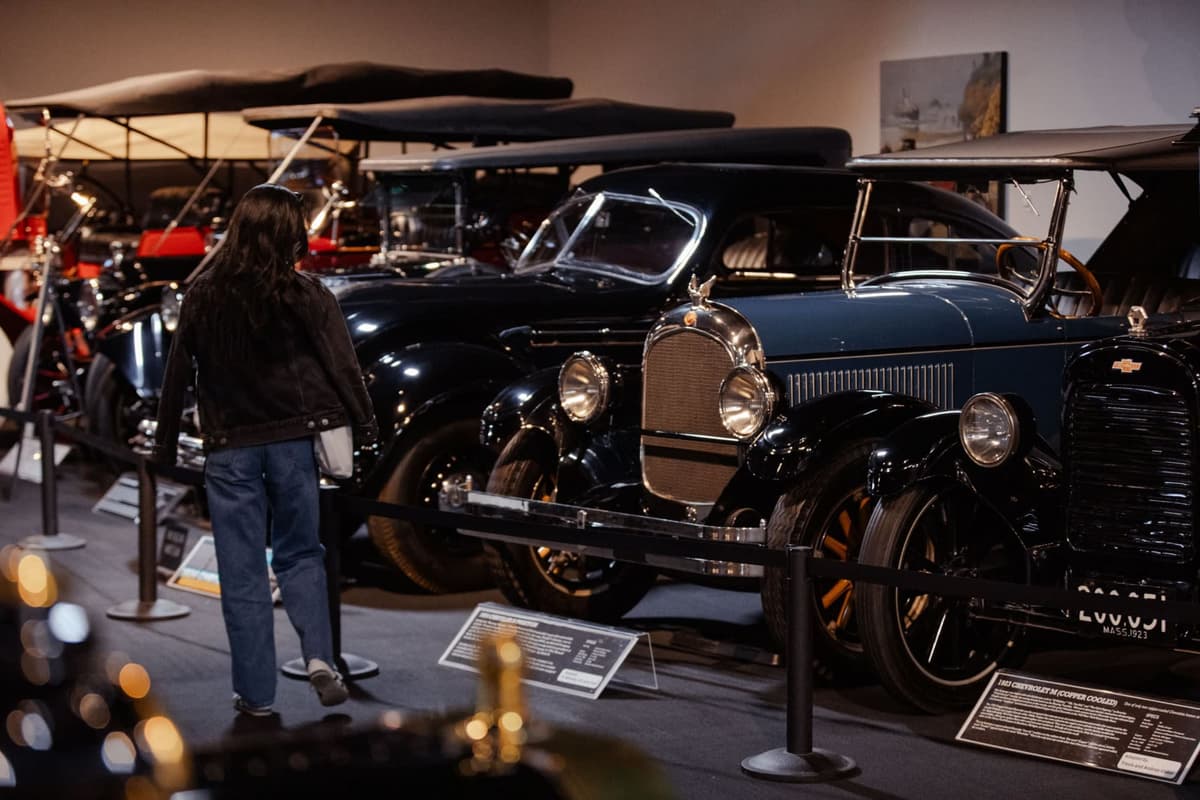
Interlude
The visit, in scale
A visitor in a denim jacket walks past a 1923 Chevrolet Copper-Cooled — Massachusetts plate, navy paint, brass-rimmed lamps. The cars look exactly the size they used to be.
The full set
Eighty-eight portraits
Photographs · Kraabel · May 2026
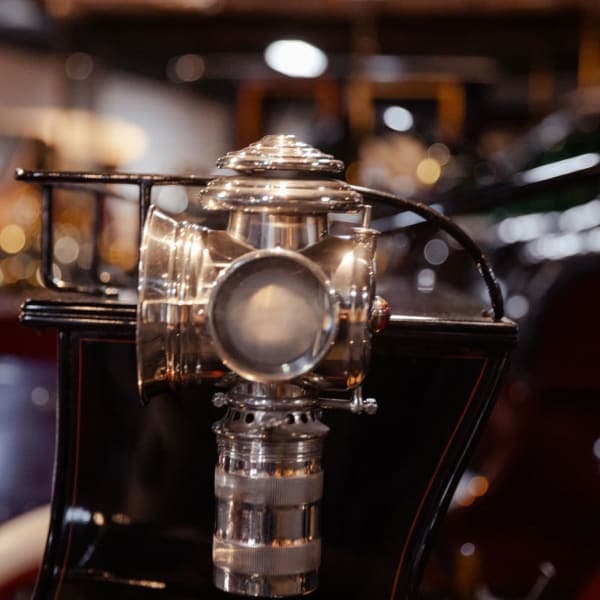
Acetylene side lamp, c. 1908
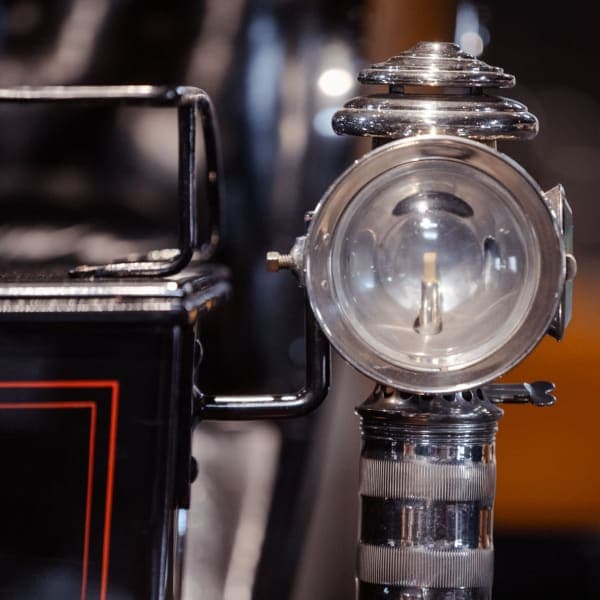
Side lantern, full height
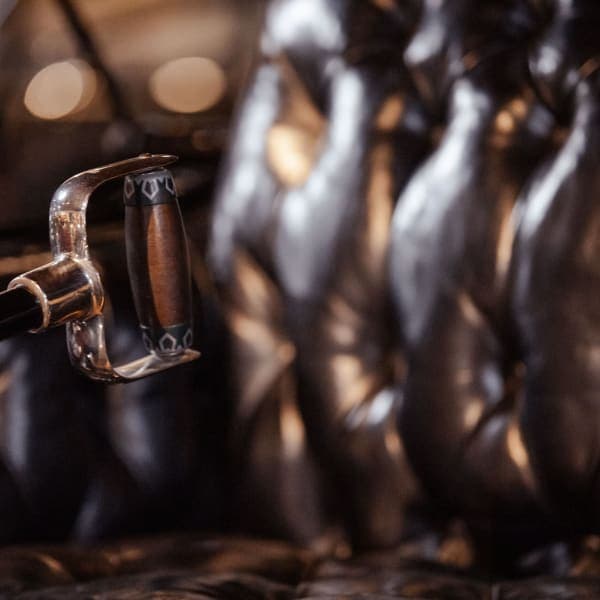
Door pull, hand-turned
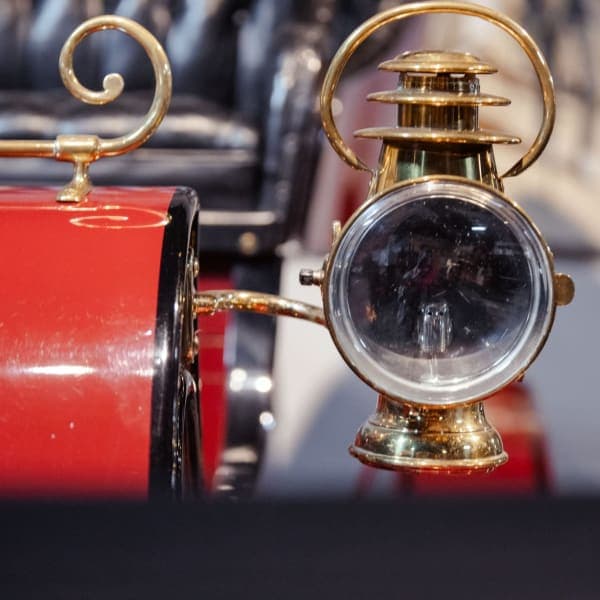
Brass headlamp on red veteran
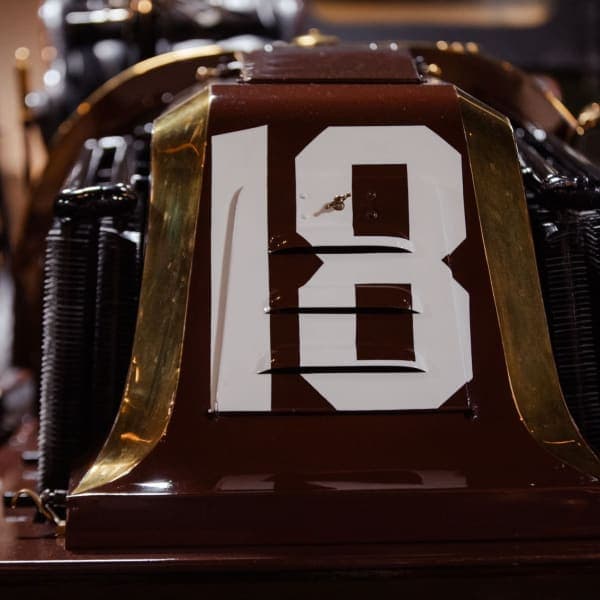
Race car number 18
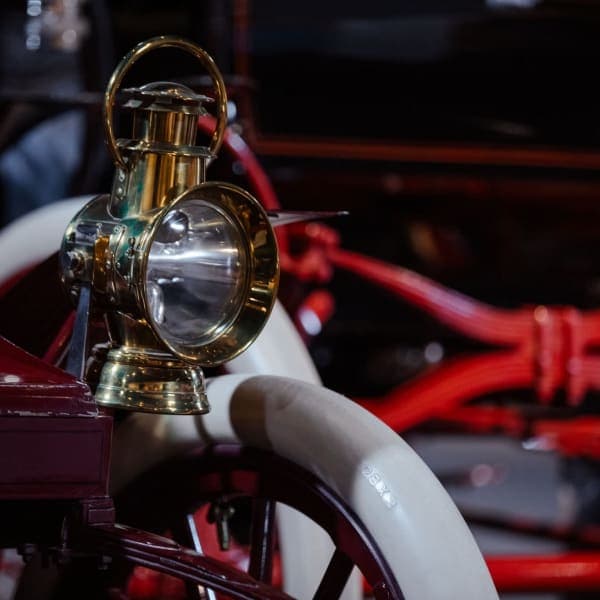
Side lamp above a white tire
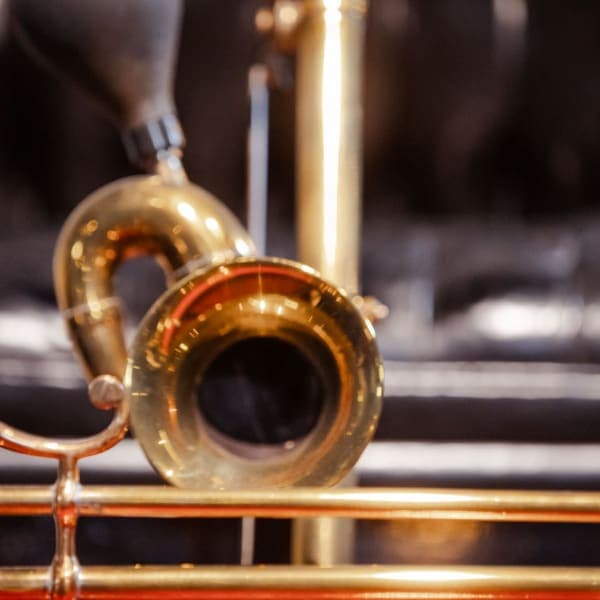
Bulb horn
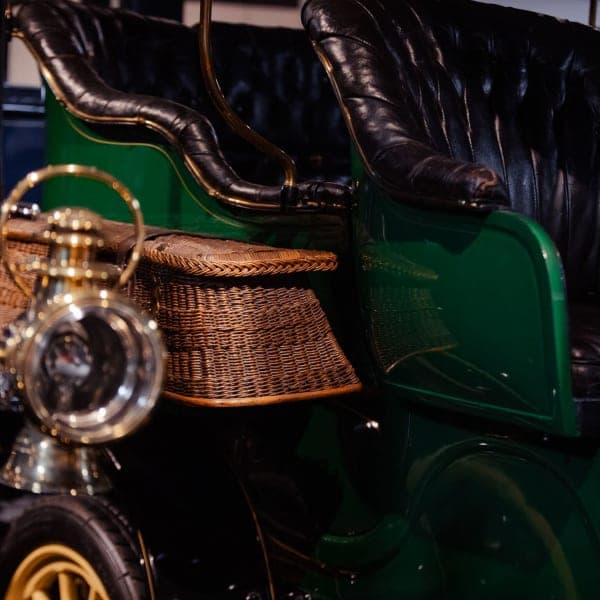
Wicker hamper, button leather
Touring car flank, white & brass
Ford script radiator badge
Bugatti steering wheel, blue cockpit
Single headlamp, vermilion bonnet
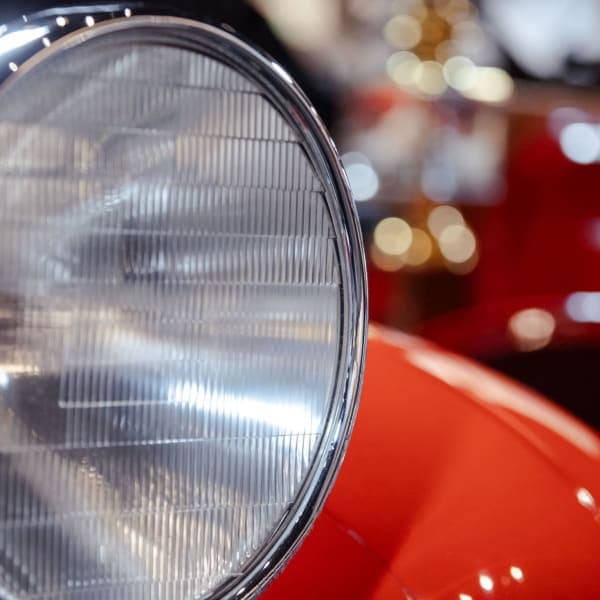
Ribbed-glass headlamp on red coachwork
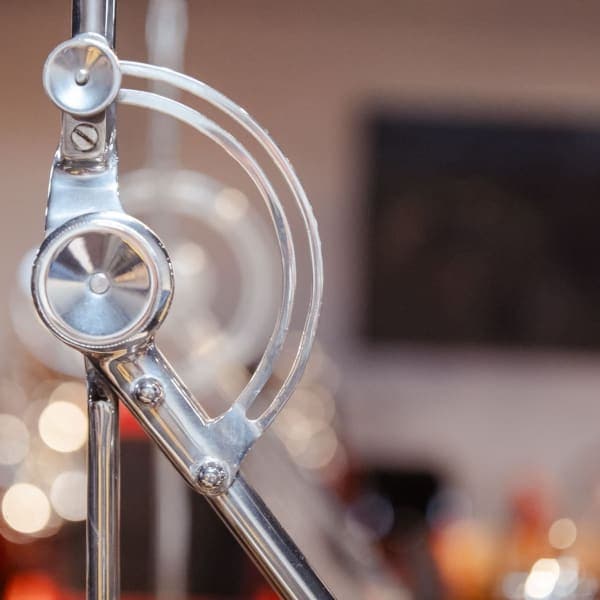
Spark and throttle quadrant
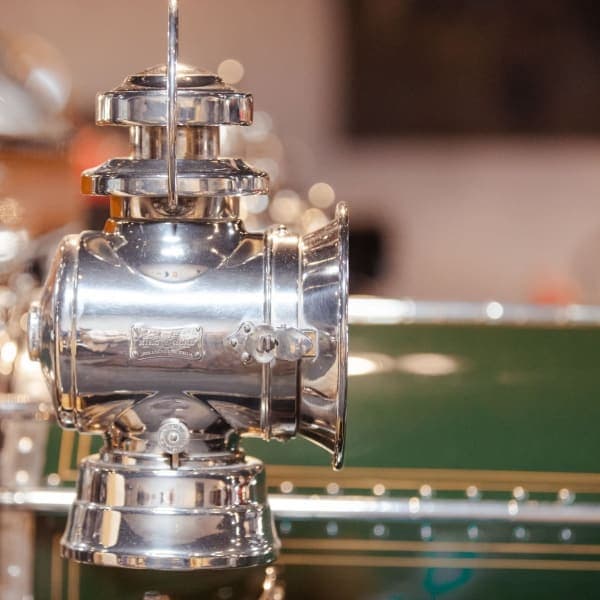
Side lantern with maker's plaque
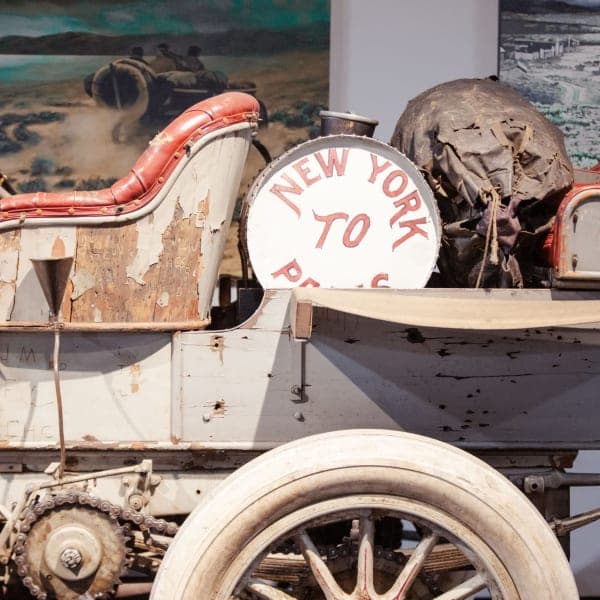
1907 Thomas Flyer — the New York to Paris car
NEW YORK TO PARIS — the sign, intact
Wagon-spoke wheel, 36×4 4-PLY
Initials carved by the crew
Cognac tufted interior, 1920s touring
Bugatti, copper plumbing
Mercer Raceabout, brass radiator
Mercer cockpit — wood wheel & black leather
Red touring car, white-wall and brass
Three across the back
Veteran cabin, brass-rimmed lights
Chromed pontoon fender, 1930s
Main Street, recreated
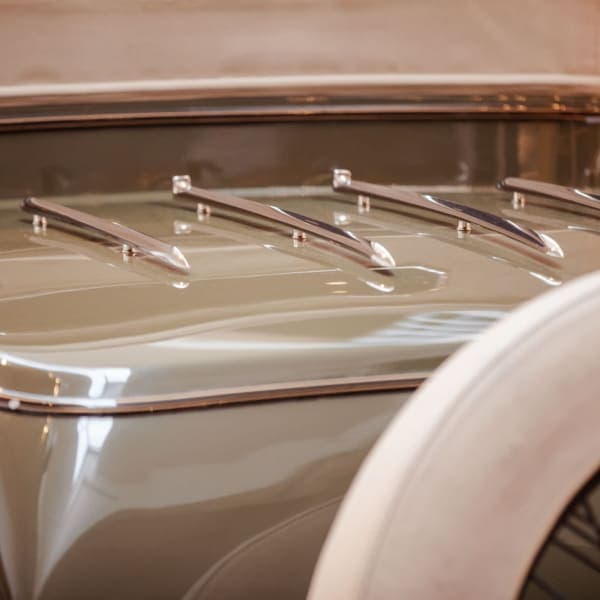
Cream coachwork, chromed louvers
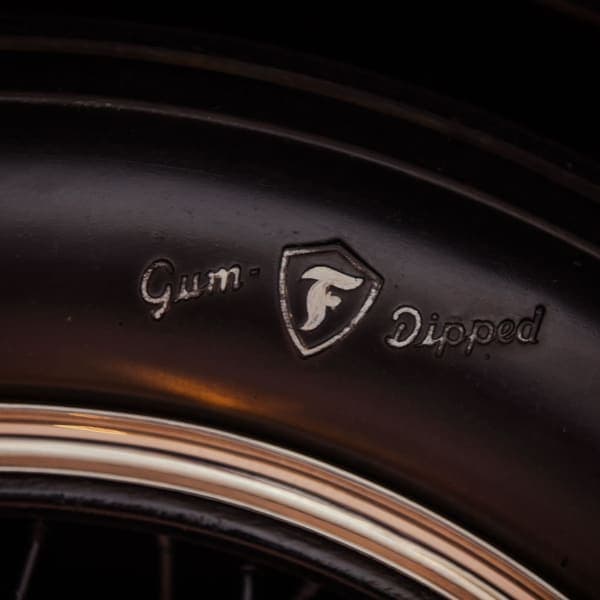
Firestone Gum-Dipped sidewall
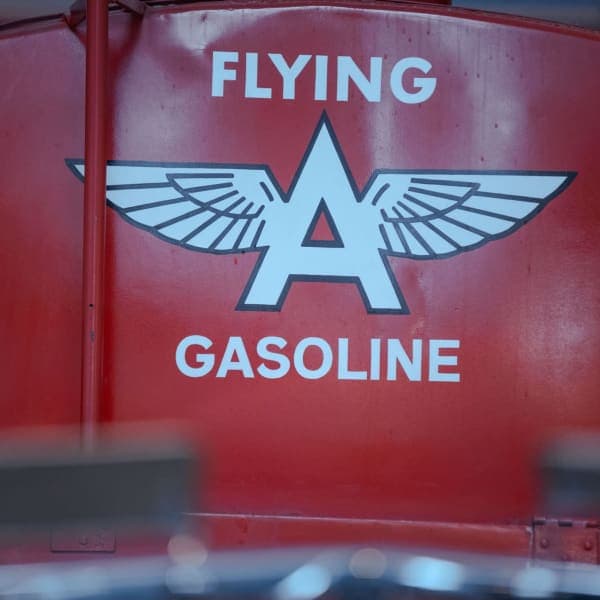
FLYING A Gasoline globe
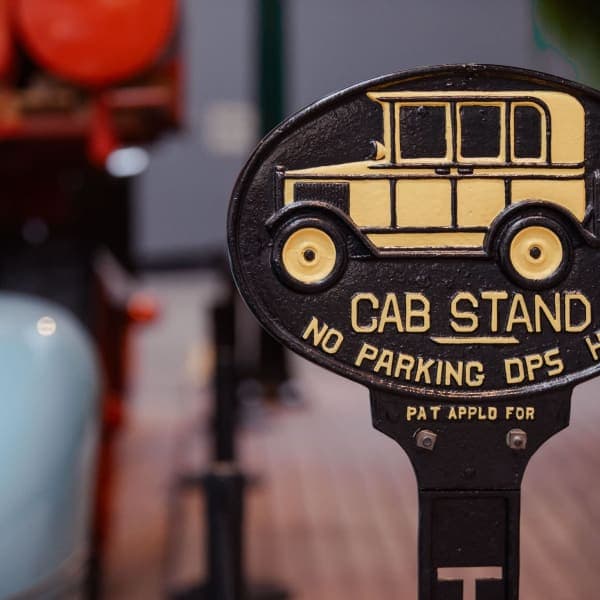
Cab Stand — No Parking
Flying A logo on enamel
Race car radiator, fan & headers
Yoke against the radiator
Brooks sedan, twin headlamps
Mercury, in script
Monroe roadster, brass script
Two-tone coupe in the long hall
Three grilles, in line
Volkswagen, headlamp & guard
Cole 8 — Indianapolis, 1922
1954 Buick Skylark, in the lube bay
Grease Lightning, three-quarter front
GREASE LIGHTNING — the side panel
GREASE · Barris Kustom
Grease Lightning — taillight cluster
Winged hood ornament, deco-era
ALVIS, in chrome
Cream coachwork, fan-shaped grille
300 SL Gullwing — Continental tyre
Gullwing door, open
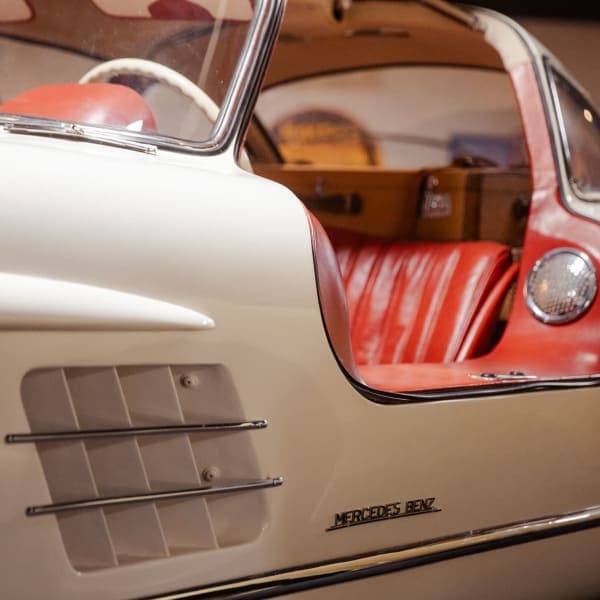
Gullwing — wide
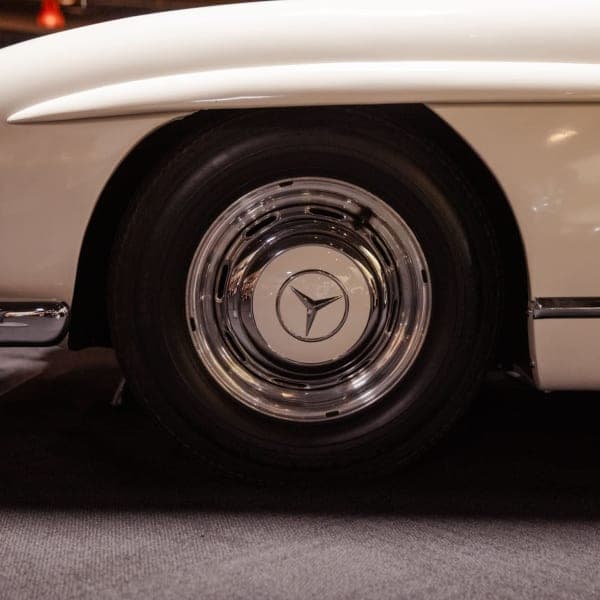
Gullwing — front wheel
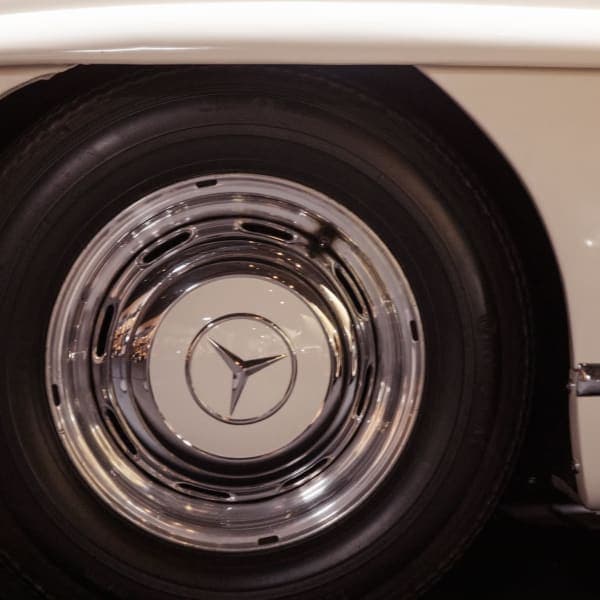
Gullwing — rear wheel
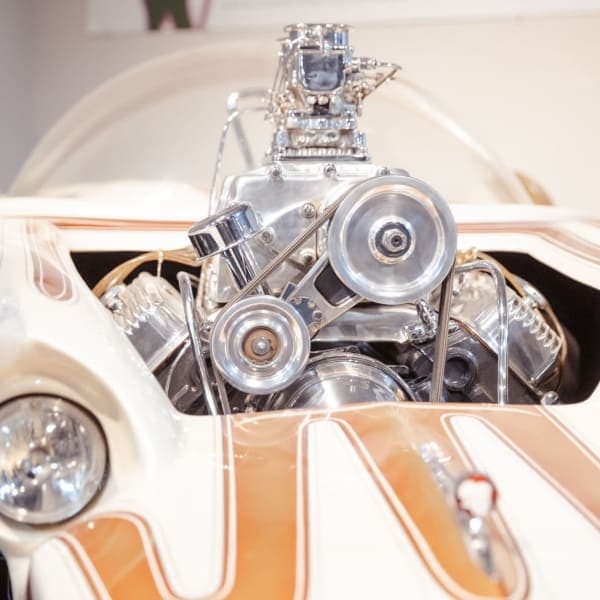
Blower, twin Strombergs, white & copper
1937 Ford, gold-yellow
Jaguar XK120 — British Racing Green
1939 Plymouth, the waterfall
Herbie — number 53
Black custom, centre-divided grille
Rolls-Royce Phantom — the temple grille
Spirit of Ecstasy
Mercedes-Benz 540K — twin Bosch trumpets
Tucker '48 — the front
Riveted aluminium, radial engine
Copper louvres, polished aluminium
Land Rover Series I — 622 XVL
Chevrolet teardrop, 1940
Tow Mater, in the flesh
ECTO-1, in profile
ECTO-1, the badge
Brass-era spokes, painted white
Léon Bollée — script in copper
Delahaye 135 — yellow eyes
Ford headlamp, in yellow
Edsel — the horse-collar grille
The Goddess of Speed
Cadillac Eldorado, '57
1939 Plymouth — Mayflower badge
Porsche — script in chrome
Cut-glass marker lamp
Auburn — vertical bars
Amber teardrop on chocolate
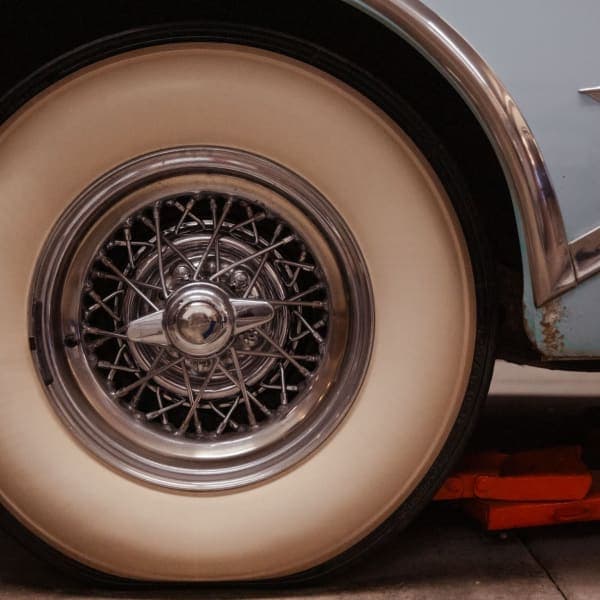
Packard Safari — wire wheel
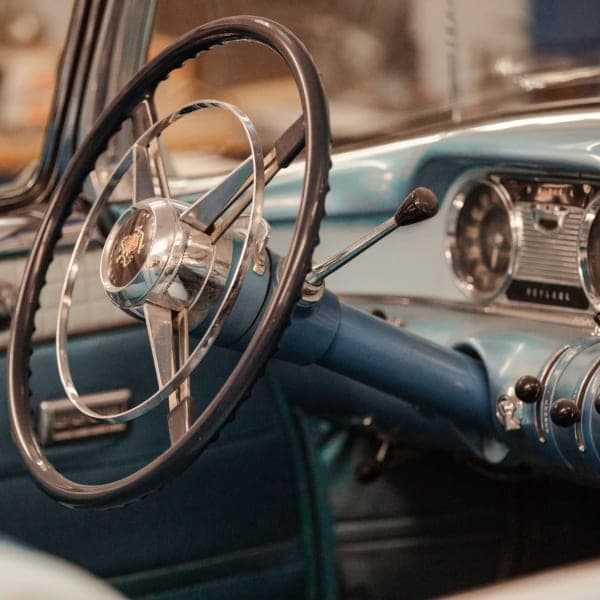
Sky-blue cockpit
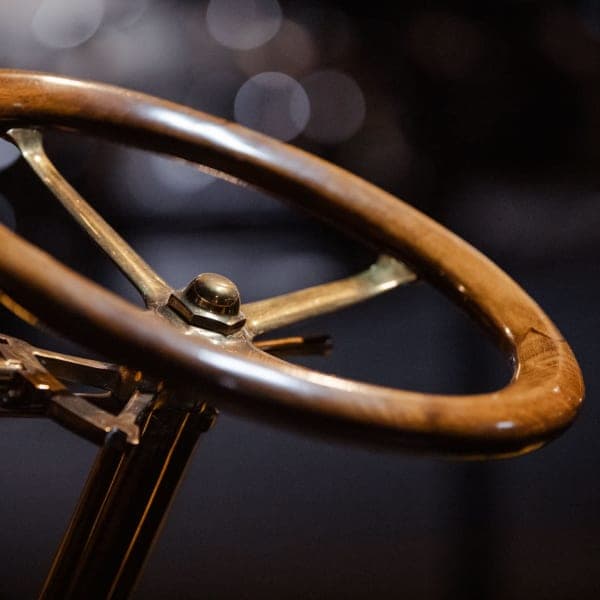
Wood and brass, 1907
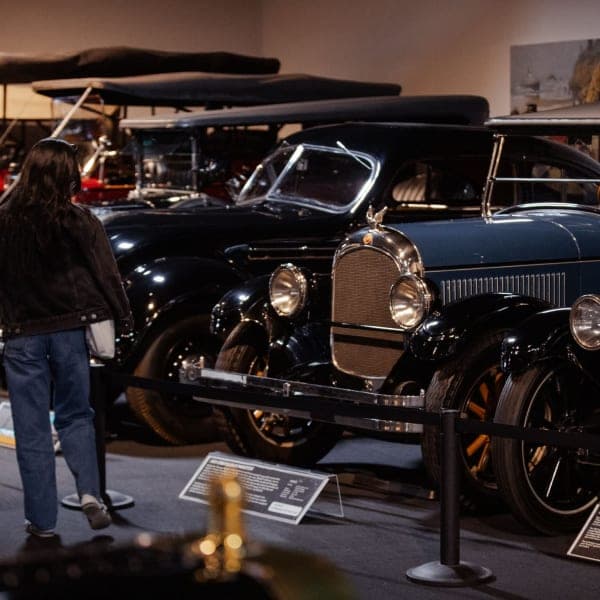
The visit, in scale
Rolls-Royce Phantom — twin lamps, vertical bars

Chevrolet bowtie on burnt-umber steel

Coiled chrome exhaust

Mater — Pixar Cars tribute build

ECTO-1 — Ghostbusters Cadillac

Chevrolet Copper Cooled, 1923
Yellow eye on midnight blue

Delahaye GFA — badge in profile

Delahaye GFA — vertical bars

Ford script, blue oval

Edsel — the horse-collar grille

Thunderbird Classic — checkered crest

Kneeling figural — hood ornament
Plan your visit
The National Automobile Museum
Address
10 South Lake Street, Reno, NV 89501
Hours
Mon–Sat 9:30am–5:30pm · Sun 10am–4pm
Highlights
The 1907 Thomas Flyer · Bill Harrah's personal cars · four full-scale period street scenes